How to get to Palmyra now: transport, permits and the desert road
Minibuses run from Homs, no direct bus from Damascus; the site is open and free, the museum shut. Getting to Palmyra now, the desert road, and what to bring along.
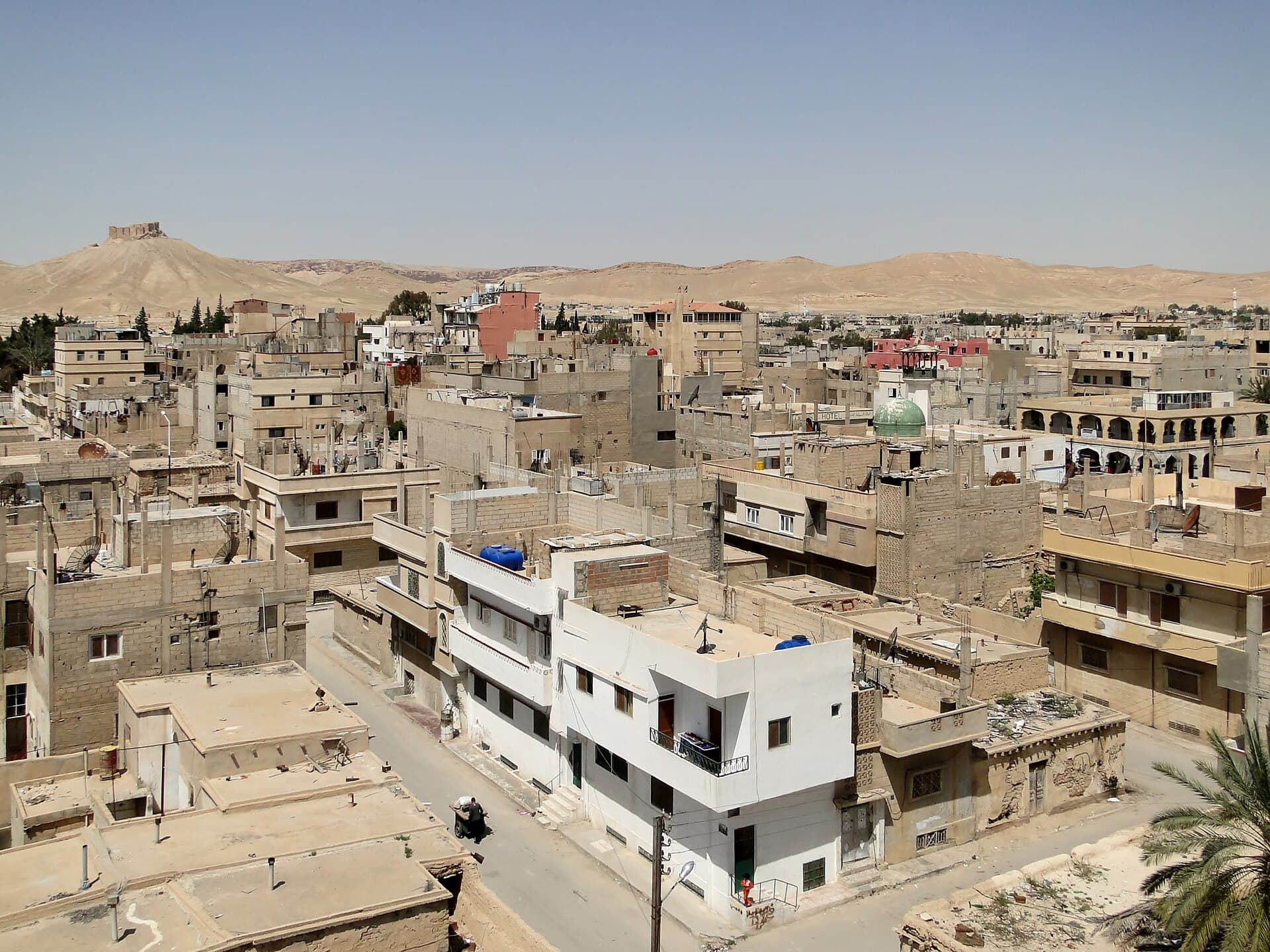
The answer to getting to Palmyra today is very different from the one in older guidebooks. There is no direct bus from Damascus, all the old hotels are in ruins, the museum is closed and mine clearance is under way in parts of the site. On the other hand, the ruins are open, entry is free, and in spring 2026 groups of journalists and students came to the town. This page sets out that picture with dates: how and from where to travel, what is open on site, the state of the road and what to bring. The plan for the day inside the site is on the route a day in Palmyra.
How and from where
In practice you start from Homs. As of December 2025, Palmyra minibuses leave directly from the Homs South Garage, and the ride takes two and a half hours. The second option is the Deir ez-Zor bus: it leaves from the Homs North Garage, does not enter Palmyra, and drops passengers on the ring road about 4 kilometres northeast of the museum. There is no direct service from Damascus to Palmyra; travellers from Damascus change in Homs or hire a car with a driver.
Distances: in July 2026 the director of Palmyra’s hospital put Homs at 160 kilometres and about two hours. From Damascus the road is 215 kilometres, three hours without checkpoints.
Fares go out of date fast. In December 2025 the minibus cost 50000 old pounds and the Deir ez-Zor bus 100000 old pounds. On 1 January 2026 two zeros were taken off the currency, so these equal 500 and 1000 new pounds. But on 13 September 2026 diesel went up from 125 to 175 new pounds, and bus fares are being recalculated. Treat the figures as a sense of scale only and check at the garage before you buy a ticket.
Permits, tickets and what is open
In December 2025 foreign visitors did not need a special permit. Rules can change, so keep your passport to hand at checkpoints. The archaeological site is open at all hours and no entry fee is charged. That month fewer than 20 tourists a day were visiting. The Palmyra Museum is closed: talks with France on repairing it were held in September 2025, and there is no opening date.
Work on the ruins has not reached restoration. According to a UNESCO World Heritage Committee document dated 5 June 2026, only research and damage assessment are being carried out. A project that began in January 2026 planned the clearance of mines and remnants of war. The first work started in May 2026 in the northern necropolis and the hippodrome, and is to extend to the western residential area afterwards. Those sections are off limits, and elsewhere on the site you do not leave the clear paths.
The town today
Families are still returning to the town. In mid-May 2026 the Homs governorate took 50 journalists and social media creators to Palmyra; in the same days 550 tourism-school students were in town with a licensed guide. These were official programmes, and they do not describe the conditions an independent traveller will meet.
Security incidents should be known with their dates. On 13 December 2025 a joint Syrian–US patrol was attacked near Palmyra; two US soldiers and an interpreter were killed. In the days that followed, joint security operations and raids were carried out in the town. On 3 August 2026 two explosions of undisclosed origin took place between Palmyra airport and the military prison, with no injuries. Ask in Homs about that week’s situation before you go.
The state of the desert road
The road to Palmyra is part of the desert axis linking Damascus and Deir ez-Zor. According to official statements, it is largely a single carriageway carrying traffic both ways. On 25 July 2026 two buses collided between Al-Sukhnah and Palmyra; the first count by the Deir ez-Zor health directorate was 35 dead, and later figures vary between sources. After the crash the Interior Minister said traffic patrols and fixed and mobile checkpoints would be put on the road, and that there is no phone signal along it.
The Damascus–Palmyra and Palmyra–Deir ez-Zor sections went out as two separate tenders, and 20 foreign companies applied; the construction period was given as 780 days. In other words, for the next two years the road will be used as it is. The practical result fits in a sentence: travel by day, set off early and plan the return for before dark.
Health care matters for the road too. Palmyra’s hospital sends patients on to Homs because it lacks staff and equipment; in a serious emergency the nearest fully equipped hospital is two hours away.
Mines in the desert: stay on the road
The British government’s travel advice, updated on 2 September 2026, is clear about mines and unexploded ordnance in the Syrian desert: do not leave roads and asphalt. In April 2026 a mine blast in the eastern Hama steppe killed 7 people, and the Hama disaster directorate said “there is no safe area in the steppe”. Stopping by the roadside for a photo is one thing; walking out into the steppe is another. The full rules are on the page about safety in damaged areas.
Where to stay and what to bring
All the old hotels are in ruins. As of December 2025, the only place to stay was basic camp-style lodging: a tent or a stone cellar, cold showers, breakfast included. This site does not name businesses; ask about it before you leave Homs. As a day trip, the road takes four to five hours there and back and the site needs at least half a day, so you have to leave Homs at sunrise.
- Cash: cards do not work, on site or in town.
- Water: at least two litres each; there is no shade on site.
- A hat and closed shoes.
- Your passport and entry stamp, for the checkpoints.
- An offline map on your phone, because there is no network on the road.
To combine Palmyra with the other stops in the east, the plan is on the page on desert and Euphrates travel.
Tips
- Leave from the Homs South Garage; there is no direct service from Damascus
- Check the fare at the garage; the September 2026 diesel rise is changing fares
- There is no phone signal on the road: leave your route and return time with someone
- Do not enter the northern necropolis or the hippodrome while mine clearance goes on
- In the desert, do not leave the asphalt or the clear paths
Transparency
- How this was chosen
- This page carries the fastest-ageing information on the site: visa rules, exchange rates, border crossings and SIM prices change several times a year. The verification date above says when the facts were last put through their sources; for anything later, check your own foreign ministry travel advice and a Syrian consulate. No figure that is not known for certain is written here.
- Facts checked
- September 2026
- Last updated
- September 15, 2026