When to visit Syria
April to May and October to November is the one window that works in all four climate zones at once. Summer is heavy inland, winter is wet on the coast.
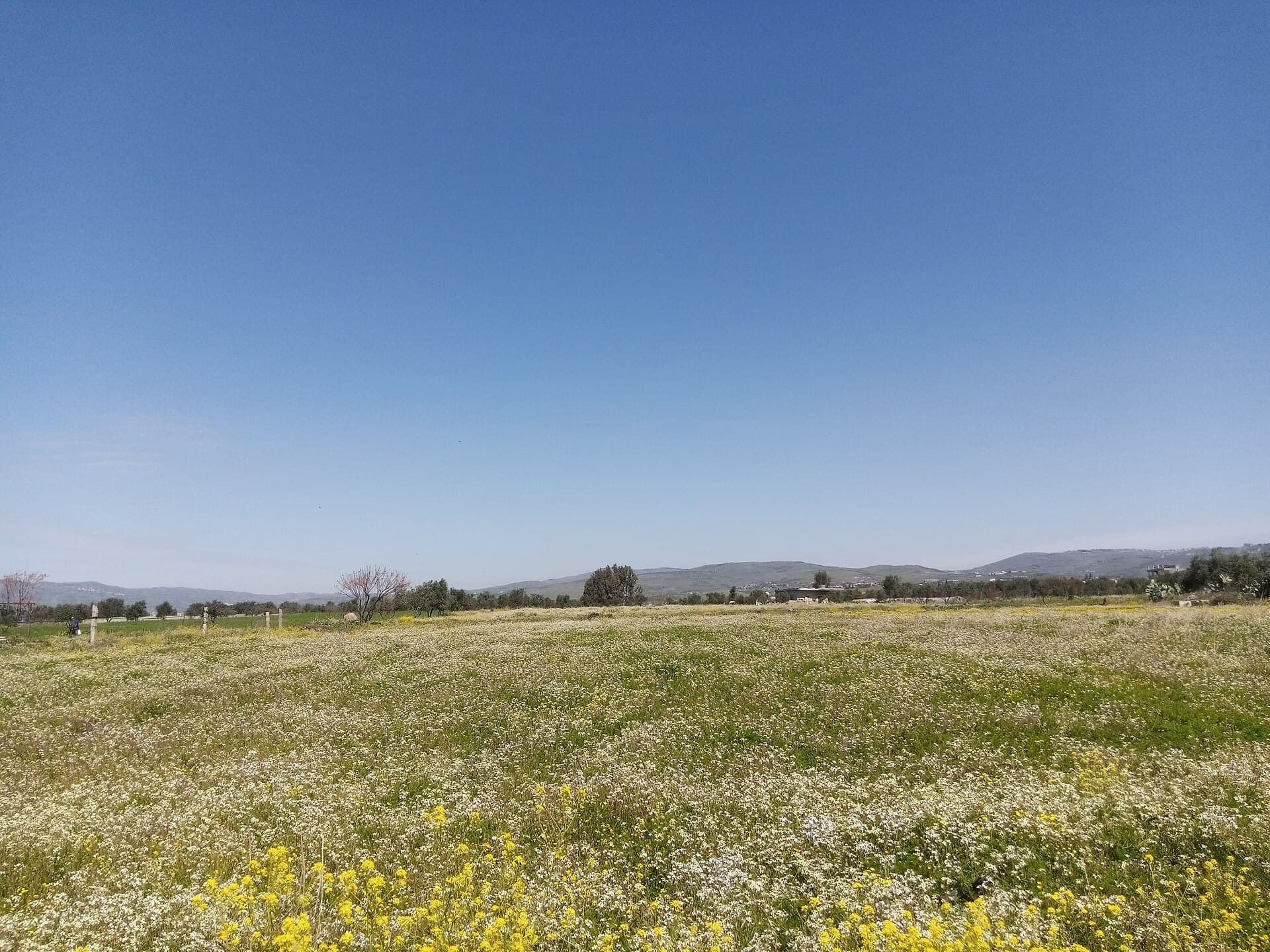
The short answer is April-May and October-November. Those four months are the one window that works across all four of Syria’s climate zones at once: not yet an oven inland, not yet wet on the coast, walkable all day in the desert.
The short answer
April, May, October, November. Cool enough to walk all day, mild enough to sit outside in the evening. March and December work too, with a higher chance of rain.
One country, four climates
Describing Syria with a single forecast gets it wrong. On the same day, Damascus and the coast can be ten degrees apart.
Damascus. At 680 metres, on the edge of the desert. January days reach 13 degrees and nights sit near zero; July runs to 38 degrees and dry. Rainfall is 130 mm a year, and snow comes every few years.
Aleppo. At 393 metres. Its winter is wetter than the capital’s: 11 degrees by day in January, 330 mm of rain a year, snow once or twice each winter. July and August reach 37 degrees.
The coast. Latakia and Tartus are Mediterranean. January days reach 16 degrees, but 760 mm of rain falls a year — winter here is genuinely wet. August is 31 degrees and humid.
The desert. Palmyra hits 39 degrees in July and drops to 3 degrees on January nights. No shade, long distances.
Summer: June to September
Inland, summer splits the day in two. Between 11:00 and 16:00, walking in the open in Damascus or Aleppo is hard work; a citadel has no shade and a ruin field has none at all. Those hours suit courtyards, mosques and vaulted markets — the stone vault of the Al-Madina Souq runs a few degrees cooler than the street.
The coast is difficult in another way: lower temperatures, high humidity, and nights that do not cool. Palmyra and the eastern desert are not advised in July and August. Carrying water is not enough. You need shade.
Winter: December to February
What winter closes is the clock, not the place. Days are short, sites go dark early, and a day trip to somewhere as far as Palmyra has to start at first light. Mountain roads — around Krak des Chevaliers and Saladin Castle — slow down in fog and rain. Boats to Arwad do not sail in a rough sea.
Then there is heating. Grid power is intermittent, most hotels run a generator, and outside generator hours the heater is off too. In winter the question to ask about a room is not the view. It is the heating.
What Ramadan changes
Ramadan 2027 begins on 7 or 8 February and ends around 9 March; the exact day is announced once the crescent is sighted. In 2028 it starts on 28 January.
Some restaurants close during daylight and those that open keep the curtains drawn. Markets open late in the morning and trade until midnight once the fast breaks — the liveliest hours of the month are there. The hour before the meal is the hardest of the day: no taxi to be found, and the one you find is in a hurry.
No visitor is expected to fast. What is expected is not eating, drinking or smoking in the street or in a vehicle during daylight. Hotel rooms and indoor spaces sit outside that.
The two Eids
Eid al-Fitr falls on 9 March in 2027 and Eid al-Adha around 16 May; both run several days. Government offices, banks and exchange bureaus close — sort your cash out beforehand. Buses and shared taxis fill up and hotel rooms get scarce. The city, meanwhile, is outdoors: markets, parks and sweet shops are full from the first morning.
Which month for what
For the desert, March-April and October-November. Palmyra and Qasr ibn Wardan can be walked all day in those months.
For the coast, May-June and September. The sea is still warm in September and the rain has not started.
The old cities work all year; in high summer only the shape of the day changes, shifting to early morning and evening.
Snow is a chance, not a plan: Damascus gets it every few years, Aleppo for a day or two each winter.
Tips
- April-May and October-November: the one window that works everywhere
- In summer, give 11:00-16:00 to courtyards and vaulted markets
- Ramadan 2027 starts 7-8 February; most restaurants close by day
- Banks and exchange bureaus shut for Eid — sort your cash out first
- In winter ask a hotel about generator and heating hours, not the view
Transparency
- How this was chosen
- This page carries the fastest-ageing information on the site: visa rules, exchange rates, border crossings and SIM prices change several times a year. The verification date above says when the facts were last put through their sources; for anything later, check your own foreign ministry travel advice and a Syrian consulate. No figure that is not known for certain is written here.
- Facts checked
- August 2026
- Last updated
- September 15, 2026