Al-Samra, Kessab’s Village by the Sea
Al-Samra sits in a V-shaped valley below Kessab, the last village on Syria’s coast before Turkey: dry-stone terraces, a 1942 rockfall and the Dayaa Dayaa houses.
- Opening hours
- Open settlement, all day
- Entry
- No charge for the village
- Duration
- 180 minutes
- Best time
- Spring and early summer; winters are wet
- Period
- —
- Address
- Kessab subdistrict, just south of the Turkish border, Latakia
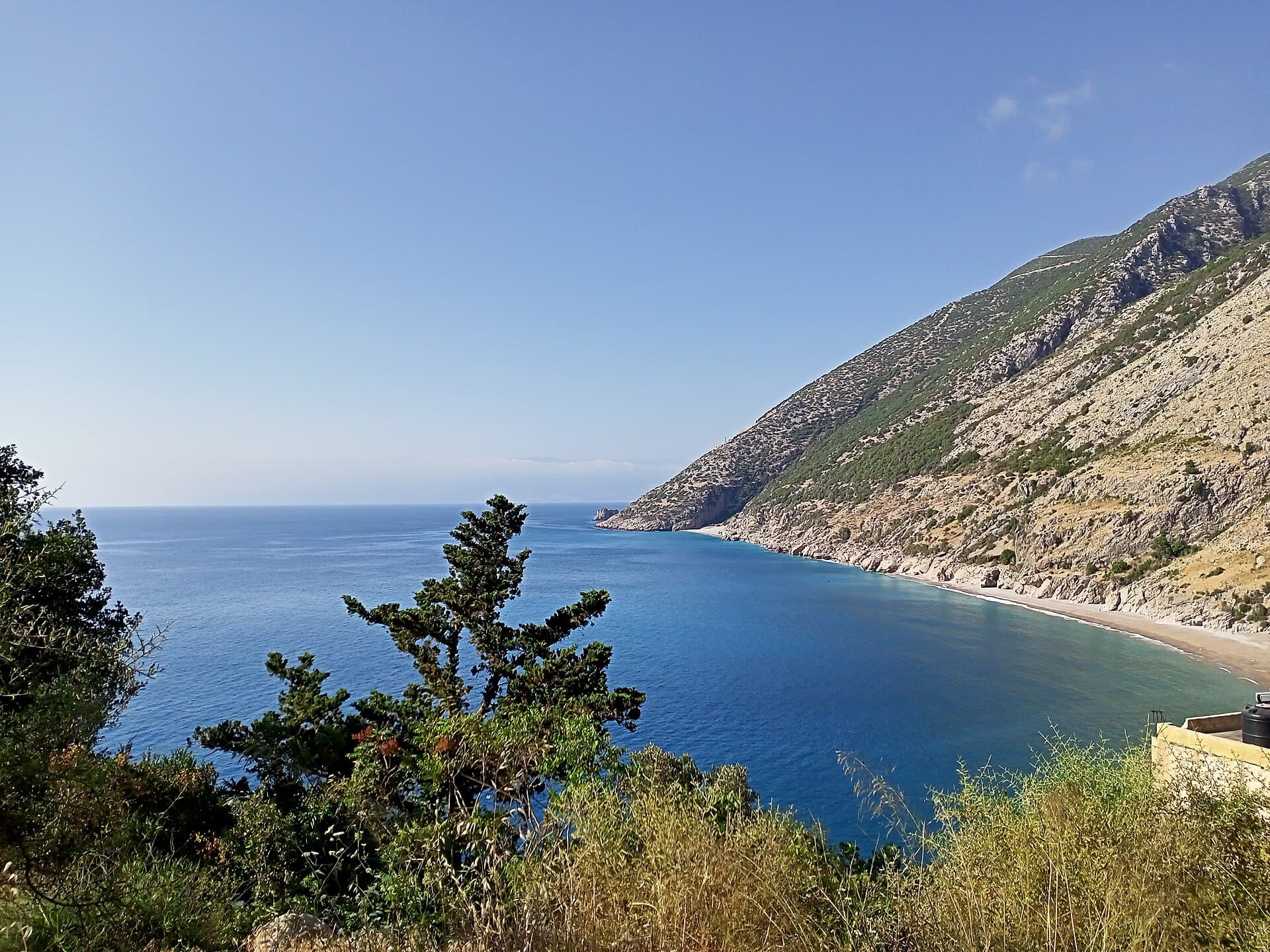
Al-Samra is a small village in a narrow valley that drops to the sea in the Kessab area, and the last settlement on Syria’s Mediterranean coast before the Turkish border. Two steep mountains squeeze it into a V shape, with rocky slopes facing the water and dense forest above. Many Syrians know the name from television: the comedy Dayaa Dayaa was filmed here over two seasons between 2008 and 2010.
Where it is and getting there
The village lies west of Kessab, at the end of the road that comes down from the mountains to the sea. The road passes Karadouran and then descends into the valley; the Turkish border is immediately to the north. It is narrow, winding and steep on the way down.
Why the shape of the valley matters
The two slopes that hem Al-Samra in have also shaped its history. The village has suffered several rockfalls over the centuries; the last, in 1942, killed many of its people. Fields on the slopes are divided by dry-stone walls known locally as hita, which step the steep ground into narrow plots. The village is known for its dried beans.
Residents speak Arabic and Armenian, and use Kessabli, the dialect particular to Kessab. The population is small, and in the woods the branches hang almost to the ground.
What the village has been through
Dayaa Dayaa (Arabic ضيعة ضايعة, ‘Lost Village’) was directed by Laith Hajjo and written by Mamdouh Hamada. Nidal Sijri and Bassem Yakhour play the leads, and in the series the village is called Umm al-Tanafes al-Fawqa. Visitor numbers rose after it aired. In March 2014 the village was drawn into the fighting around Kessab: rebel groups took Al-Samra on 25 March, and the army retook it on 27 April after a landing from the sea. The stone houses where the series was filmed were badly damaged in the earthquake of 6 February 2023.
How long it takes and when to go
Half a day together with Kessab. Two or three hours are enough to walk in the valley and look out to sea from the upper part of the village, where people also go for sunrise and sunset. Spring and early summer are the easiest seasons; rainfall is heavy in winter.
What most people miss
The hita walls on the slopes. They vanish easily in a photograph facing the sea, yet they explain how the village has held on: these dry-stone boundaries hold the steep soil in place and divide the fields.
Tips
- The road down is narrow and steep; do not leave the drive back until dark
- The border is immediately north — do not photograph military posts or follow paths towards the border
- Do not walk on top of the hita walls; they mark the field boundaries
- Put Kessab and Karadouran in the same day
Transparency
- How this was chosen
- Written by hand; opening hours, entry fee and coordinates are kept as data. A field that is not known for certain is marked as variable rather than guessed.
- Facts checked
- September 2026
- Last updated
- September 15, 2026