Latakia’s al-Saliba quarter on foot: mosques, a zawiya and Roman columns
A half-day walk in al-Saliba, Latakia’s oldest quarter: the Roman arch, two mosques that began as Crusader churches, a zawiya of 1291 and Roman columns.
- Duration
- 2.5 hours
- Distance
- 0.8 km
- Difficulty
- Easy
- Best season
- March–May, October–November
- stops
- 6
- City
- Latakia
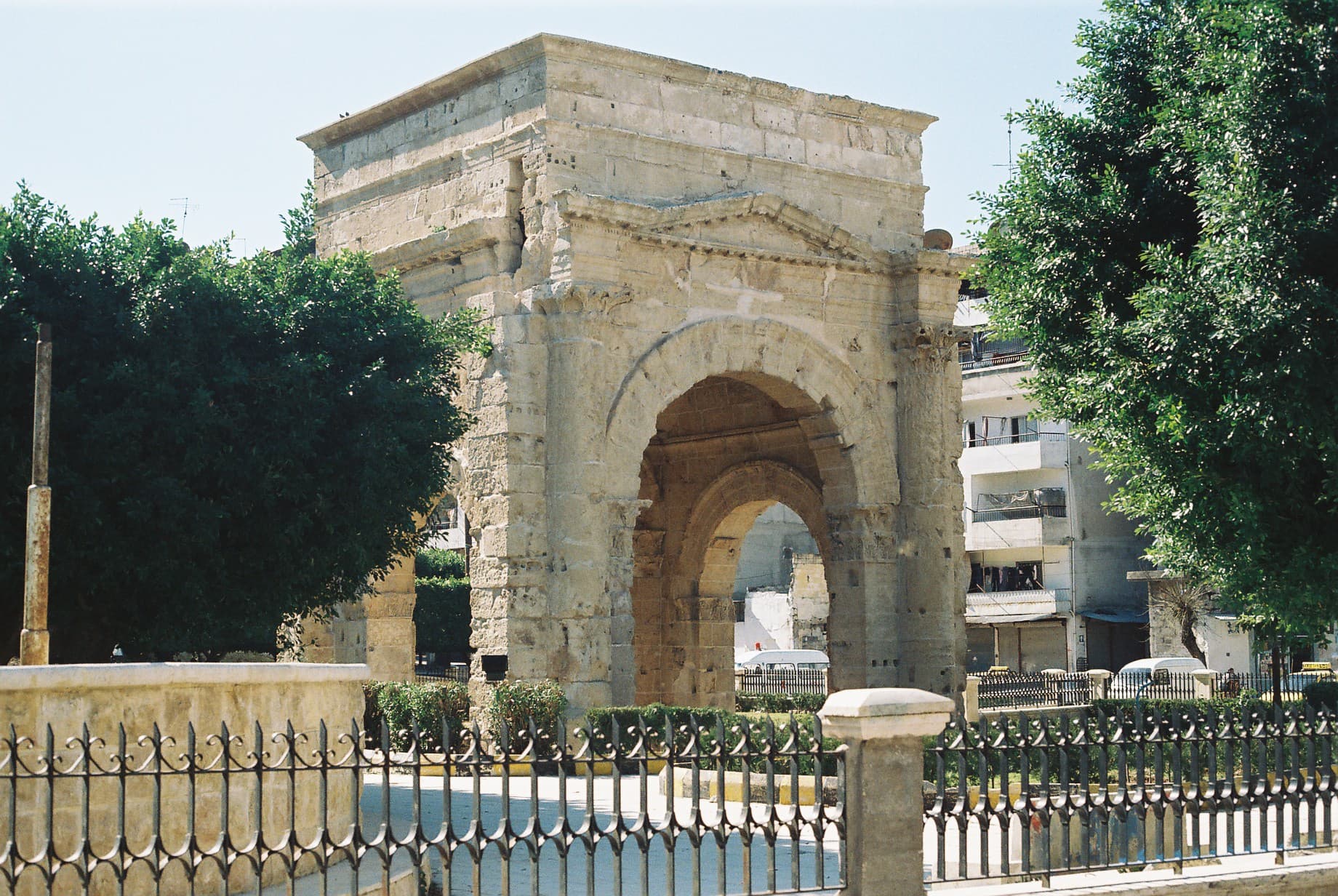
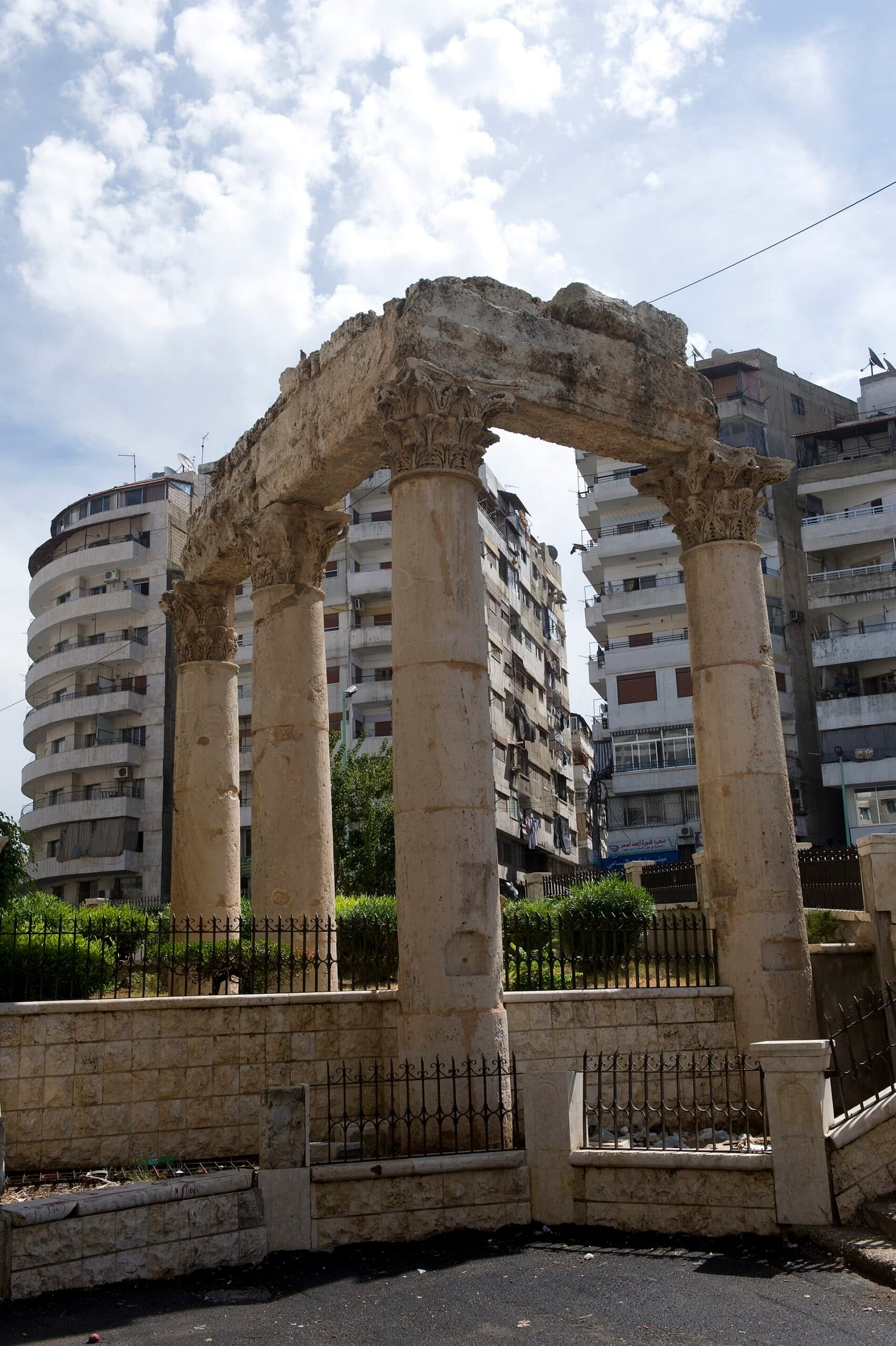
Al-Saliba is the oldest quarter of Latakia. Its lanes hold several centuries: a Roman arch and four columns, two buildings that were Crusader churches before Saladin took the city, a Mamluk zawiya of 1291 and an Ottoman mosque recorded in a decree of 1749. A zawiya is a small lodge where Sufis met to pray. This walk starts at the Roman arch, passes the quarter’s three mosques and its zawiya, and ends at the Colonnade of Bacchus. Six stops, about 800 metres on foot, two and a half hours.
The route
The Roman arch stands in a small park on Port Said Street and is visible from the road. Walk west from the arch: the Al-Saliba Mosque is about 200 metres on, among the old lanes. The concrete hall at the front is new; the historic prayer hall is behind it. The Al-Fattahi Zawiya is in the same quarter, about 100 metres away, right next to the new Al-Fattahi Mosque. Asking for the new mosque is the quickest way to find it. The Al-Mashati Mosque comes about 100 metres later, on Yarmouk Street; its west door opens onto a narrow lane that runs north to the Beit al-Daya market. The Qubba Mosque is about 170 metres further, opposite the old Yasin Mosque, which was repaired in 2011. You know it by the green dome that shows from the street. The Colonnade of Bacchus is just east of it, in a small fenced garden. From the columns walk 200 metres southwest and you are back at the arch.
Timing
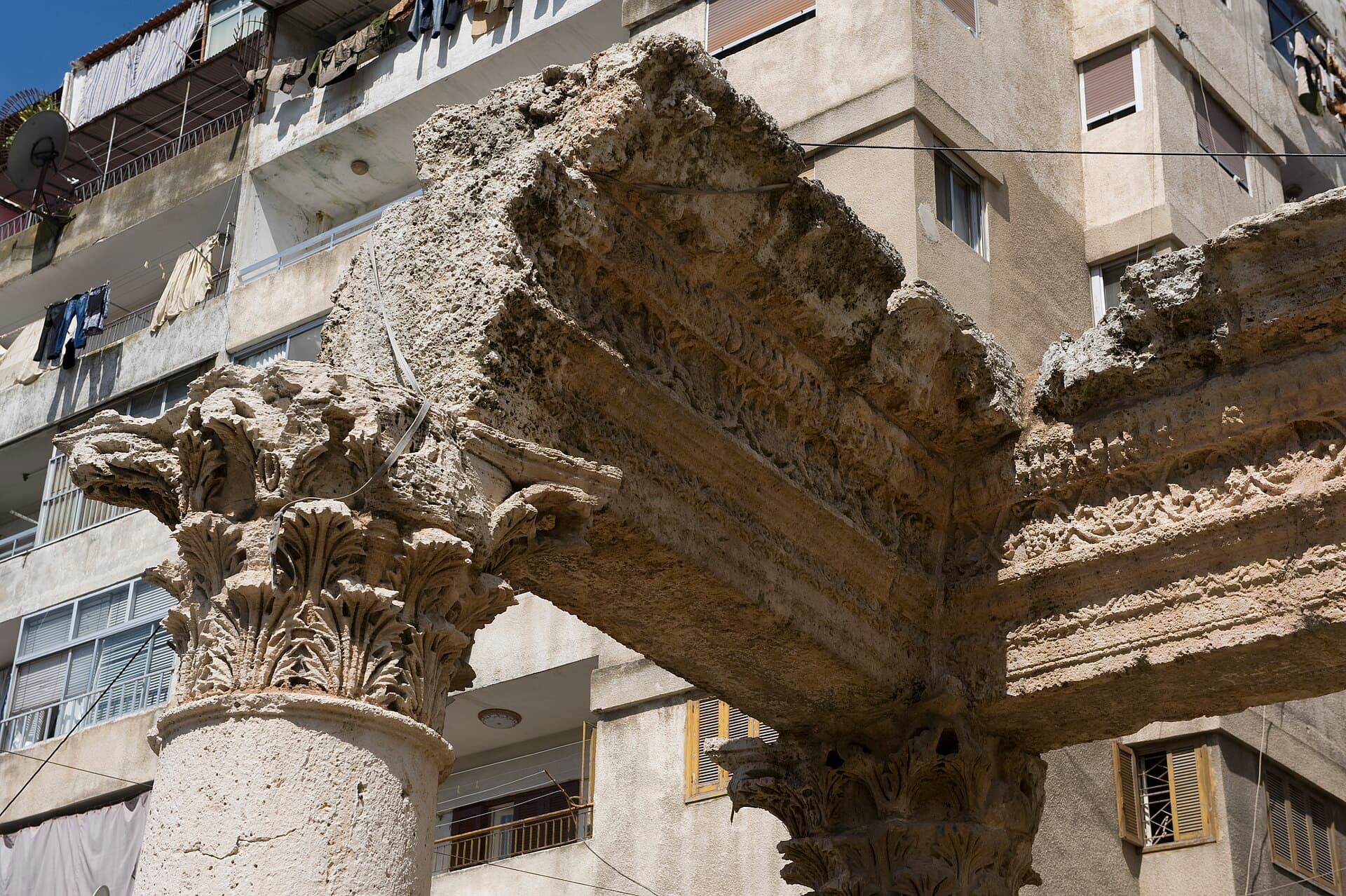
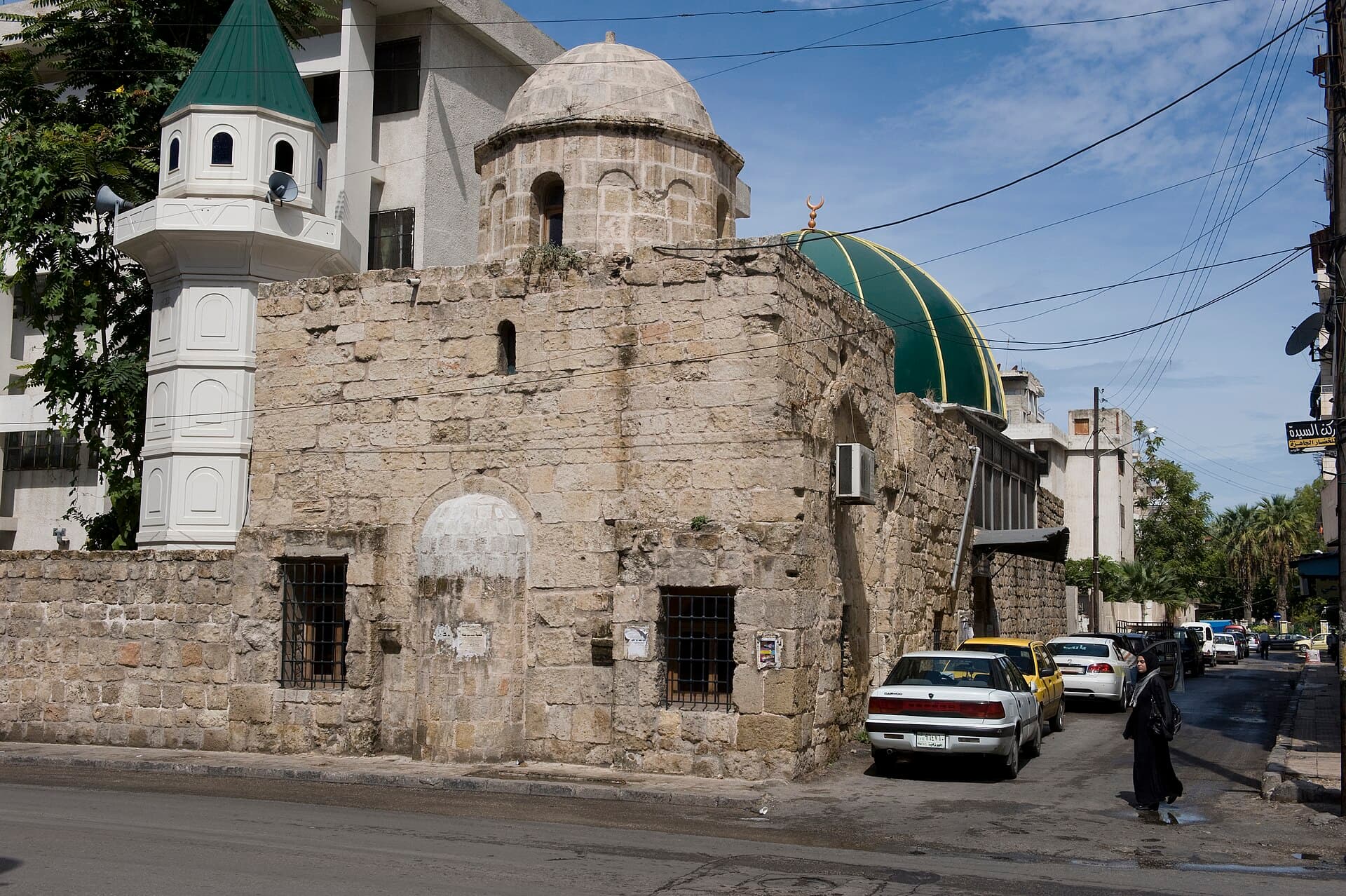
Be at the arch at 09:00. In morning light the reliefs on its four faces throw shadows; in the noon sun they flatten out. The arch is linked to the reward the city received after Septimius Severus won the throne in 194. Walking round its four faces takes twenty minutes. At 09:30 you are at the Al-Saliba Mosque. In the inner hall the weight of four domes comes down through four arches onto a single round column in the middle. The minaret’s wooden lattice balcony sits on carved stone brackets. Twenty minutes is enough. At 10:00, the Al-Fattahi Zawiya: a small rectangle built for dervishes in 1291. Muhammad Agha ibn Lutfi added the octagonal minaret in 1746, as the marble inscription over the door on the minaret’s east face records. At 10:20, the Al-Mashati Mosque. In the 12th century it was the Latin church of St John the Great, and Saladin turned it into a mosque in 1188. The wall of large stones in the south part of the prayer hall is thought to be what remains of the church. At 10:45, the Qubba Mosque. The same break of 1188 shows here: a Crusader chapel became a school under Saladin and a mosque in 1710. The cross-shaped windows on its east and west walls tell that story. The green dome you see from the street was added in 2004. At 11:05, the Colonnade of Bacchus. The four granite columns are 8 metres tall. In the 14th century the gaps between them were walled up and they became part of a mosque, which is how Luigi Mayer’s engraving of 1810 shows them. Take fifteen minutes to walk round the garden and look at the underside of the beam. The walk ends at 11:30, before the noon prayer.
Take care
Whether the Al-Saliba Mosque, the Al-Fattahi Zawiya and the Al-Mashati Mosque are open to visitors today is not confirmed. If a door is shut, look at the minaret, courtyard and walls from outside, and ask about hours in the quarter. The locations of the zawiya and the Al-Mashati Mosque could not be confirmed by two independent sources, and only the arch and the Al-Saliba Mosque are marked on the map; ask for both buildings by name. Four stops are places of worship: arms and legs covered, a headscarf for women, and no lingering in the prayer hall during prayers. The arch sits about 2 metres below street level behind railings. The Colonnade of Bacchus is fenced too, and both are seen from the street. The arch, the Qubba Mosque and the colonnade are free; check at the door for the others. Since the events on the coast in March 2025, conditions in the city centre can change, so check the current situation with local sources before you set out. Summers are humid, so walk in the morning.
The route on a map
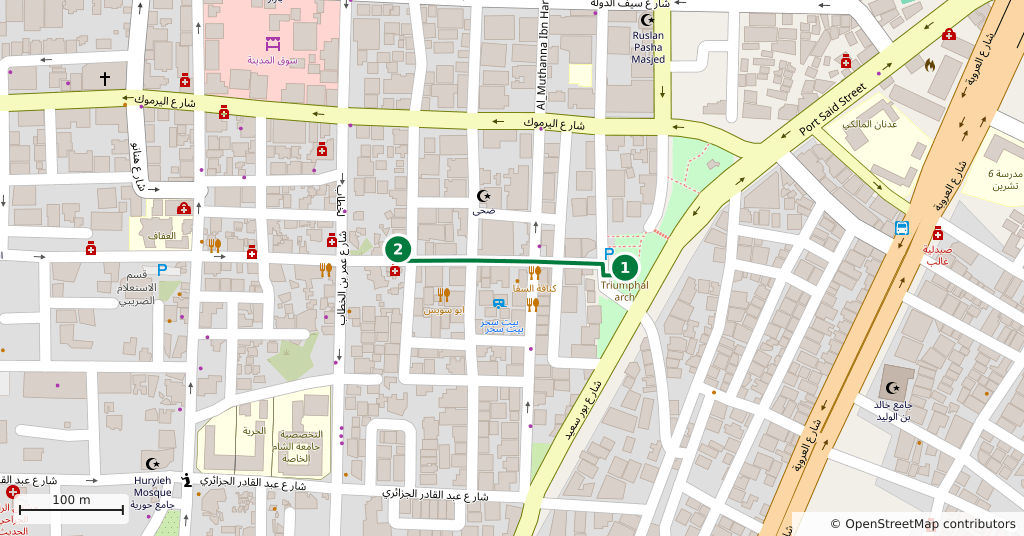
Stops along the route
- 01
- 02
- 03
- 04
- 05
- 06
Transparency
- How this was chosen
- The stops and their order were set by hand. The line on the map is real road geometry, not a straight hop between pins; distance and duration belong to that itinerary.
- Facts checked
- September 2026
- Last updated
- September 15, 2026