The Great Mosque of al-Nuri, Homs
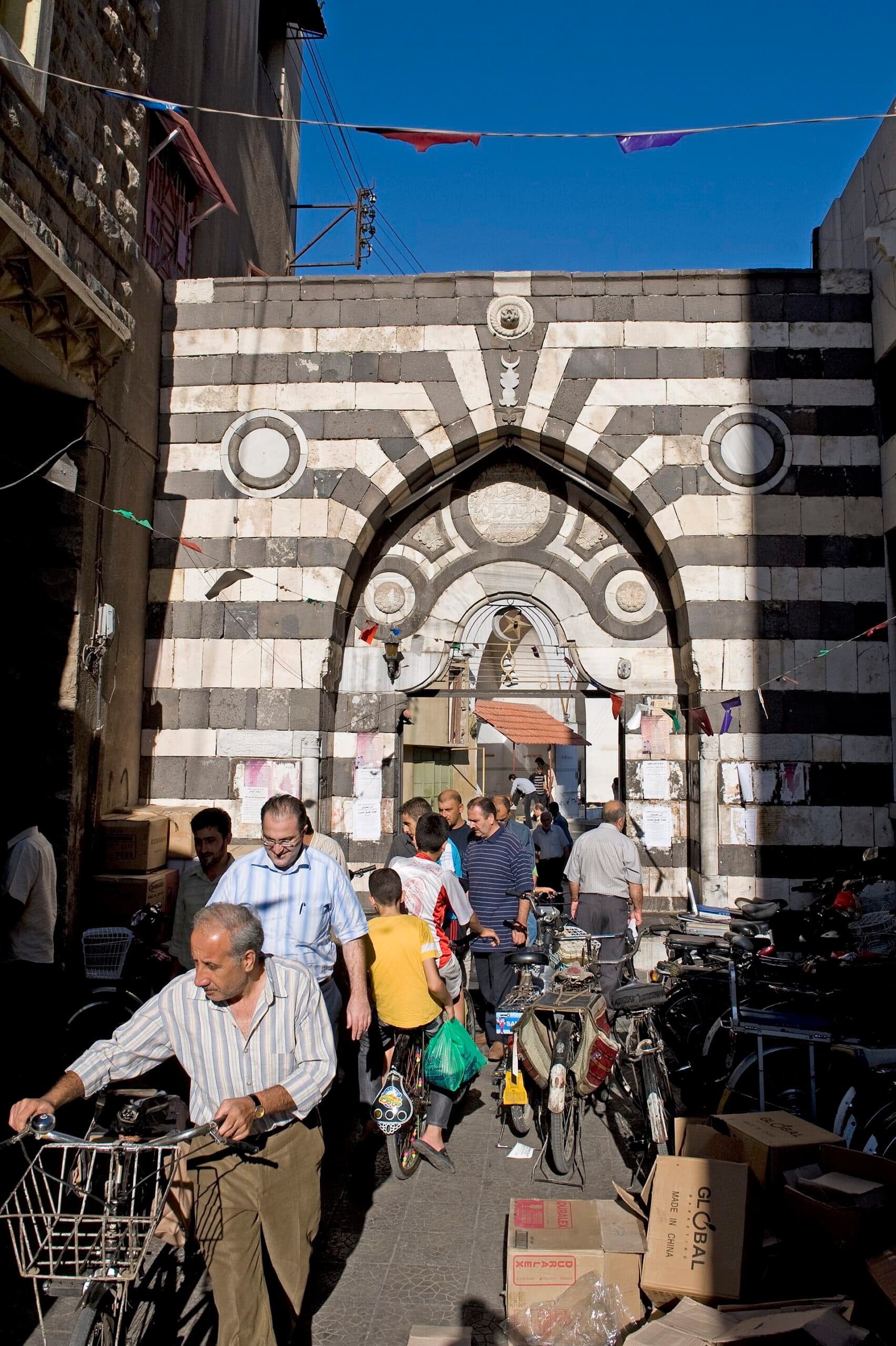
A sun temple, then the Church of St John, then a mosque. Inside the souq: a portal banded in black basalt and white stone, a basalt minaret, reused Roman columns.
- Opening hours
- Daylight hours, outside prayer times
- Entry
- Free
- Duration
- 40 minutes
- Best time
- Morning, as the souq opens and the courtyard is still empty
- Period
- Roman temple — church — Zangid mosque
- Address
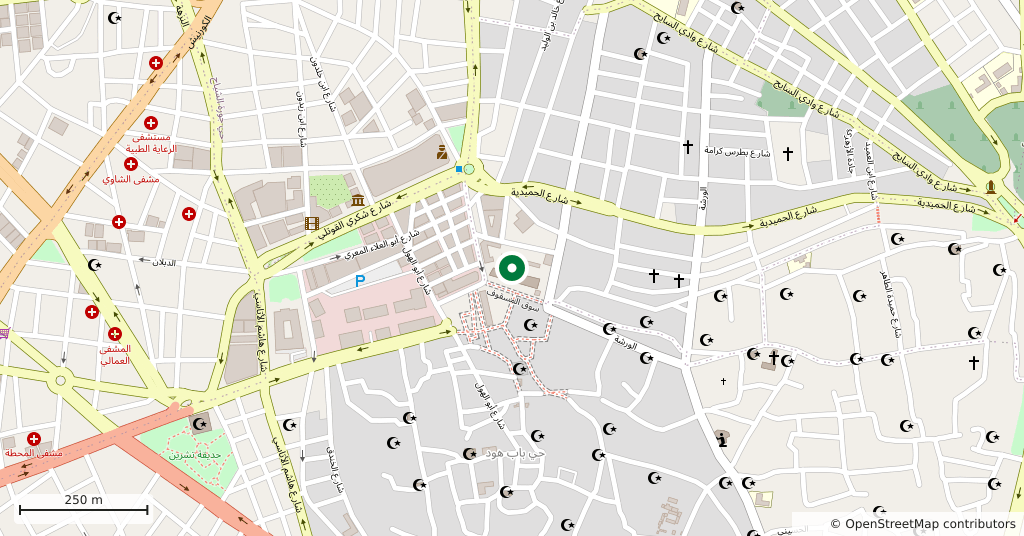
- Old city souq, Homs
The main mosque of Homs, and the building that stacks three of the city’s religious layers on one floor. It sits inside the souq, between the Hasba and Qaysariyya markets. The first thing you see from outside is the portal: courses of black basalt alternating with white stone, the two stones of Homs side by side.
How often the ground changed hands
In the Roman period a temple to the sun god Elagabal stood here; the city was then called Emesa and the temple was its most important building. Under the emperor Theodosius the temple was turned into the Church of St John the Baptist. After the Muslim conquest part of the church came into use as the Friday mosque. Writing in 1154, the geographer al-Idrisi called it one of the largest mosques in any city in Syria.
Where the name comes from
Most of the present building went up under Nur al-Din Zangi, between 1146 and 1174, and the mosque takes its name from him. Aleppo, Hama and Homs each have a mosque called al-Nuri, all of them from the same ruler’s building programme.
What to see
The minaret is basalt, square-shafted and heavy. The prayer hall stands on columns with Corinthian capitals reused from the Roman building. Fragments of Byzantine mosaic survive in the arch of the mihrab. In the courtyard is a large basin cut from basalt, most likely an ancient vessel.
Getting there
You walk in through the souq; there is no vehicle access. This part of the old city was badly damaged in the war and repairs are still going on, so which lanes are open and which door you enter by can change. Ask in the souq and someone will point you through.
Tips
- Stop at the portal: the banding of black basalt and white stone is the signature of Homs
- The Corinthian capitals in the prayer hall are reused Roman work and do not match one another
- Look closely at the arch of the mihrab; fragments of Byzantine mosaic are still there
- Cover shoulders and knees; you reach it on foot through the souq, not by car
Transparency
- How this was chosen
- Written by hand; opening hours, entry fee and coordinates are kept as data. A field that is not known for certain is marked as variable rather than guessed.
- Facts checked
- August 2026
- Last updated
- September 15, 2026