Villages of the Valley of the Christians: a day from Marmarita to Mizyeneh
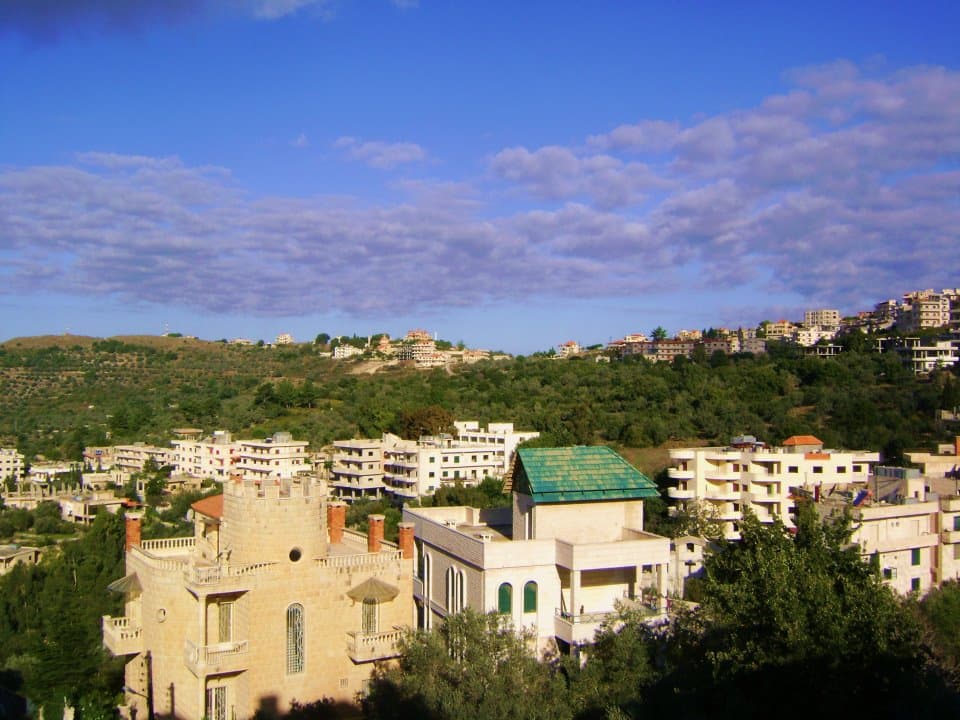
A day through the villages of the Valley of the Christians: old Marmarita, the Fawwar spring, Saint George’s Monastery, Krak and a basalt church in Mizyeneh.
- Duration
- 8 hours
- Distance
- 19.1 km
- Difficulty
- Easy
- Best season
- April–June, September–October
- stops
- 5
- City
- Homs
Most visitors squeeze the Valley of the Christians, Wadi al-Nasara, into the gap between Krak des Chevaliers and the monastery. This route crosses the valley by its villages. It starts in Marmarita in the west, stops at a karst spring, Saint George’s Monastery and the castle, and ends at a basalt village church in Mizyeneh at the mouth of the valley. Five stops and close to 20 kilometres by car. No drive between stops takes half an hour; what stretches the day is the castle.
The route
In Marmarita, leave the car in the village and walk the old core. The village sits on the slope of Jebel al-Sayih at 850 metres. The old market, called the Sehle, keeps its stone vaults and arches. Right beside it, a narrow lane barely wide enough for a small car runs under the Dehliz arch.
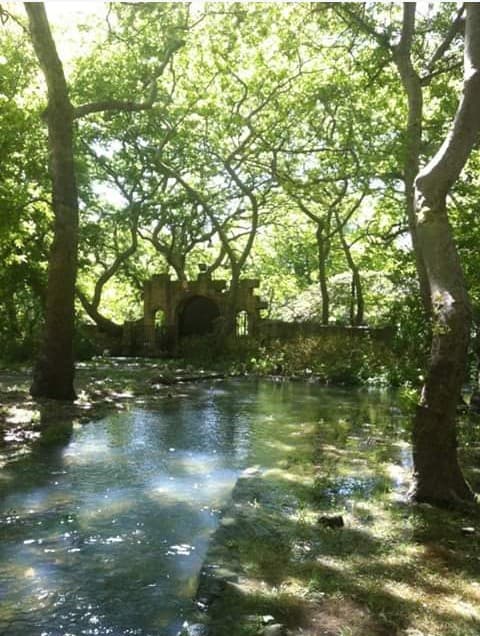
From here, drop into the valley and drive to the village of Zweitina. The Fawwar spring is on the slope facing Saint George’s Monastery. The water gushes out at unpredictable intervals: sometimes three times a day, sometimes not for months. On a short stop, not seeing it overflow is normal. The two mouths of the cavity in the limestone are still worth a look; the water comes out of the north mouth and sinks back into the ground at the south one.
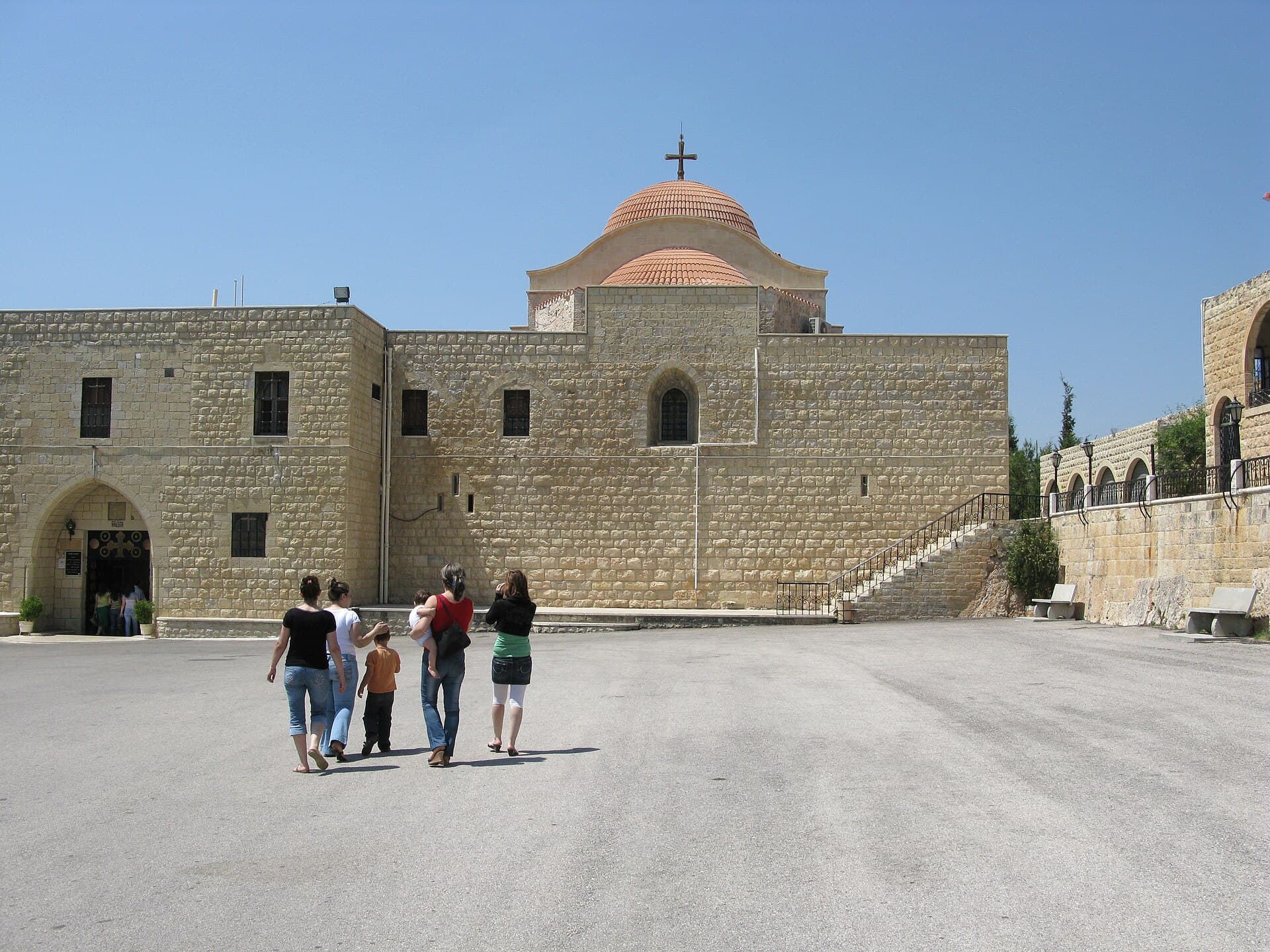
The monastery is on the opposite slope, in Meshtaye. The upper church does not take long. What matters is below the courtyard: go down the stairs and you reach a 13th-century chapel with a small iconostasis, the carved screen that holds the icons. The two columns at the entrance are Byzantine; the door itself is not.
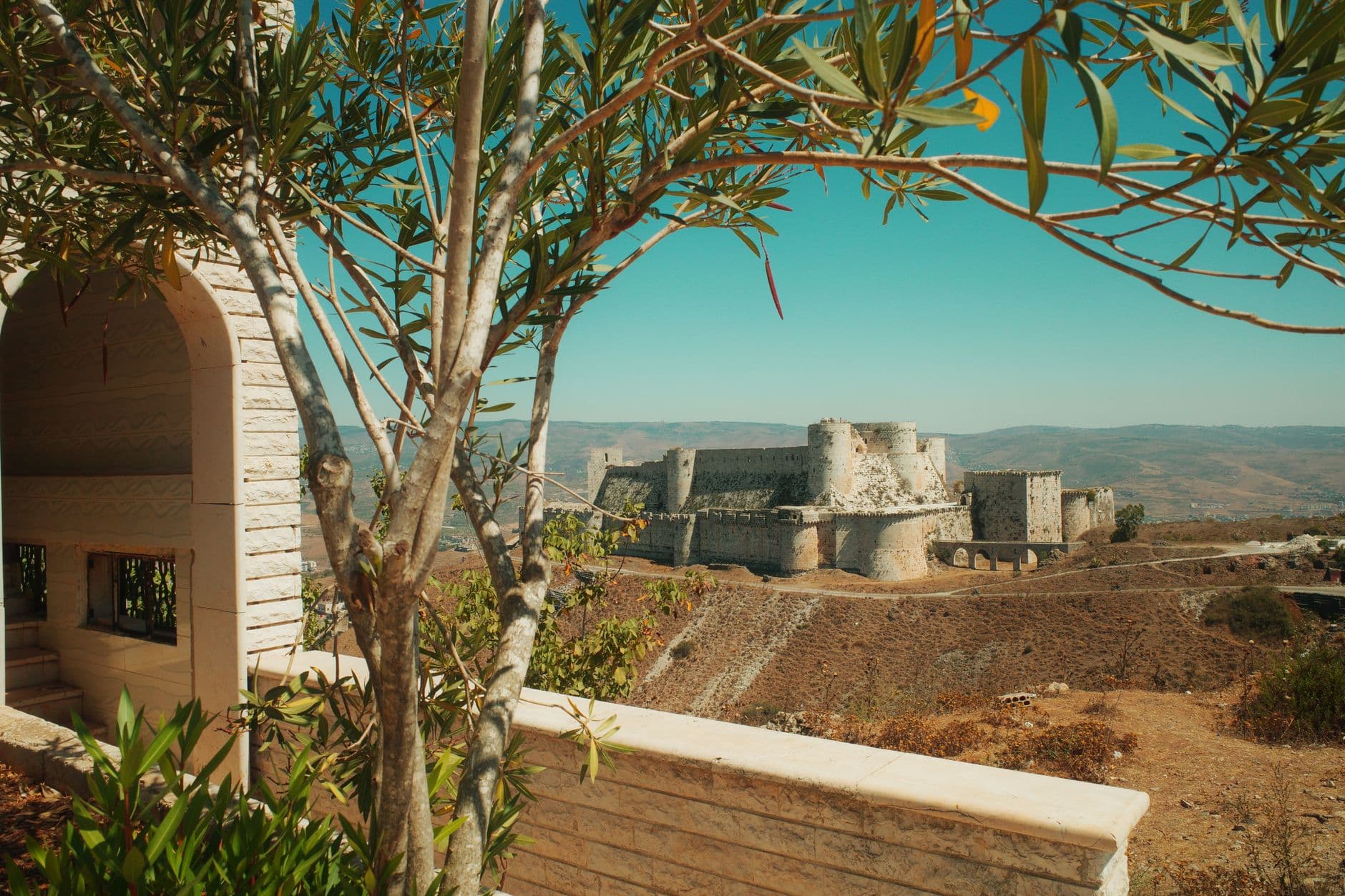
Krak des Chevaliers is south-east of here, about fifteen minutes by car. Leaving the castle, carry on east; the road reaches the mouth of the valley and the village of Mizyeneh. Al-Shahhara Church stands below the hill the village was founded on. It is a long, vaulted body of black basalt. Inside are sacred vessels dated 1814 and the remains of a carved wooden iconostasis dated 1889; the new basalt iconostasis stands beside the old one.
Timing
Be in Marmarita at 09:00 and give the village an hour. Head down to the Fawwar around 10:15. The spring keeps no timetable, so waiting is wasted time; twenty minutes is enough. Move on to the monastery at 10:45. The courtyard fills in the afternoon, and in the morning the lower chapel is quiet.
Take a lunch break in the valley and go up to Krak at 14:00. The castle is open from 09:00 to 17:00. The inner court falls into shade in the afternoon, and the castle deserves two hours. Leave at 16:00 and you reach Mizyeneh around 16:30.
Al-Shahhara Church receives visitors at set hours through the week, but those hours are not fixed. If the door is shut, ask for the church keeper in the village. If seeing the church matters more to you, start the day in Mizyeneh; you will then reach Krak at midday, when the court has no shade.
Take care
Public transport between the villages is sparse, so plan the day around a car. The Fawwar flows hardest in winter and early spring; in summer it may not overflow for months. Snow can fall on Marmarita in winter, so check the road before setting out in that season.
Feast days are crowded. Marmarita fills up for its carnival on 14 August, the monastery for its feasts on 6 May and 14 September, and al-Shahhara Church on 25 March and 15 August. The monastery and al-Shahhara are working places of worship: cover shoulders and knees, and ask before taking photos during a service. The stone stairs at Krak are worn and slippery. Entry fees at the castle, the monastery, the spring and the church change, so confirm them at the entrance.
The route on a map
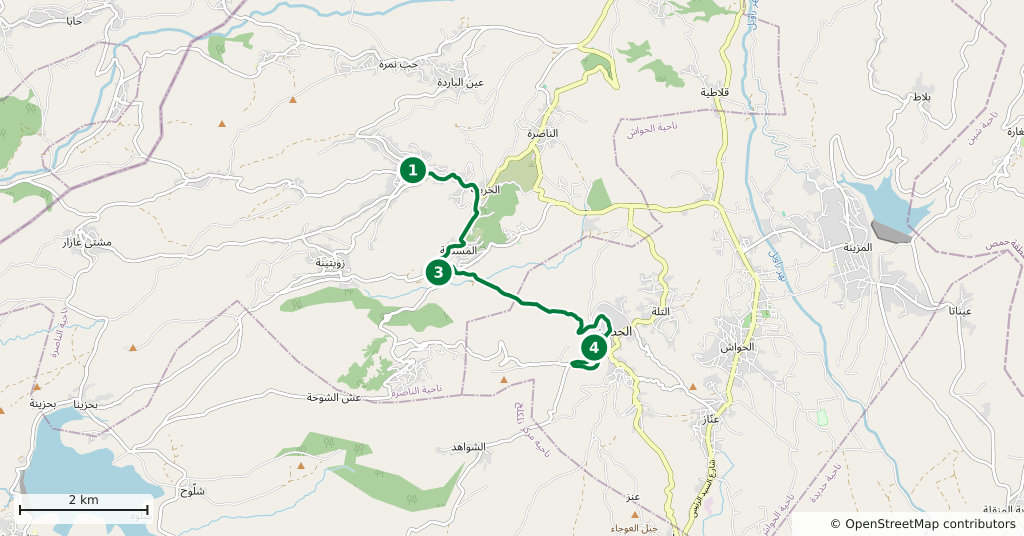
Stops along the route
- 01
- 02
- 03
- 04
- 05
Transparency
- How this was chosen
- The stops and their order were set by hand. The line on the map is real road geometry, not a straight hop between pins; distance and duration belong to that itinerary.
- Facts checked
- September 2026
- Last updated
- September 15, 2026