The Covered Souqs of Homs
A maze of roofed lanes running from the Great Mosque of Homs towards the old citadel: grocers, cobblers, knife-sharpeners, and the evening as the busiest hour.
- Opening hours
- Shop hours vary; busiest in the evening
- Entry
- Free
- Duration
- 60 minutes
- Best time
- Late afternoon into evening, when the souq is liveliest
- Period
- Mamluk — Ottoman
- Address
- Old city, south and east of the al-Nuri Mosque, Homs
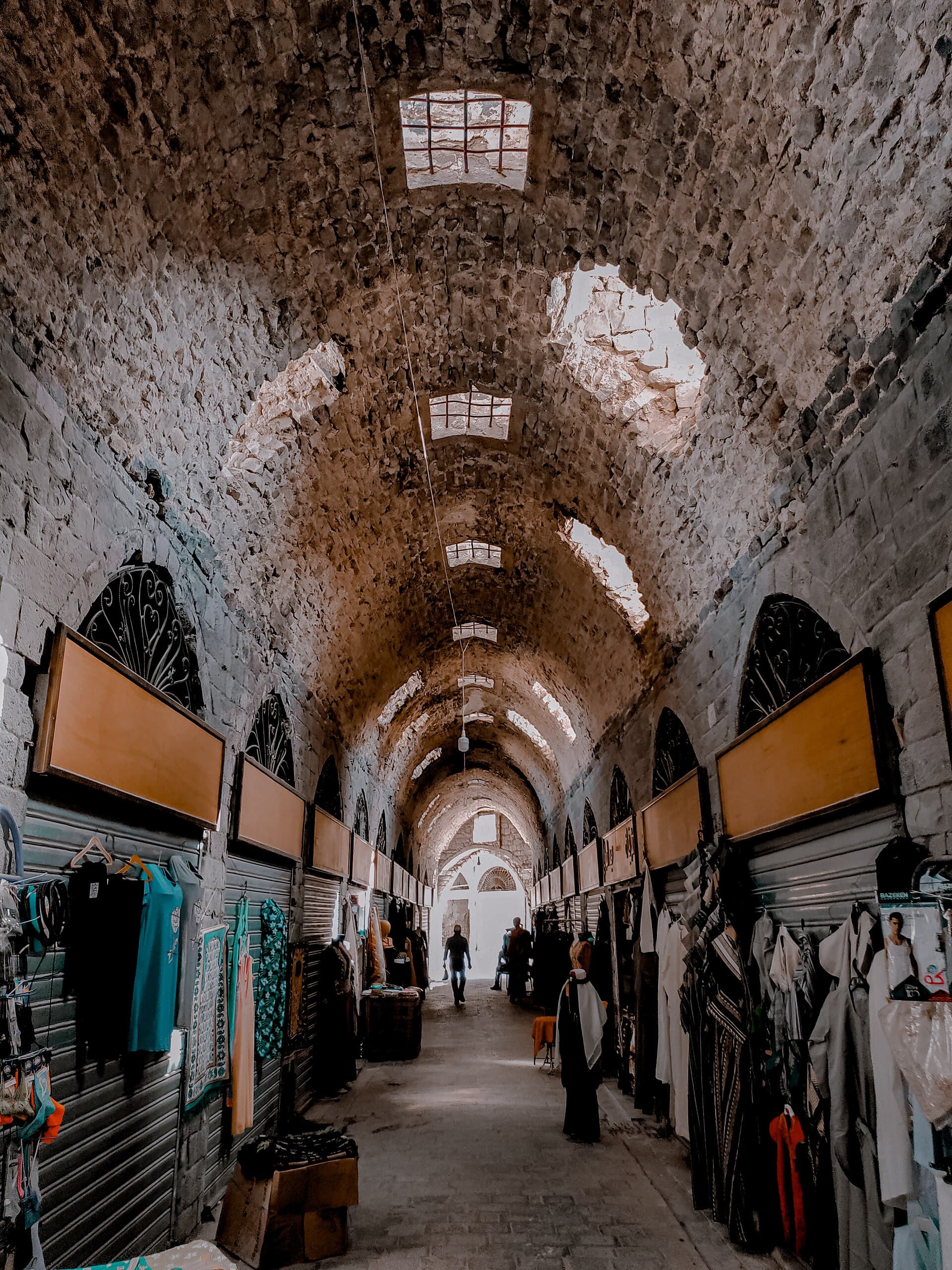
The covered souq of Homs is not one street but a network of narrow roofed lanes running south and east from the Great Mosque, al-Nuri, towards the old citadel. Clothing and cloth shops, grocers and craft workshops line the vaulted passages. The souq is at its busiest in the evening.
Where the souq begins
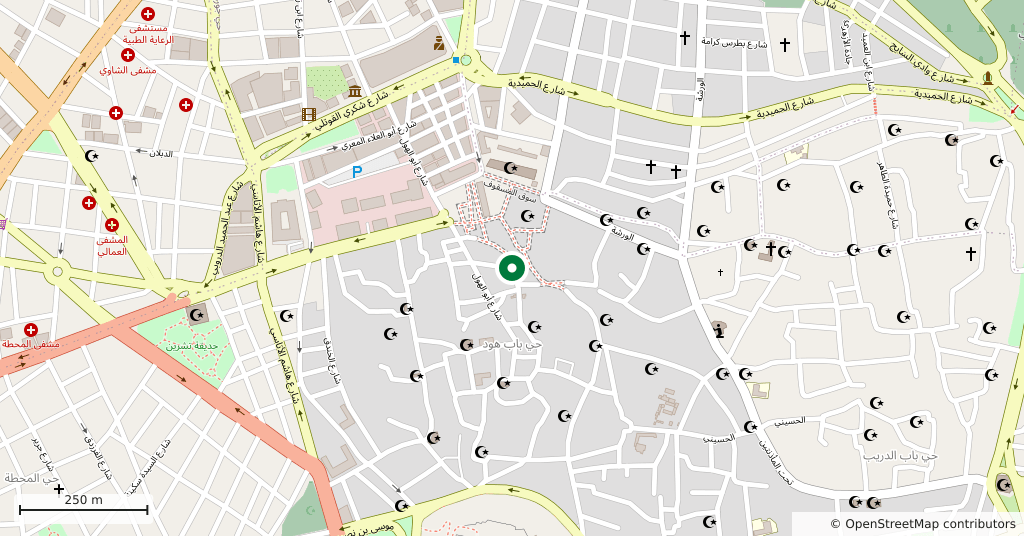
The Great Mosque sits at the north-west corner of the souq. Heading south and east, the lanes narrow and run into one another. OpenStreetMap marks 9 separate covered passages in this area. The Arabic name is al-Souq al-Masqouf, simply the roofed market. The Qasimi Mosque stands between this covered souq and the vegetable market (Souq al-Khudra), which makes it a useful landmark inside the maze.
What is sold
Grocers and clothing shops take up most of the souq. Between them are workshops for carpenters, cobblers, metalworkers and knife-sharpeners — shops that work for the city’s own needs, not for visitors. One of the old markets still carries the name Souq al-Harir, the Silk Souq.
Why Homs is known for its souqs
From the 16th century the city was known for silk and wool weaving, especially cloth striped with gold thread. In the 1870s about 5000 looms were working in Homs and nearby Hama together, and a British consul called Homs “the Manchester of Syria”. A French visitor in the Ottoman period wrote that the walls and citadel were in good repair but everything inside was in decay; in his view, only the covered markets had kept their beauty.
Visiting
Entry is free and you walk through. The old city was badly damaged in the war; restored passages and ones still closed can sit side by side, and asking in the souq is the quickest way to learn which lanes are open. The black-and-white stone portal of the al-Nuri Mosque is at the edge of the souq, an easy place to start.
Tips
- Use the Qasimi Mosque as a landmark: it sits between the covered souq and the vegetable market
- Go towards evening; that is when the souq is at its busiest
- Which passages are open can change, so ask in the souq
- The portal of the al-Nuri Mosque is at the souq's edge; start your walk there
Transparency
- How this was chosen
- Written by hand; opening hours, entry fee and coordinates are kept as data. A field that is not known for certain is marked as variable rather than guessed.
- Facts checked
- September 2026
- Last updated
- September 15, 2026