The Ibrahim ibn Adham Mosque and Tomb
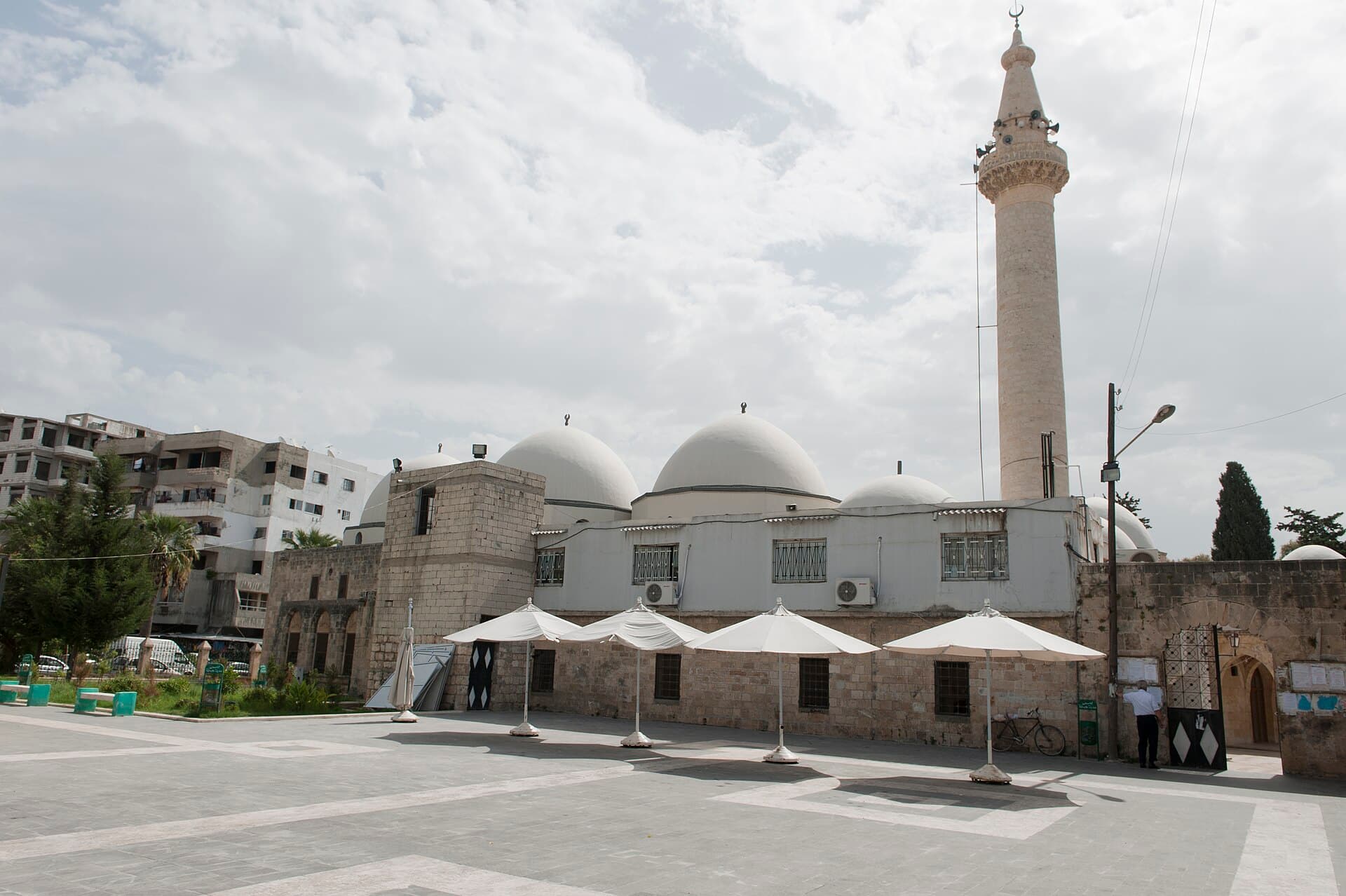
A mosque and shrine in the middle of Jableh, just north of the Roman theatre: a Seljuk tomb, a Mamluk mosque built onto it, Ottoman domes above them both.
- Opening hours
- Daylight hours; visiting stops at prayer times
- Entry
- Free
- Duration
- 40 minutes
- Best time
- Morning, before the afternoon call to prayer, while the courtyard is empty and shaded
- Period
- Seljuk — Mamluk — Ottoman
- Address
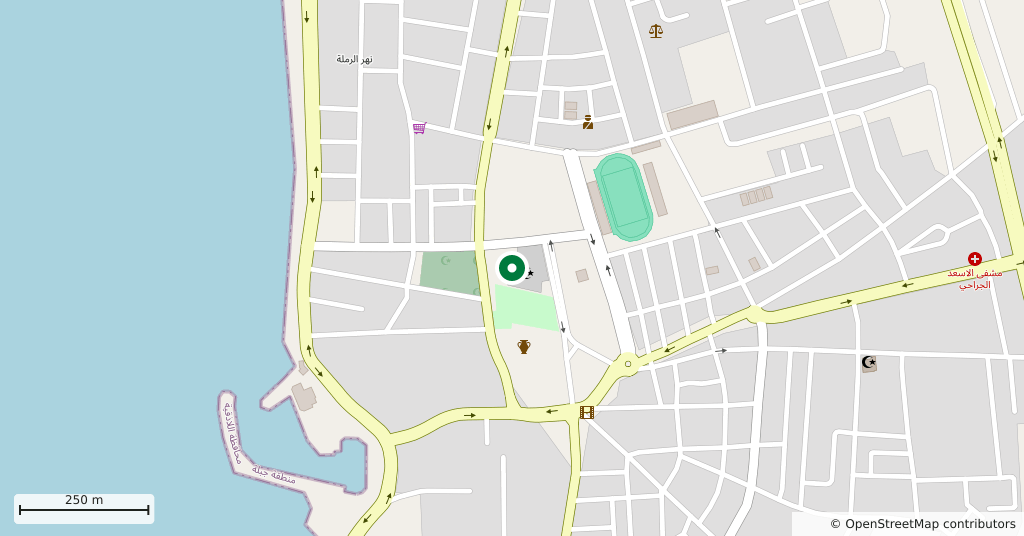
- Old centre of Jableh, north of the Roman theatre
A mosque and shrine in the middle of Jableh, just north of the Roman theatre. It is the most visited building in the town. It takes its name from Ibrahim ibn Adham, an ascetic of the eighth century. The sources say he died on a naval campaign against the Byzantines and was buried in a fort on an island, and that fort has been identified with the site of present-day Jableh.
Getting there
In Jableh, 25 kilometres south of Latakia, inside the old centre. Shared minibuses run along the coast road and set you down a few minutes’ walk away. The domes and the minaret are visible from the square; anyone who finds the theatre will find the mosque.
What to see
The building has three parts: the prayer hall, the courtyard and the tomb chamber. The north door opens straight into the courtyard, the south door into the tomb. The prayer hall is Mamluk; the qibla wall carries the mihrab and a minbar of greyish-white marble. The tomb chamber is square in plan, carries a sandstone dome on an octagonal drum, and the grave of Ibrahim ibn Adham lies in the middle of the room. Look at the door arches: courses of black and white stone in ablaq work, with voussoirs cut to interlock.
How it reached today
A church stood on this spot first and was later demolished. The earliest thing built over the grave was the tomb, and the Seljuks built it. Under the Mamluks a mosque and a minaret were added to the tomb, along with a fountain and a portal. Under the Ottomans the domes were raised and the minaret renewed, and that is the most visible layer in the building today. In the twentieth century it went through several repairs: the minaret was rebuilt after damage, roofs and architectural details were renewed, small domes were added, and a religious school was attached alongside.
How long it takes
Forty minutes. The courtyard, the prayer hall and the tomb chamber are all small. Visiting stops at prayer times, so wait and go in afterwards.
What most people miss
The old semicircular mihrab on the south wall of the tomb chamber. It sits between two rectangular windows, under a pointed arch, flanked by columns with muqarnas capitals. Most visitors look at the grave and leave without seeing the oldest piece in the room.
Tips
- This is a working mosque: cover arms and legs, and women need a headscarf
- Shoes come off at the door of the prayer hall, not in the courtyard
- Ask before photographing in the tomb chamber, and not while people are praying there
- Add the Roman theatre and the souq to the same walk; both are a few streets away
Transparency
- How this was chosen
- Written by hand; opening hours, entry fee and coordinates are kept as data. A field that is not known for certain is marked as variable rather than guessed.
- Facts checked
- September 2026
- Last updated
- September 15, 2026