The Old Centre of Jableh
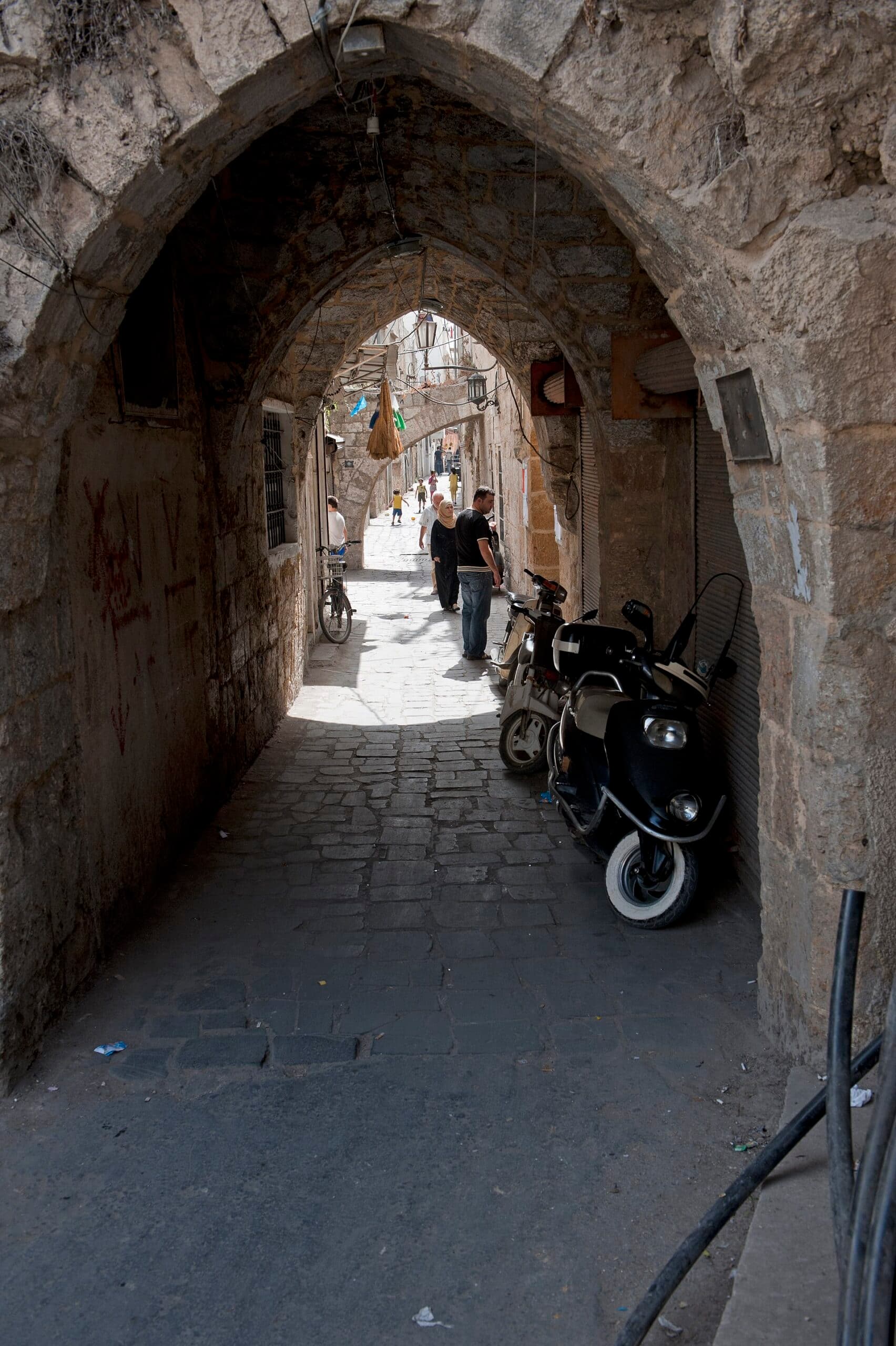
A coastal town 25 kilometres south of Latakia: a market built around a Roman theatre, vaulted passages, the mosque of Ibrahim ibn Adham and a fishing harbour.
- Opening hours
- Streets at any hour; market morning to evening, mosque at prayer times
- Entry
- Streets and mosque free; check at the gate for the theatre
- Duration
- 120 minutes
- Best time
- Morning as the market sets up; late afternoon by the harbour
- Period
- Roman — Mamluk — Ottoman
- Address
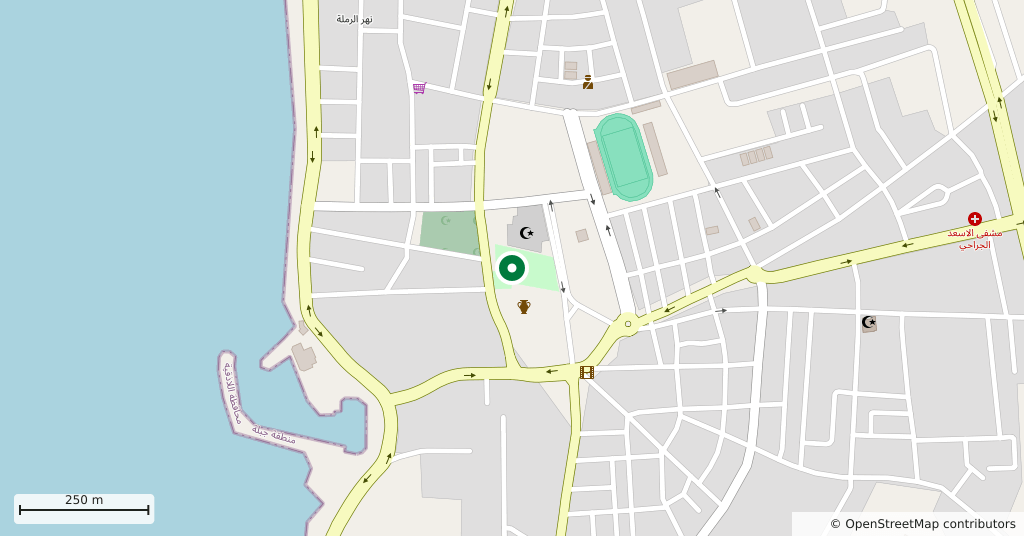
- Old centre, between the theatre and the harbour, Jableh
Jableh is a coastal town 25 kilometres south of Latakia. Its centre is not one square but a handful of streets linked by vaulted passages: the Roman theatre on one side, the mosque and shrine on the other, the fishing harbour below. The population of the town was around eighty thousand at the 2004 census.
How the centre took shape
The ancient name was Gabala. The mound of Tell Tweini, a kilometre from today’s centre, was a town of the kingdom of Ugarit and appears in the Ugarit archives. When the water receded and its harbour failed, settlement moved to the shore, where the centre stands now. The Crusaders took the town in 1109 and attached it to the Principality of Antioch; Saladin took it back in 1189. Ibn Battuta passed through in 1326. Under the Ottomans, Jableh was first a district of Tripoli and then a province of its own; its importance rose with the conquest of Cyprus in 1570 and fell again in the 18th century as Latakia grew.
Getting there
It lies on the coast road south from Latakia, about forty minutes by minibus. Inside the town everything is within walking distance, and there is no point driving into the centre: the streets are narrow.
What to see
The Roman theatre sits in the middle of the centre. What makes it unlike the usual excavation is that the town settled around it and on top of it: houses lean against the tiers and the streets follow the outer wall. A few steps away stands the mosque of Sultan Ibrahim ibn Adham. The shrine of the Sufi who gave up the throne of Balkh for an ascetic life dates from the Seljuk period; the mosque and minaret were added under the Mamluks and the domes finished in Ottoman times. The old market of the centre runs under vaulted passages: greengrocers, fishmongers, a coffee roaster, tailors. To the west are the harbour and the breakwater, and beyond it the rocky shore.
How long it takes
Half a day. The theatre and the mosque are side by side, and the rest of the time goes on the market and the harbour. Most people come from Latakia and return the same day.
The earthquake
In the earthquake of February 2023 at least 283 people died in Jableh and 19 buildings collapsed. In some streets of the centre the plots of the collapsed buildings are still empty, and as you walk you pass propped facades and sealed doorways.
What most people miss
The street that follows the outer wall of the theatre. Without going inside, walking it between the shops shows you how the theatre is embedded in the town; most visitors head straight for the entrance and skip that part.
Tips
- Leave the car outside the centre; the streets are narrow
- Walk the street that follows the outer wall of the theatre
- Visit the mosque outside prayer times, when the courtyard is calmer
- End at the harbour; the fishing boats come back in the afternoon
Transparency
- How this was chosen
- Written by hand; opening hours, entry fee and coordinates are kept as data. A field that is not known for certain is marked as variable rather than guessed.
- Facts checked
- September 2026
- Last updated
- September 15, 2026