Karadouran, Kessab
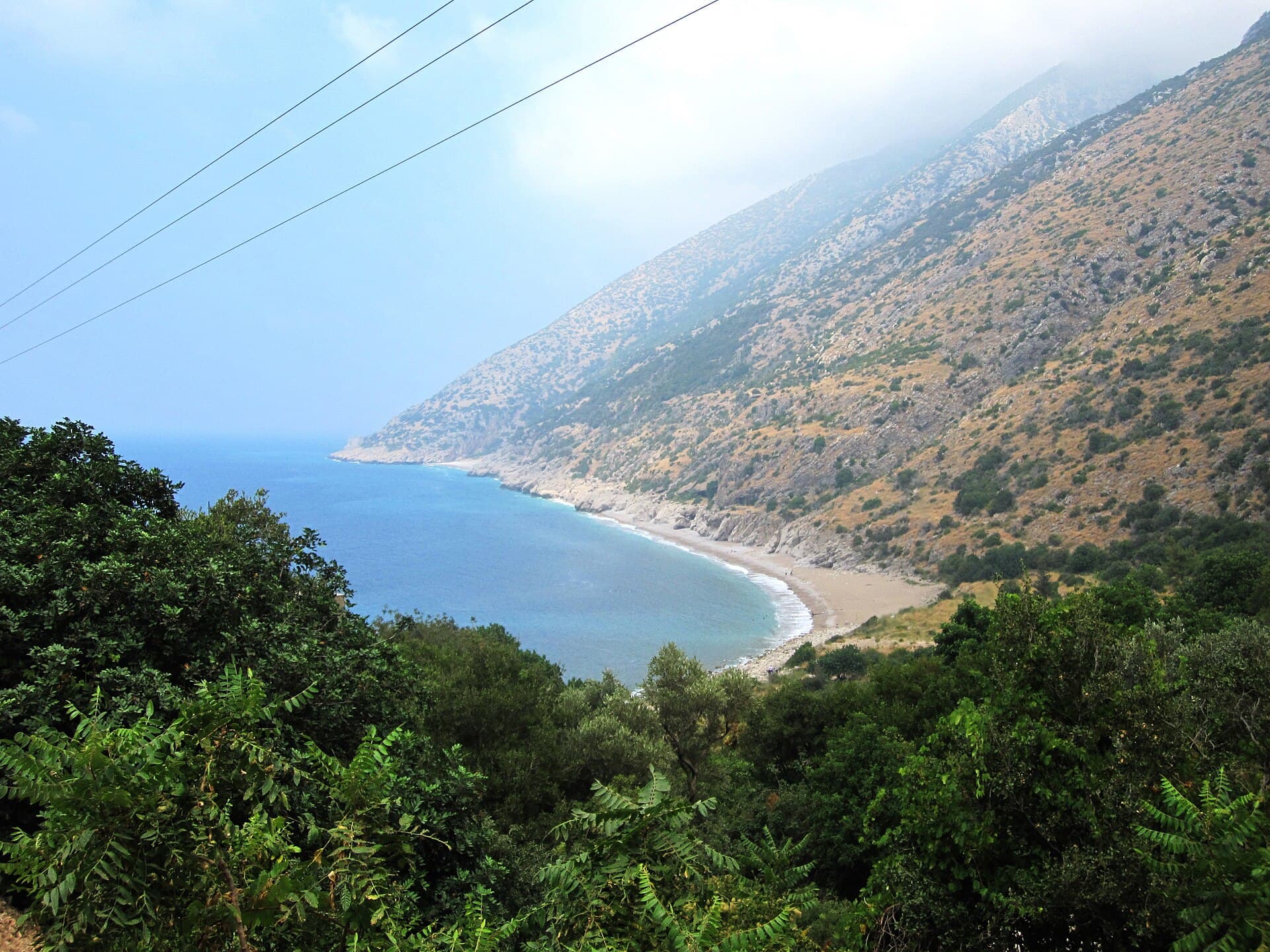
An Armenian village on the slope from Kessab down to the sea, where the region’s 1915 deportations began. Two churches, a chapel and a bay on the border below.
- Opening hours
- Open village; for the churches, check on arrival
- Entry
- Free
- Duration
- 180 minutes
- Best time
- June–September, the season for going down to the bay to swim
- Period
- Armenian settlement since Ottoman times; churches 19th–21st century
- Address
- West of Kessab, Latakia province
An Armenian village west of Kessab, on the slope that runs from the mountains down to the sea. It had 1381 inhabitants in 1913 and 450 in 2003. The village has two churches and a chapel, and in 1915 the deportations from the Kessab region began here.
Getting there
From Kessab, take the road west that drops towards the sea. The village is about a mile from the centre of Kessab; below it lie Samra bay and the Turkish border.
How long it takes
Half a day. The churches take an hour; going down to the bay and back, and looking at the shore where Mount Dyunag meets the sea, fills the rest.
What to see
Three buildings stand out. The newest is the Holy Mother of God (Surp Asdvadzadzin) Armenian Apostolic Church, with its red-tiled dome. The old church was built in the late 19th century, fell into ruin and was rebuilt. Catholicos Aram I of Cilicia consecrated the present building on 18 October 2009. The Armenian Evangelical Church and the chapel of Saint Stephen (Surp Stepanos) are also in the village. The chapel was restored in 1987 by the French-Armenian association Yergir yev Mshaguyt (Country and Culture).
Where the sources disagree
Some publications give the year 909 for the chapel of Saint Stephen and call it the oldest standing Armenian church in Syria; the Armenian-language encyclopedia says the chapel was built in 1908. The similarity of the two numbers suggests a misreading, and calling it ‘the oldest’ without checking would be wrong. The Evangelical church also has two opening dates in circulation, 1873 and 1908. In the village, the inscriptions and the people who look after the churches are the most reliable sources.
1915 and 2014
The deportation order reached Kessab on 26 July 1915, to be carried out within five days. People first thought of withdrawing to Mount Dyunag in Karadouran and holding out there. The village priest, Betros Papoujian-Abrahamian, backed the idea, but it never happened, and the deportations in the region started from Karadouran. After the 2014 attack, the Holy Mother of God church was reconsecrated on 25 July 2014, and the first liturgy was held on 27 July, the feast of Vardavar.
Don’t miss
The slope above the bay. In the Seleucid period the coastal road from Laodicea (today’s Latakia) to Seleucia passed through this bay. Today the same bay sits on the Syrian-Turkish border, with the slopes of Jebel Aqra rising behind it.
Tips
- Check the circulating claim that Saint Stephen's chapel dates from 909 and is the oldest against its inscription
- The bay is on the Turkish border; ask before taking photographs near it
- The Holy Mother of God church in central Kessab fits into the same day
- The way down to the bay is steep; take water and firm shoes for the climb back
Transparency
- How this was chosen
- Written by hand; opening hours, entry fee and coordinates are kept as data. A field that is not known for certain is marked as variable rather than guessed.
- Facts checked
- September 2026
- Last updated
- September 15, 2026