Maniqa Castle in the Syrian Coastal Mountains
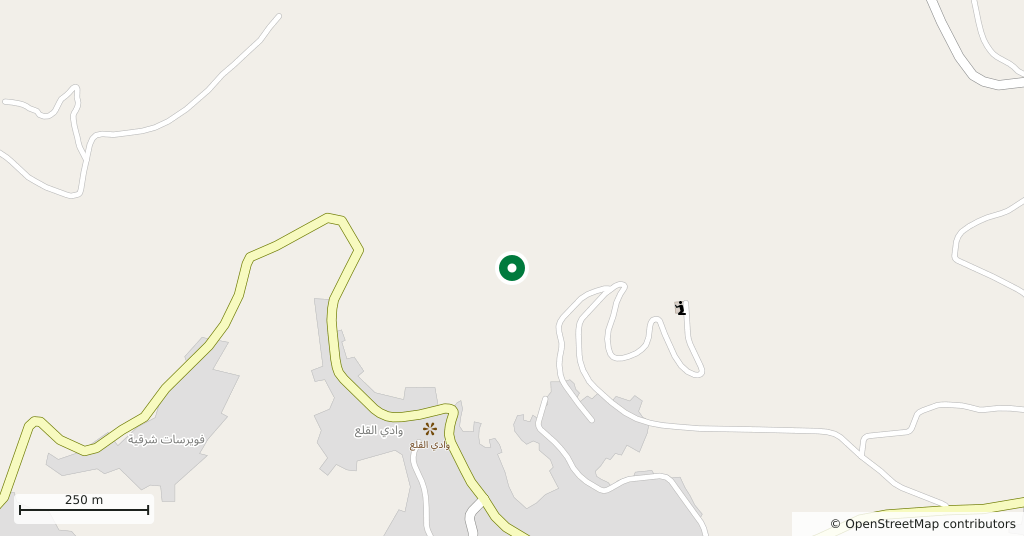
A castle between Jableh and Baniyas, raised by a ruse in 1028 and taken after a 13-day siege in 1031. A 15-20 minute dirt path climbs to it from Wadi al-Qalaa.
- Opening hours
- Open ruin; no known guard or visiting hours
- Entry
- Variable — confirm on site
- Duration
- 90 minutes
- Best time
- Spring and autumn, when the path is dry
- Period
- Byzantine — Crusader — Ismaili — Mamluk
- Address
- Above the village of Wadi al-Qalaa, between Jableh and Baniyas
Maniqa is a ruined castle on a ridge halfway between Jableh and Baniyas, where the Latakia and Tartus mountains meet. The village below takes its name from it: Wadi al-Qalaa, ‘the valley of the castle’. It was built through a ruse in 1028 and changed hands after a 13-day siege in 1031; later it passed to the Crusaders and the Ismailis, and finally to the Mamluk sultan Baybars. Its outer walls survive well on the north-east and north-west, while the interior is largely ruined and buried.
How the castle was built
In 1028 the Arab tribal leader Nasr ibn Musharraf al-Rawadifi persuaded Michael Spondyles, the Byzantine governor of Antioch, to build a fortress at Maniqa to defend Byzantine territory. Spondyles agreed and sent a garrison of 1000 men. Once the fortress was finished, Nasr refused to hand it over and, with help from the qadi of Tripoli and the local Fatimid commander, killed the garrison. In 1030 Emperor Romanos III ordered Niketas, the new governor of Antioch, to retake it. Niketas took the castle in 1031 after a siege of 13 days.
Who held it next
In 1118 or 1119 the Banu Muhriz commander of Margat surrendered Margat to the Crusader lord Rainald Masoir, together with the nearby castles of Maniqa, Qulay’a and Hadid. The Crusaders called it Malikas or Malghanes. In the mid-12th century the Ismailis — the Shia sect that held a chain of castles in these mountains — took Maniqa along with other strongholds and kept it largely in their hands until 1270. Between 1270 and 1273 Baybars took the coastal mountain castles one by one, and Maniqa was among them.
What to see
The castle stands on a ridge running north-east to south-west, roughly rectangular in plan and built of basalt. Its defences are concentrated on the north-east front, with a rock-cut ditch and a keep. At the south-east corner a tower is partly standing. There are three underground rooms, and two of them still have rings in the walls for tethering horses. Villagers farmed the interior for a long time, so much of it is filled with soil.
Getting there and how long it takes
From Jableh a minibus reaches the village of Wadi al-Qalaa in about 30 minutes. From the village a dirt path climbs to the castle in 15-20 minutes. An hour is enough to walk the walls and find the underground rooms; allow an hour and a half with the walk.
What most people miss
The tethering rings. With the interior filled with earth, little visible trace of daily life remains; the rings in two of the underground rooms are among the few concrete signs that horses were kept here.
Tips
- The path from the village is dirt and takes 15-20 minutes; wear closed shoes
- The interior is rubble and farmland; check the ground before entering the underground rooms
- Pair it with Margat Castle; the two changed hands together in 1118
- Ask about current security conditions in the coastal countryside before you set out
Transparency
- How this was chosen
- Written by hand; opening hours, entry fee and coordinates are kept as data. A field that is not known for certain is marked as variable rather than guessed.
- Facts checked
- September 2026
- Last updated
- September 15, 2026