St Michael Armenian Catholic Church, Kessab
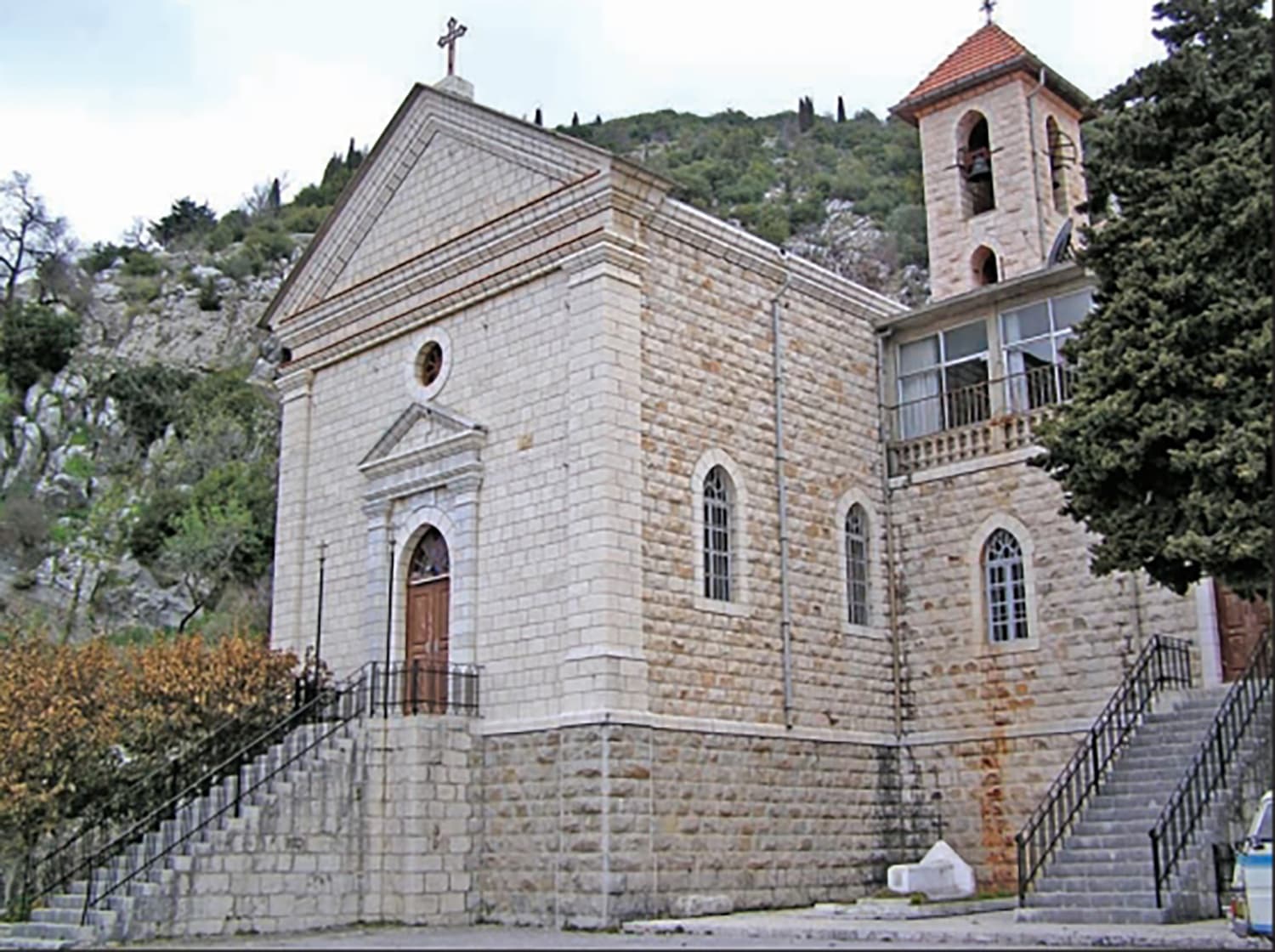
An Armenian Catholic church in eastern Kessab, built in 1925 and opened in 1926. Five inscriptions in Armenian, Latin and Italian; it was burnt in 2014.
- Opening hours
- Current status not verified — check at the door
- Entry
- Not verified — check at the entrance
- Duration
- 30 minutes
- Best time
- Daytime; the inscriptions read best in daylight
- Period
- French Mandate era, 1925; Armenian Catholic since 1946
- Address
- Eastern quarter, Kessab, Latakia province
The Armenian Catholic church in the eastern quarter of Kessab. It was built in 1925 with money from the Custody of the Holy Land, opened on 20 May 1926, and passed to the Armenian Catholic Patriarchate in 1946. It is a plain, single-nave stone basilica, and its real interest lies in the five inscriptions on its walls and in its courtyard. It was burnt and badly damaged in June 2014. Photographs from 2018 and 2021 show the building standing.
How it was built
The church was paid for by the Franciscan Custody of the Holy Land (Custodia Terrae Sanctae) in Jerusalem. The master mason was Nazar Rstagaryan, and the stone came from a quarry at Bashord (Pashort), a village belonging to Kessab. In 1946 the church was handed to the Armenian Catholic Patriarchate, and that same year Kessab’s Catholic community left its old church and moved its services here.
What to see
A vaulted, iron-roofed, single-nave basilica built of well-cut stone. The five-sided apse is at the north end, and the only entrance is in the south front. The hall takes its light from paired windows in the east and west walls, and from windows in the north-east and north-west faces of the apse.
What do the five inscriptions say?
- In Armenian: Church of Saint Michael, built 1925.
- In Latin letters: A.D. MCMXXV, that is, 1925.
- An Italian inscription naming Mount Kasios (Jebel Aqra), Gethsemane and Mount Tabor, and giving the name of the Custos, Fr Ferdinando Diotallevi.
- A Latin inscription stating that the church was opened on 20 May 1926 by the Custos, Fr Aurelius Marotta.
- An Armenian plaque dated 6-8-1995, put up for the 100th anniversary of the birth of Patriarch Krikor Bedros XV Agagianian. It says that thanks to his mediation in the 1930s, Kessab stayed in Syria and its people were spared exile.
After 2014
In the June 2014 attack on the town, the Armenian Catholic and Armenian Evangelical churches were burnt. When St Michael was repaired, and how extensively, is not in the sources. Commons photographs from 2018 and 2021 show the building standing with its façade intact, and Armenian Wikipedia records the church as in use. Its current status has not been verified: no source from the past year specific to the church or to Kessab could be found.
Getting there and how long it takes
Kessab is about 60 km north of Latakia, at the end of a winding mountain road. The church is in the eastern quarter; the Armenian Church of the Holy Mother of God in the town centre has its own page on this site. Half an hour is enough for the inscriptions and the façade.
Don’t miss
Mount Kasios in the Italian inscription. Kessab sits on the slopes of this mountain, and the inscription names the town’s own mountain in the same lines as holy places such as Gethsemane and Tabor.
Tips
- Look for all five inscriptions: Armenian, Latin and Italian, on the walls and in the courtyard
- The opening date on the Latin inscription is 20 May 1926
- The 1995 Armenian plaque honours Patriarch Agagianian and sums up a chapter of Kessab's history
- The Armenian Church of the Holy Mother of God is in the same town; visit both together
Transparency
- How this was chosen
- Written by hand; opening hours, entry fee and coordinates are kept as data. A field that is not known for certain is marked as variable rather than guessed.
- Facts checked
- September 2026
- Last updated
- September 15, 2026