Umm al-Tuyour Coastal Reserve, North of Latakia
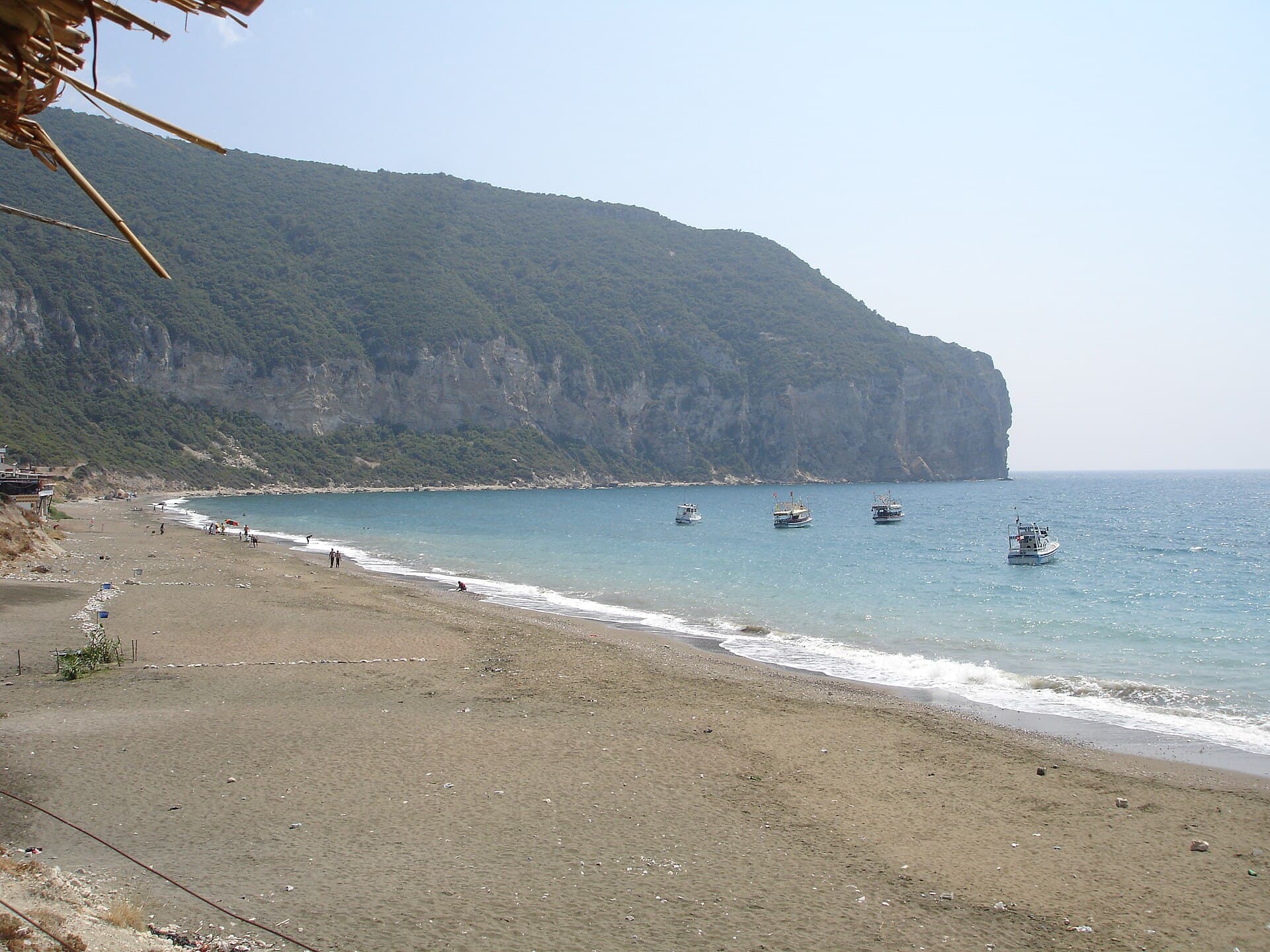
A 12-kilometre shore 30 kilometres north of Latakia, protected for migrating birds: sand and a village in the south, rocky coast running north to Ras al-Bassit.
- Opening hours
- Open coast; no posted visiting hours
- Entry
- Varies — confirm on site
- Duration
- 180 minutes
- Best time
- Spring and autumn migration; June to October for the sea
- Period
- Coastal forest reserve
- Address
- Qastal Maaf subdistrict, 30 kilometres north of Latakia
A 12-kilometre strip of coast 30 kilometres north of Latakia, where the mountains come down to the sea, and the forest behind it. The name means “mother of birds”. That is why the reserve exists: to protect migrating birds and the coastal woodland. It covers 1000 hectares, or ten thousand dunams. In the south are a sandy beach and the village of Umm al-Tuyour; to the north a rocky shore runs all the way to Ras al-Bassit.
Where it is and getting there
The reserve belongs to the Qastal Maaf subdistrict. The shore starts at Mount Quz Turanja in the south and ends at Ras al-Bassit in the north. On land, its edge is the farm road linking Turanja, al-Issawiyah and Bassit; to the west lies the sea. You head the same way as for Ras al-Bassit from Latakia.
What the shore is like
It has two characters. The southern part is sand. The village and its fishing boats are there. Heading north the sand gives way to igneous rock that continues to Ras al-Bassit. The mountain rises steeply right behind the shore, wooded along its top.
What grows in the woods
The coastal forest belongs to the warm, semi-humid Mediterranean belt. Three species dominate. They are carob, mastic (Pistacia lentiscus) and wild olive. Sources describe the cover as degraded Mediterranean forest, meaning low trees and scrub rather than tall, closed woodland.
Which birds it protects
BirdLife International lists this coast as an Important Bird Area (IBA). Details of which species earned it that status could not be found, so no species list is given here. Migration peaks in spring and autumn, and those are the two seasons that matter for birdwatching.
The village and how long to stay
Umm al-Tuyour is a Turkmen village. At the 2004 census it had 1101 people. Half a day is enough to walk the shore and sit on the beach, and you can carry on to Ras al-Bassit the same day.
Tips
- For birds, come in spring or autumn and early in the morning
- Wear shoes with grip on the rocky northern stretch
- Do not light fires or cut plants; the coastal woodland is protected
- Put Ras al-Bassit in the same day; the shore joins it to the north
Transparency
- How this was chosen
- Written by hand; opening hours, entry fee and coordinates are kept as data. A field that is not known for certain is marked as variable rather than guessed.
- Facts checked
- September 2026
- Last updated
- September 15, 2026