Bosra
A town on the Hauran plain, built end to end in black basalt. How to reach Bosra from Damascus, how long you need there, and what is still standing today.
- Founded
- 2nd millennium BC
- Best season
- April–May, October–November
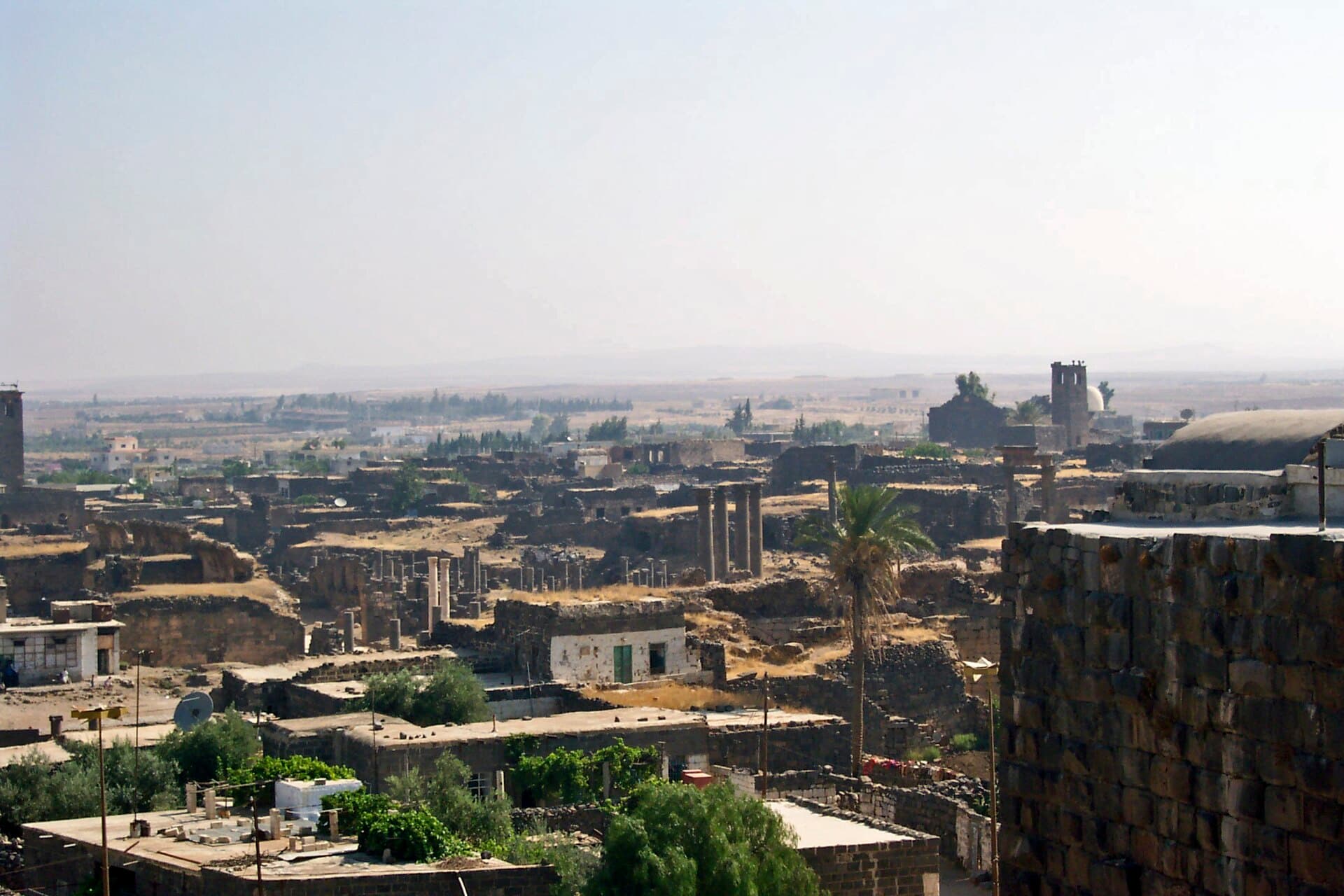
A town on the Hauran plain, built from end to end in black basalt. It was the capital of the Roman province of Arabia, and the first major stop for the pilgrim caravans running from Damascus to Mecca. The ancient city is not a fenced-off site — people still live among the ruins, and a two-thousand-year-old wall goes on being the wall of somebody’s house.
Where to start
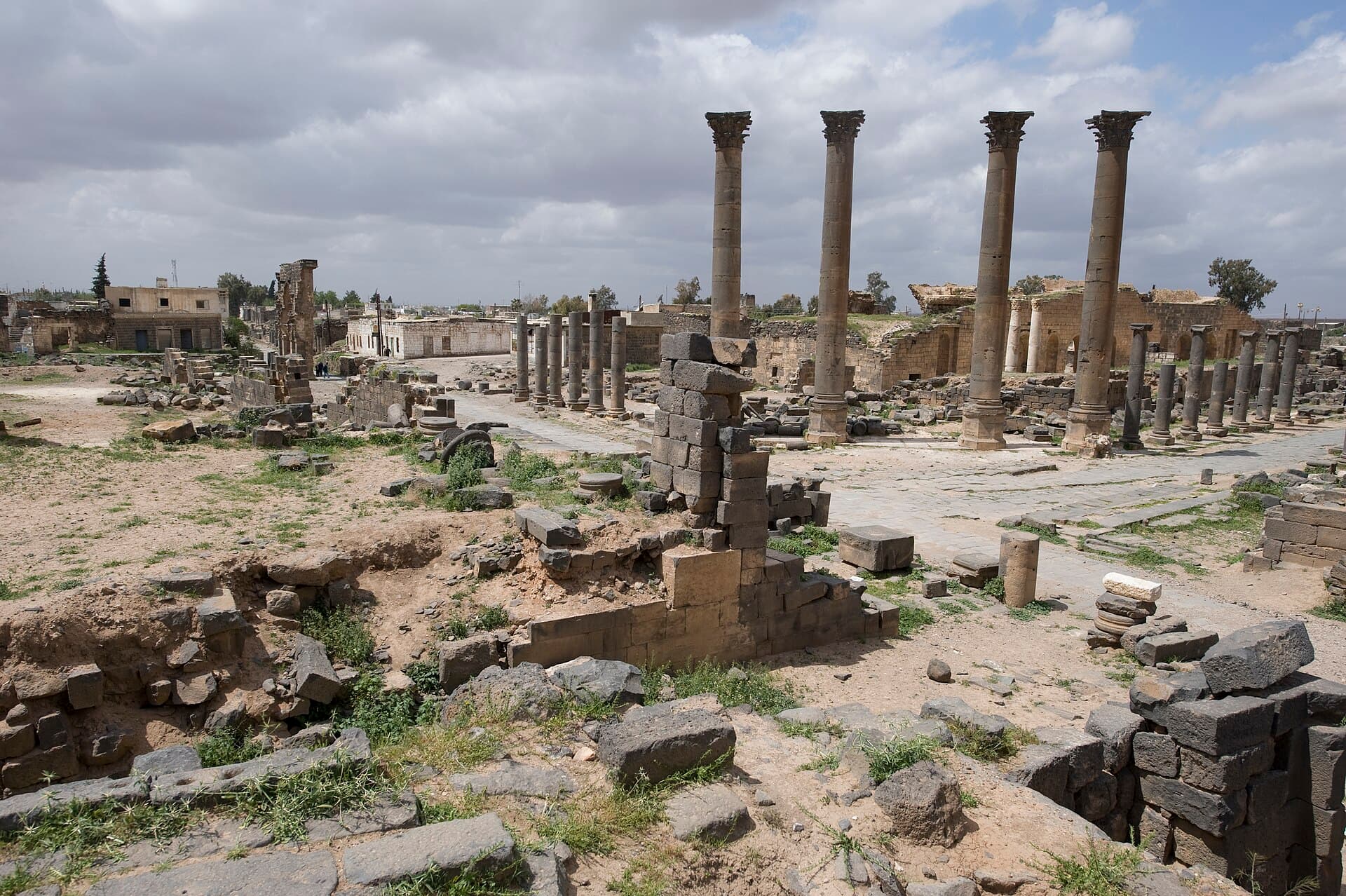
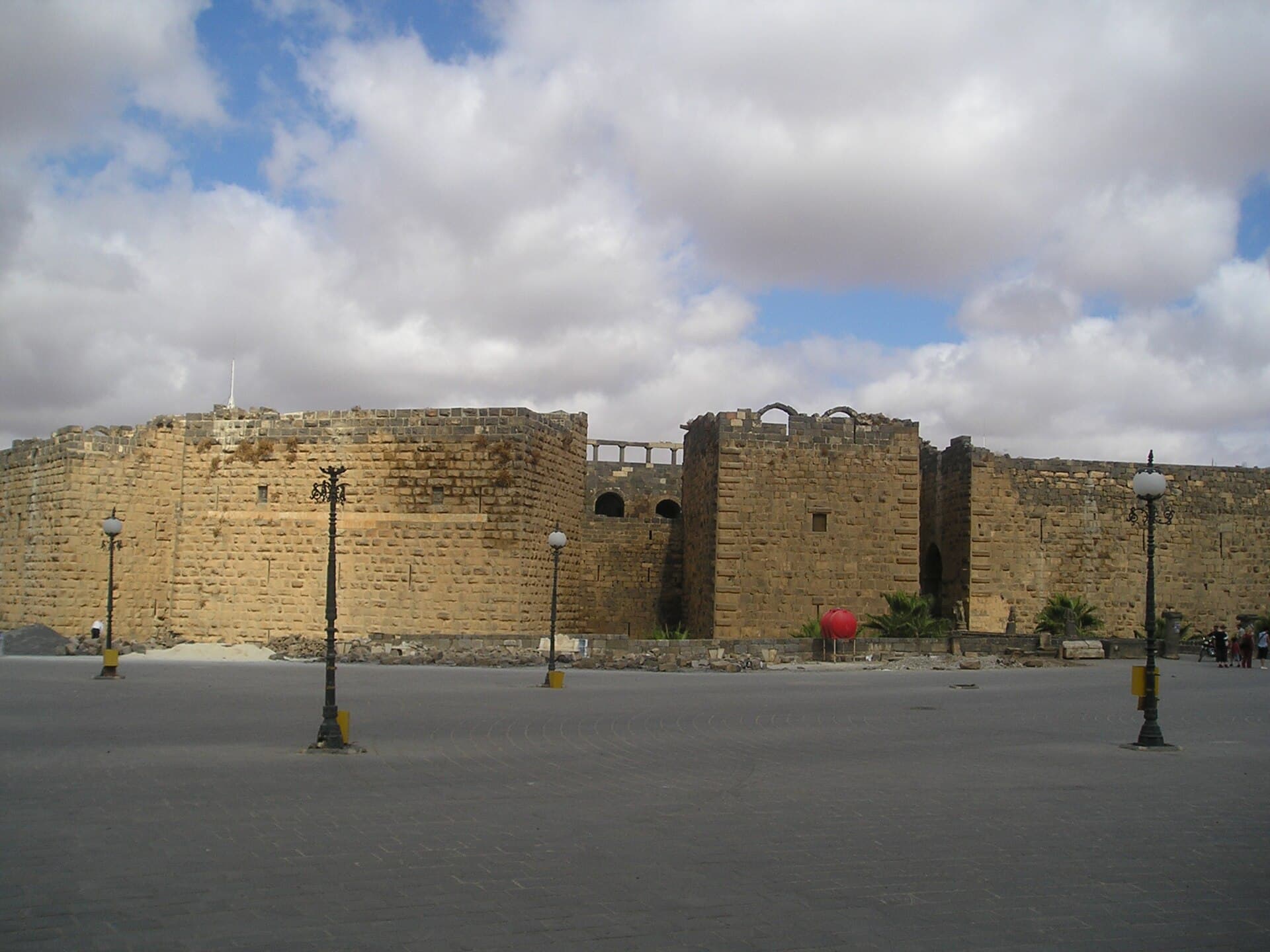
At the theatre. The citadel gate facing the town square is where a visit begins. What is inside it has few equals anywhere: the Roman theatre survives in this condition because an Ayyubid fortress swallowed it whole, a castle raised by Saladin’s dynasty. From there you walk north to the colonnaded street. Everything else lines up on either side of that axis.
In the town
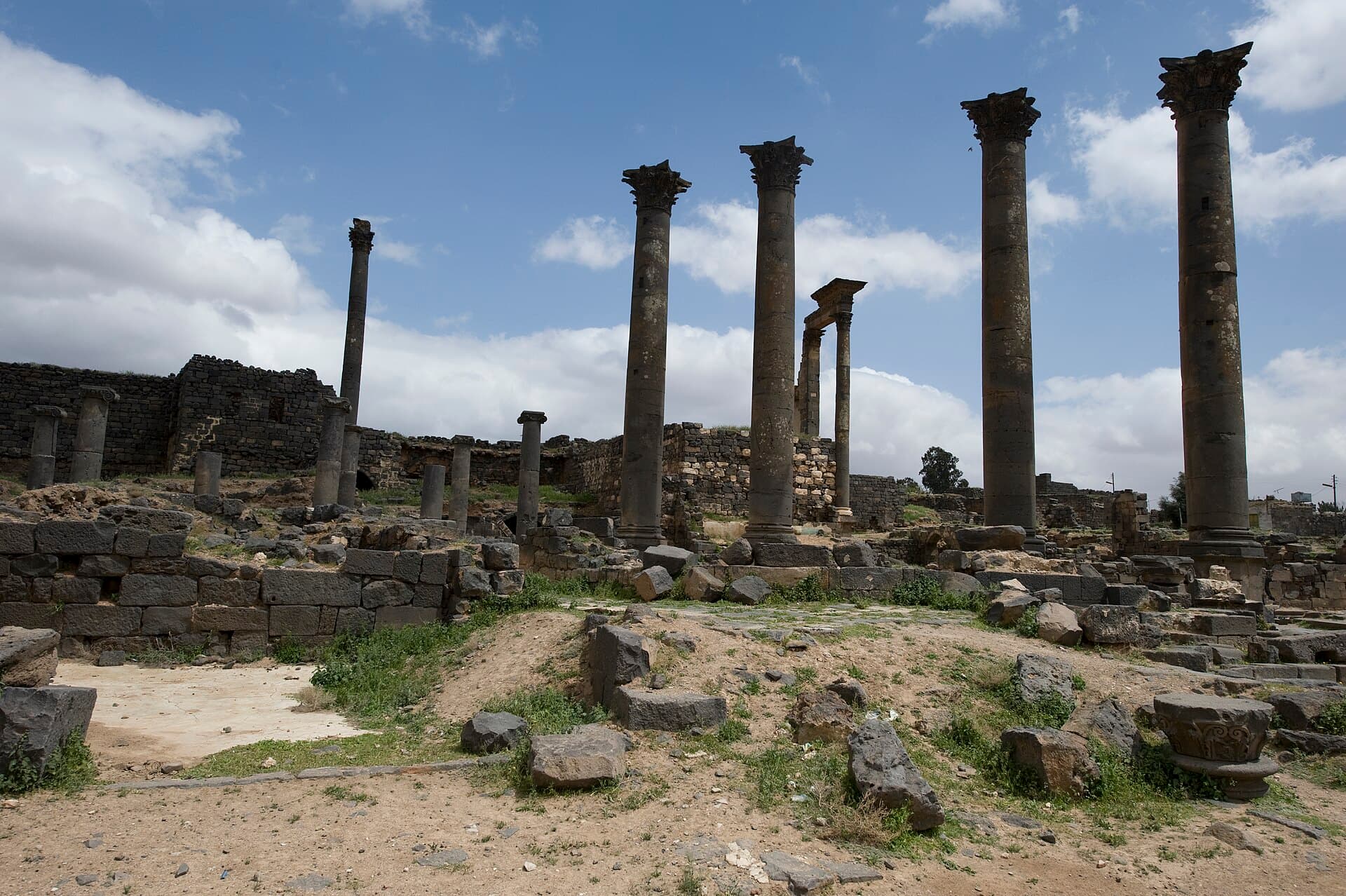
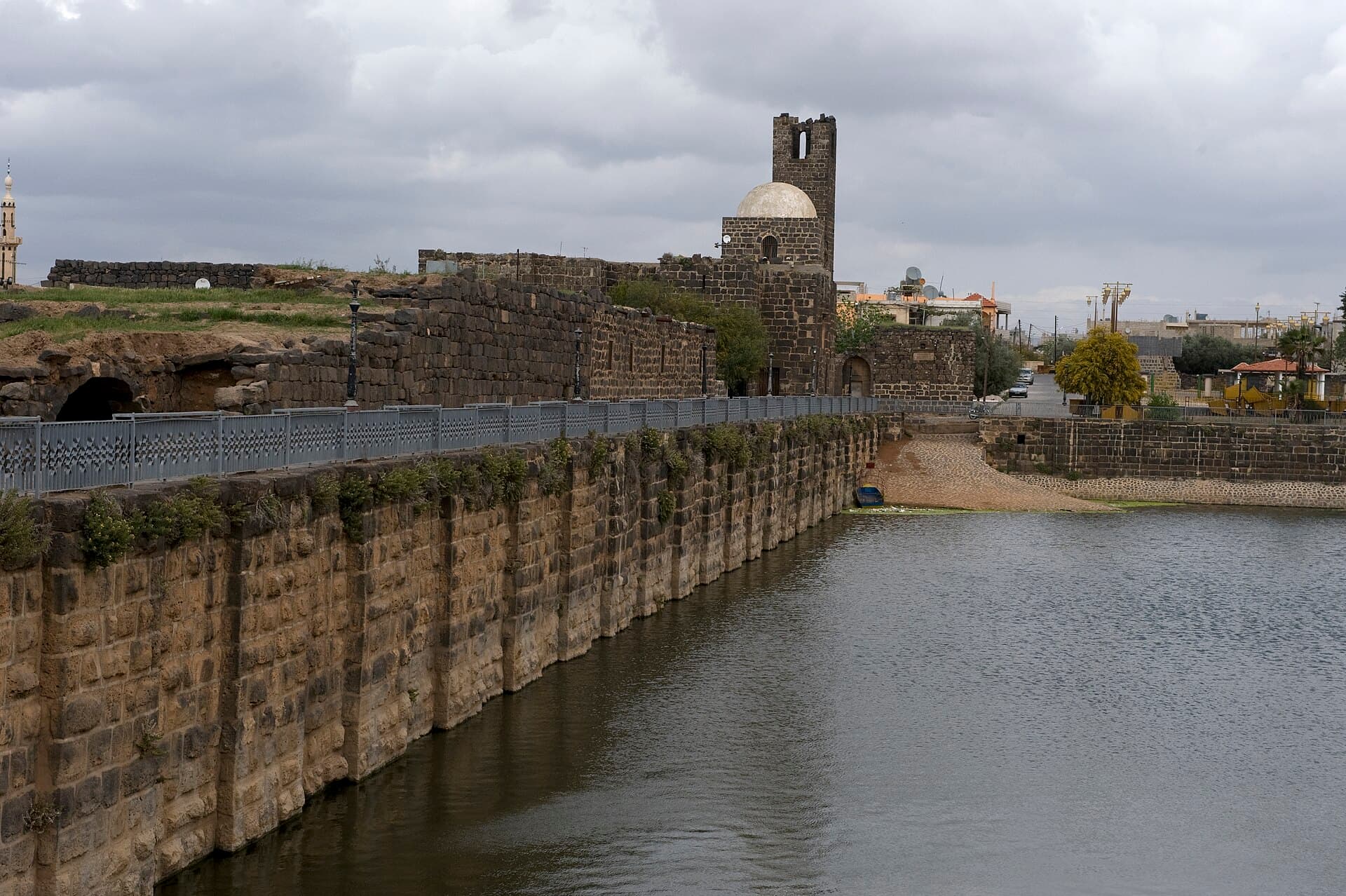
It is under a kilometre from one end of the ancient city to the other. Walking north from the theatre along the colonnaded street brings you to the Roman market, the Central Baths and the Mosque of Omar; at the eastern end are the ruins of a 6th-century cathedral. A 1st-century Nabataean arch and the great cistern that watered the pilgrim caravans stand in between. All of it is the same stone, and all of it is within walking distance.
When to go
The Hauran plateau sits at 850 metres and the climate is semi-arid: almost all the rain falls in winter, and between June and September none falls at all. There is no shade in those months, and the black basalt gives back all day what it has absorbed — the August average reads 32 degrees but the site feels hotter than that. April to May and October to November are the right windows; winter nights drop to 3 degrees. For light, take the first hour of the morning: the theatre’s seating is in shade then, and the town is still quiet.
Getting there
About 140 kilometres south of Damascus by road, two and a half to three hours including checkpoints. Public transport means changing at Daraa: a minibus or shared taxi from Damascus to Daraa, then a second vehicle to Bosra. Hiring a car with a driver for the day is more common and gets you there door to door. The Nasib crossing into Jordan is about 45 kilometres away by road; it was rebuilt and reopened during 2025.
Where things stand
Bosra is open to visitors, and foreign tour groups came through in 2025 and 2026; tourist police patrol the site and the theatre hosts large events. The international festival that ran before the war has not restarted, though officials say they intend to revive it. Against that, Daraa governorate saw armed incidents, tribal clashes and unexploded ordnance throughout 2025, and as of mid-2026 the British Foreign Office still advises against all travel to every part of Syria. This page tells you what Bosra is; it does not tell you that Bosra is safe today. That is a separate question, and its answer lives in current advisories and in local knowledge.
Highlights
- A Roman theatre swallowed by a castle — the only one whose colonnaded upper gallery is complete
- Black basalt throughout: the columns, the mosque and today's houses are all the same stone
- The centrally planned cathedral consecrated in 512, a circle set inside a square
- The 44 columns of the Mosque of Omar, salvaged from buildings of different centuries
- Houses still lived in along both sides of the colonnaded street
Where to stay
There is effectively no visitor accommodation in Bosra: the town is small, and the current state of the one large pre-war property cannot be confirmed. Almost everyone bases themselves in Damascus and comes for the day — two and a half to three hours each way, and half a day to walk the site. If you have to stay, the nearest real option is Daraa, 40 kilometres west, and even there nothing is stable enough to name; call ahead before you travel.