What is Bosra famous for?
Bosra is known for its Roman theatre, built in black basalt. Because an Ayyubid fortress was raised around it, the theatre is one of the best preserved in the Roman world, and UNESCO calls it the only one whose upper gallery — a covered portico — has survived complete. The town has been on the World Heritage list since 1980 and on the list of World Heritage in Danger since 2013. Beyond the theatre, the colonnaded street, the market and the baths of a city that was once the capital of Roman Arabia are all still standing, and a 6th-century cathedral and the early Islamic Mosque of Omar sit within the same square kilometre.
Highlights
- A Roman theatre swallowed by a castle — the only one whose colonnaded upper gallery is complete
- Black basalt throughout: the columns, the mosque and today's houses are all the same stone
- The centrally planned cathedral consecrated in 512, a circle set inside a square
- The 44 columns of the Mosque of Omar, salvaged from buildings of different centuries
- Houses still lived in along both sides of the colonnaded street
What to see
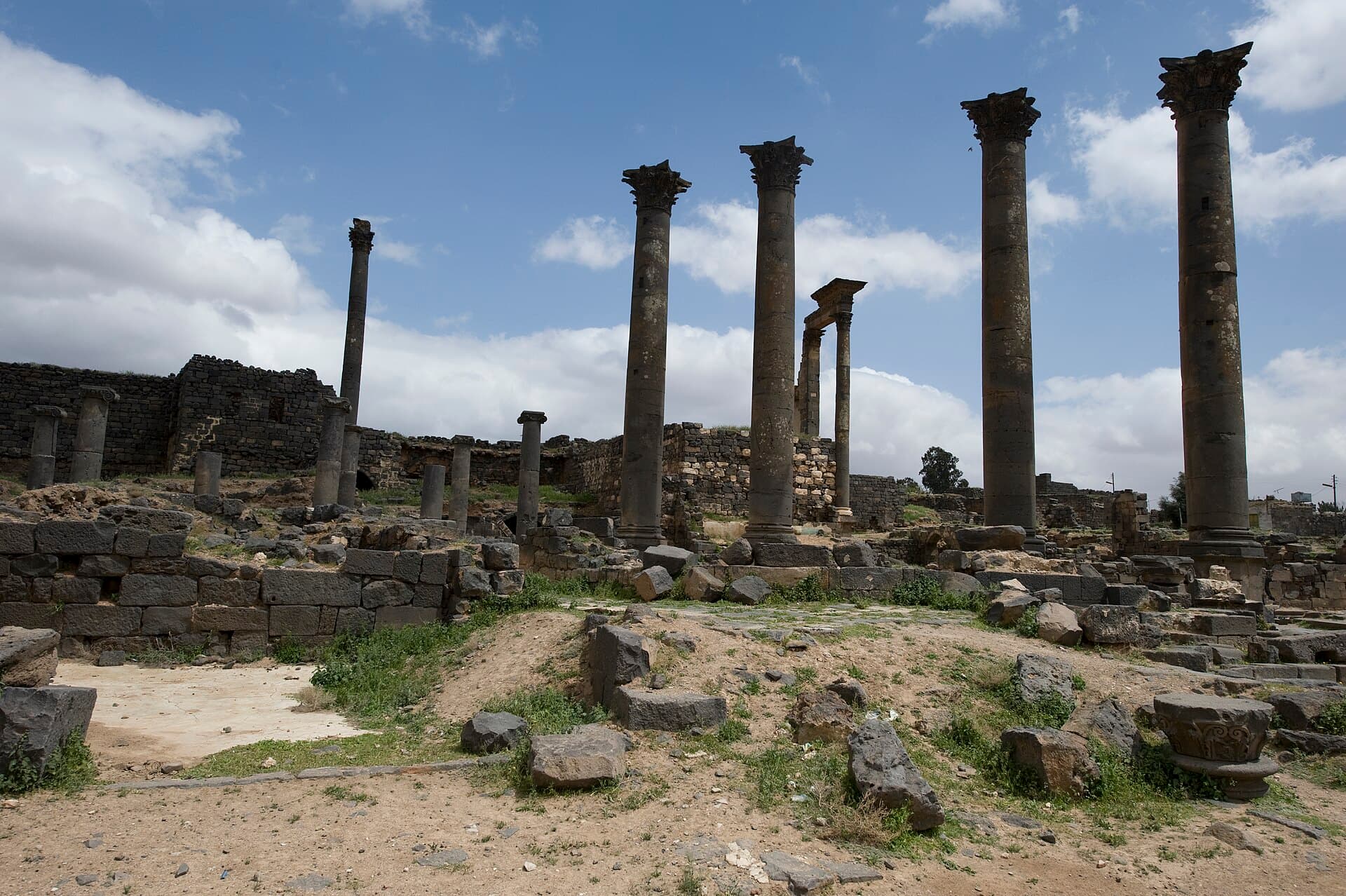 Bosra · 2nd century
The Nymphaeum and the Four-Column Exedra of Bosra
Two Roman monuments face each other on Bosra's main street: a fountain with a façade of nearly 24 metres, and the four-column exedra often mistaken for it.
- Bosra · 2nd-4th century
The Cryptoporticus, Market and Tetrapylon of Bosra
A vaulted gallery 108 metres long under Bosra's main street, a four-column Roman market entrance and a 4th-century tetrapylon square: what the sources describe.
- Bosra · 2nd-3rd century
The Roman Circus of Bosra, the Hippodrome South of the Theatre
South of Bosra's theatre lies a U-shaped Roman circus over 440 metres long: a chariot track, 20 rows of seating and the short walk to it from the citadel.
- Bosra · 12th century
The Al-Khidr Mosque and the Tomb of Mar Jirjis in Bosra
A small mosque in western Bosra with an inscription dated 1134, a square minaret 17 metres tall and the tomb of Mar Jirjis beside it: what the sources describe.
- Bosra · 1st century
Birkat al-Nabatiyya, the Eastern Reservoir of Bosra
A square reservoir east of Bosra's walls marked with Nabataean masons' signs: sides nearly 150 metres long, a channel from 5 km away and what is known of it today.
- Bosra · 5th-6th century
The So-called Palace of Trajan in Bosra
Named after Trajan but built as a Byzantine residence: an 1850-square-metre courtyard house in Bosra, its three-apsed upper hall, and why the name is wrong.
Ready-made routes
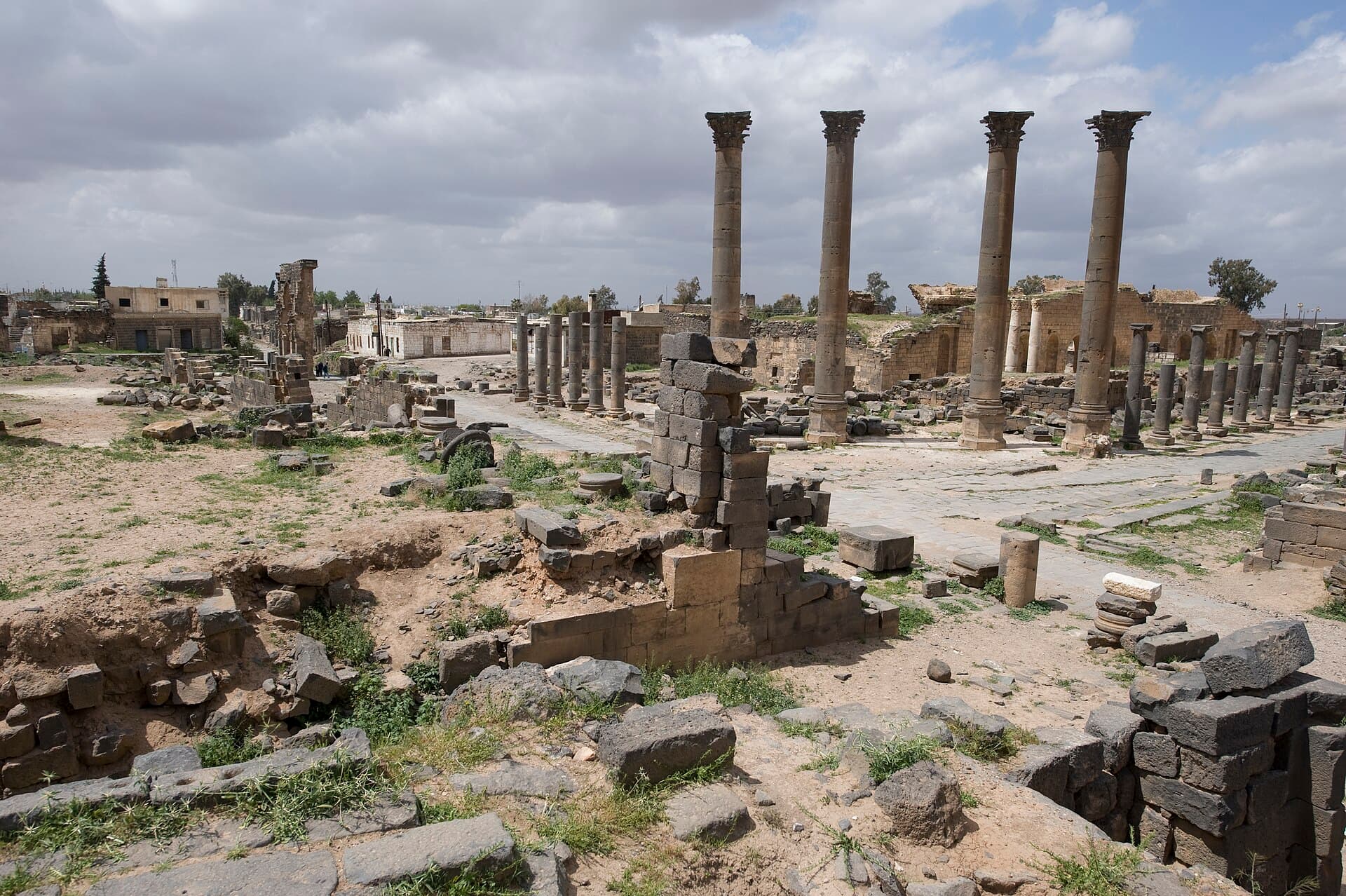 On foot · 2–3 hours
Bosra crossroads walk: from the al-Omari Mosque to the al-Khidr Mosque
A walk through Roman Bosra's crossroads between two Burid mosques: the exedra columns, Bab al-Qandil, a 108-metre cryptoporticus and the tetrapylon square.
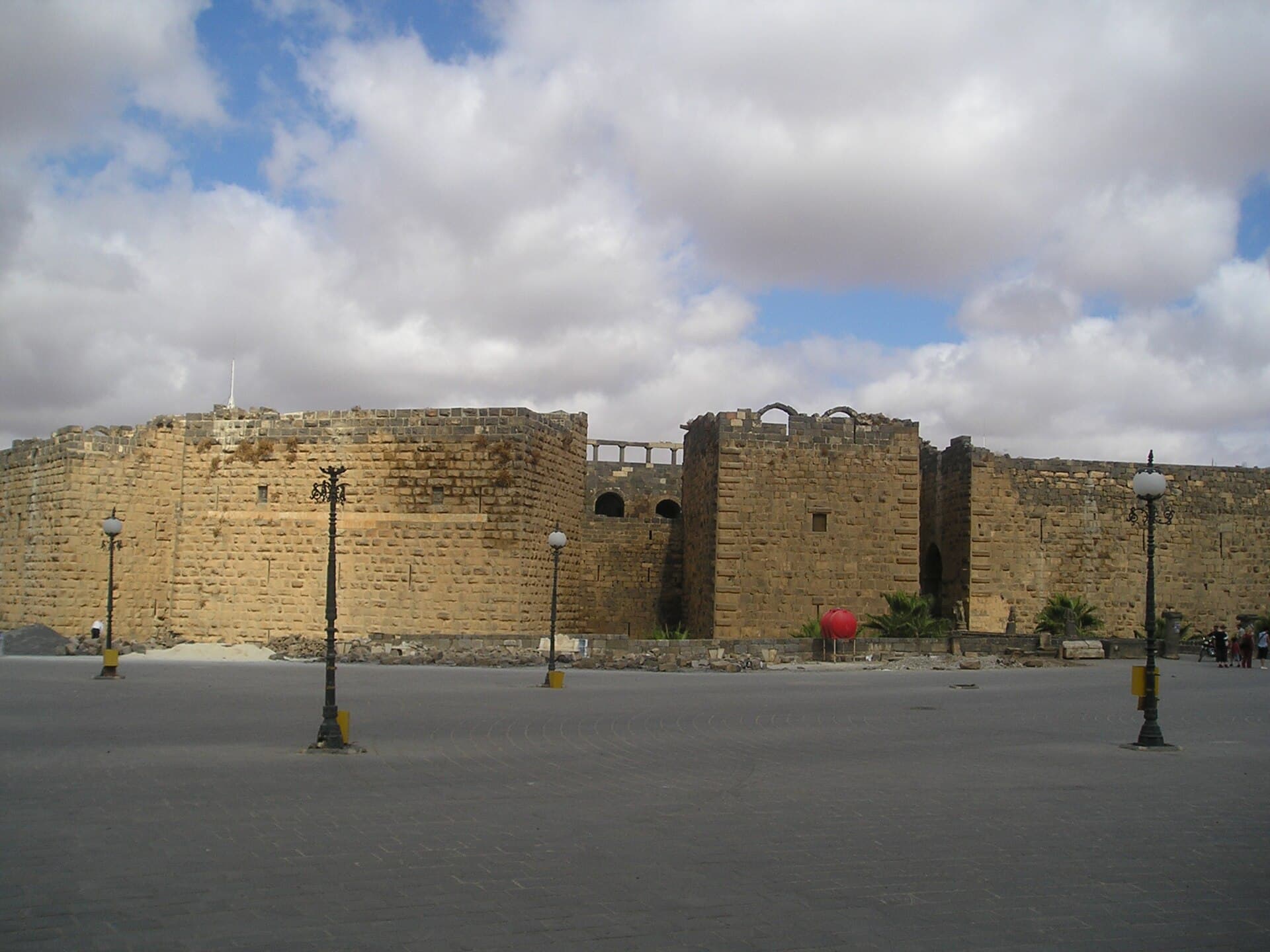 On foot · 4 hours
Bosra’s southern and eastern edge: from the Roman circus to the Eastern Reservoir
A four-hour walk around Bosra's edge: the Roman circus outside the walls, the theatre-citadel, Birket al-Hajj, the Palace of Trajan and the Nabataean reservoir.
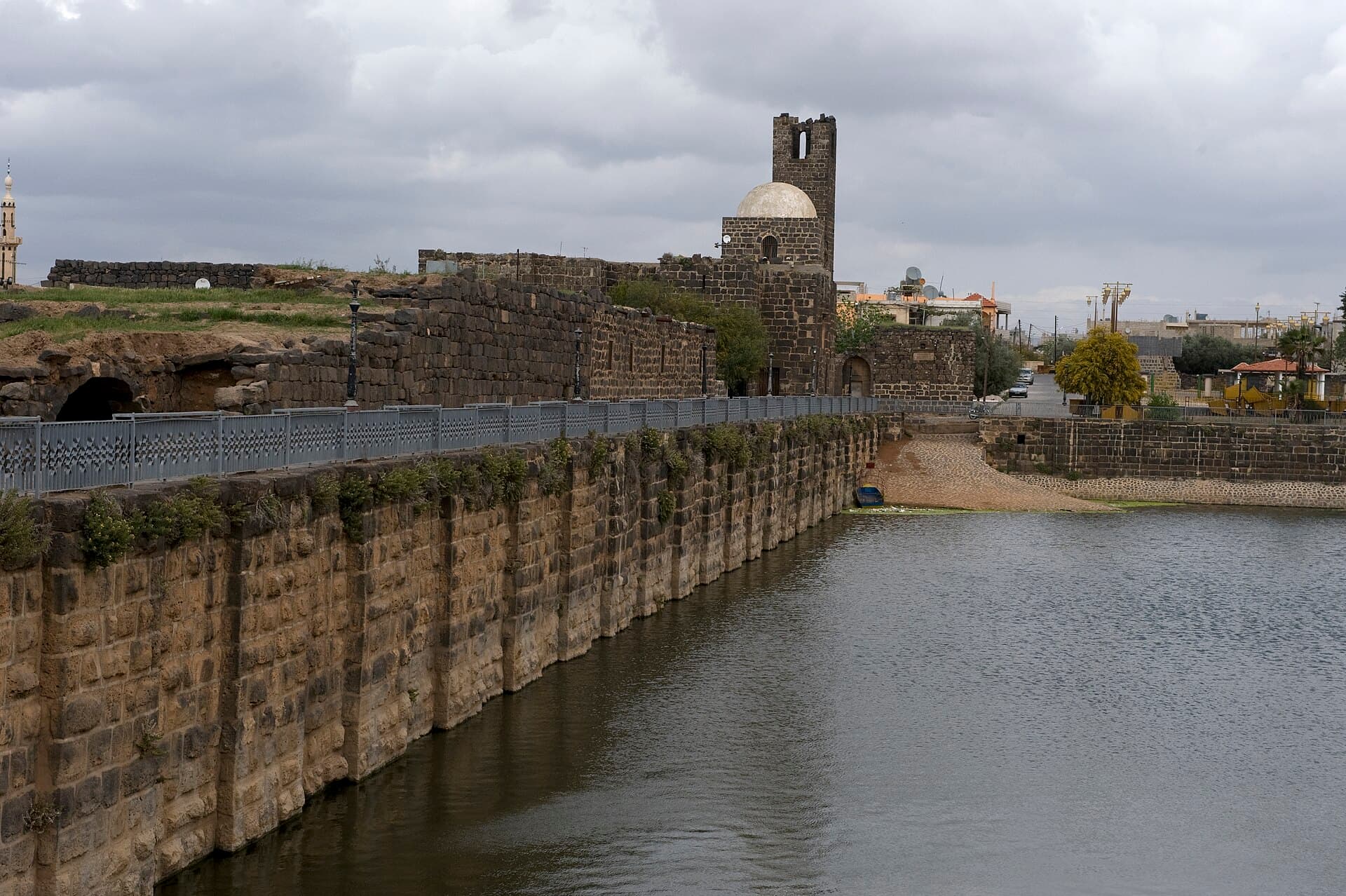 On foot · 2 hours
Bosra on the Hajj road: a walk from the pilgrims’ pool to the Mamluk bathhouse
A two-hour walk through Bosra's pilgrim-caravan stop: the Ayyubid pool, a madrasa dated 1225, a Mamluk minaret and the caravan's bathhouse. Under 800 metres.
Transparency
- How this was chosen
- The answer on this page is written by hand. The lists are built from published records tied to this city and grow on their own as records are added.
- Facts checked
- August 2026
- Last updated
- September 15, 2026