From Masyaf to Wadi al-Uyun: Rusafa Castle and the valley of springs
A 68-kilometre mountain day southwest of Masyaf: its Ismaili castle, tree-covered Rusafa, the waterfalls of Wadi al-Uyun and the Roman temple at Husn Suleiman.
- Duration
- 8.5 hours
- Distance
- 67.8 km
- Difficulty
- Moderate
- Best season
- May–September
- stops
- 4
- City
- Hama
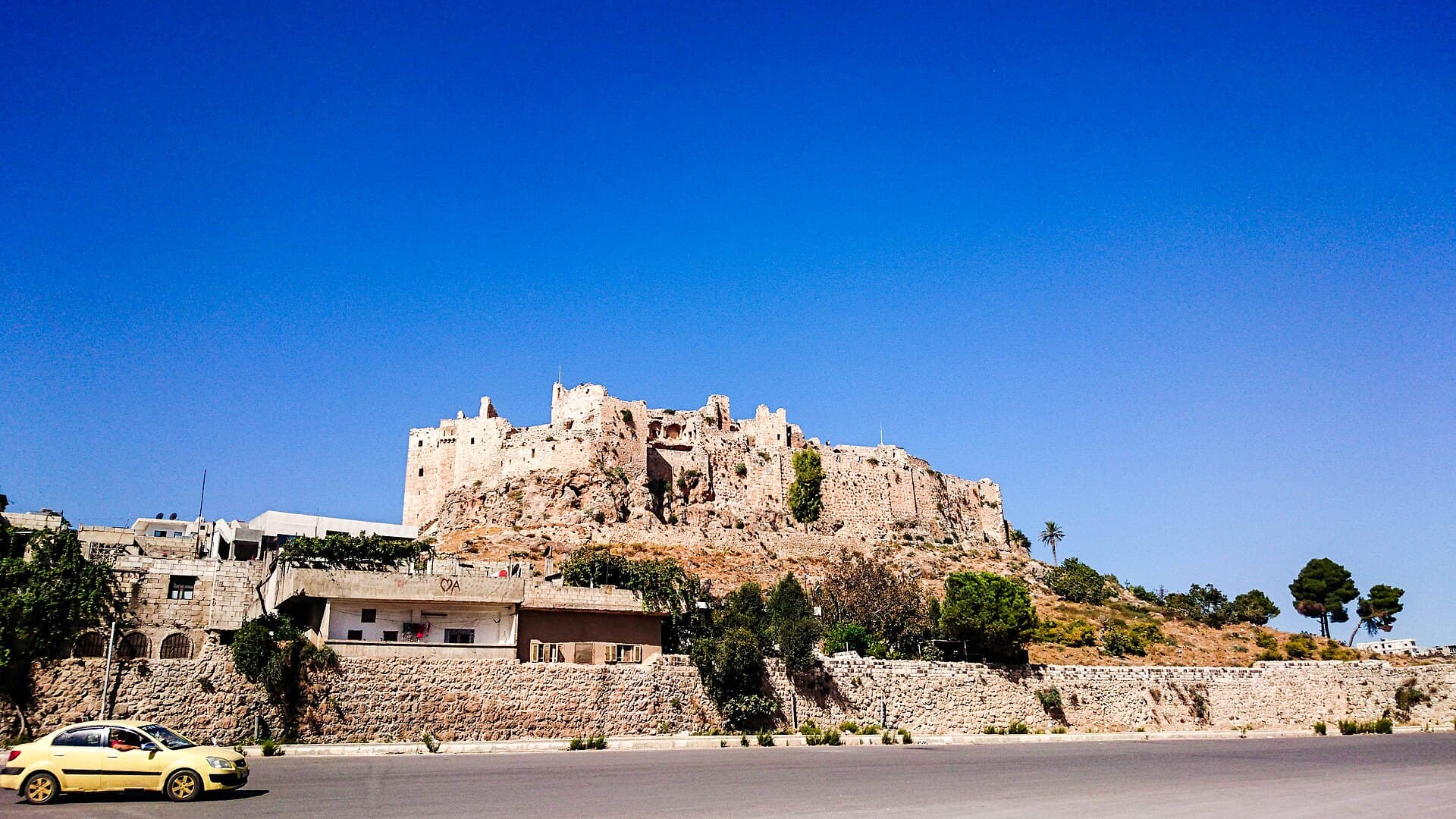
The mountain road southwest of Masyaf runs along the eastern slope of the coastal range, from an Ismaili castle to a valley full of waterfalls and on to a Roman temple at 950 metres. The day opens at Masyaf Castle, continues at Rusafa Castle under its cover of trees, spends midday at the waterfalls of Wadi al-Uyun and ends at the courtyard walls of Husn Suleiman. The loop from Masyaf back to Masyaf is about 68 kilometres; the distance is short, but all of it is mountain road. The Al-Kahf route from the same town heads northwest; this one goes southwest and does not include Al-Kahf.
The route
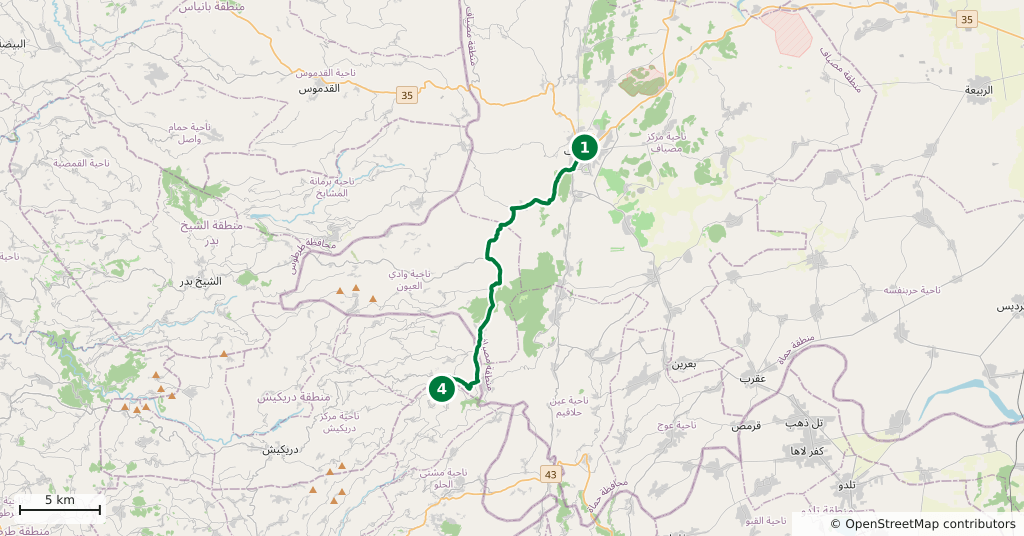
Masyaf is 45 kilometres from Hama, a little over an hour; spending the night in Masyaf makes the morning easier. Come down from the castle into the town and head southwest: the village of Rusafa is about 7 kilometres, a quarter of an hour. The castle stands on the hill at the north end of the village, 60 metres above it. When you ask the way, say Masyaf, because the name gets confused with Resafa near Raqqa. From Rusafa to Wadi al-Uyun is 15 kilometres, a little over half an hour. From the valley to Husn Suleiman is 23 kilometres, about fifty minutes; the road climbs and its last part is narrow. From the temple it is 24 kilometres back to Masyaf, fifty minutes. If you would rather go down to Tartus, it is 54 kilometres via Safita, close to an hour and a half.
Timing
Be at Masyaf Castle at 08:30. Give it an hour and a half: courtyards, cisterns cut into the rock and the upper terrace. Look east from the terrace, where the plain lies open from end to end. The castle was the Syrian centre of the Nizari Ismailis; Saladin besieged it in 1176 and withdrew without taking it. Set off at 10:00 and you are in Rusafa village at 10:15.
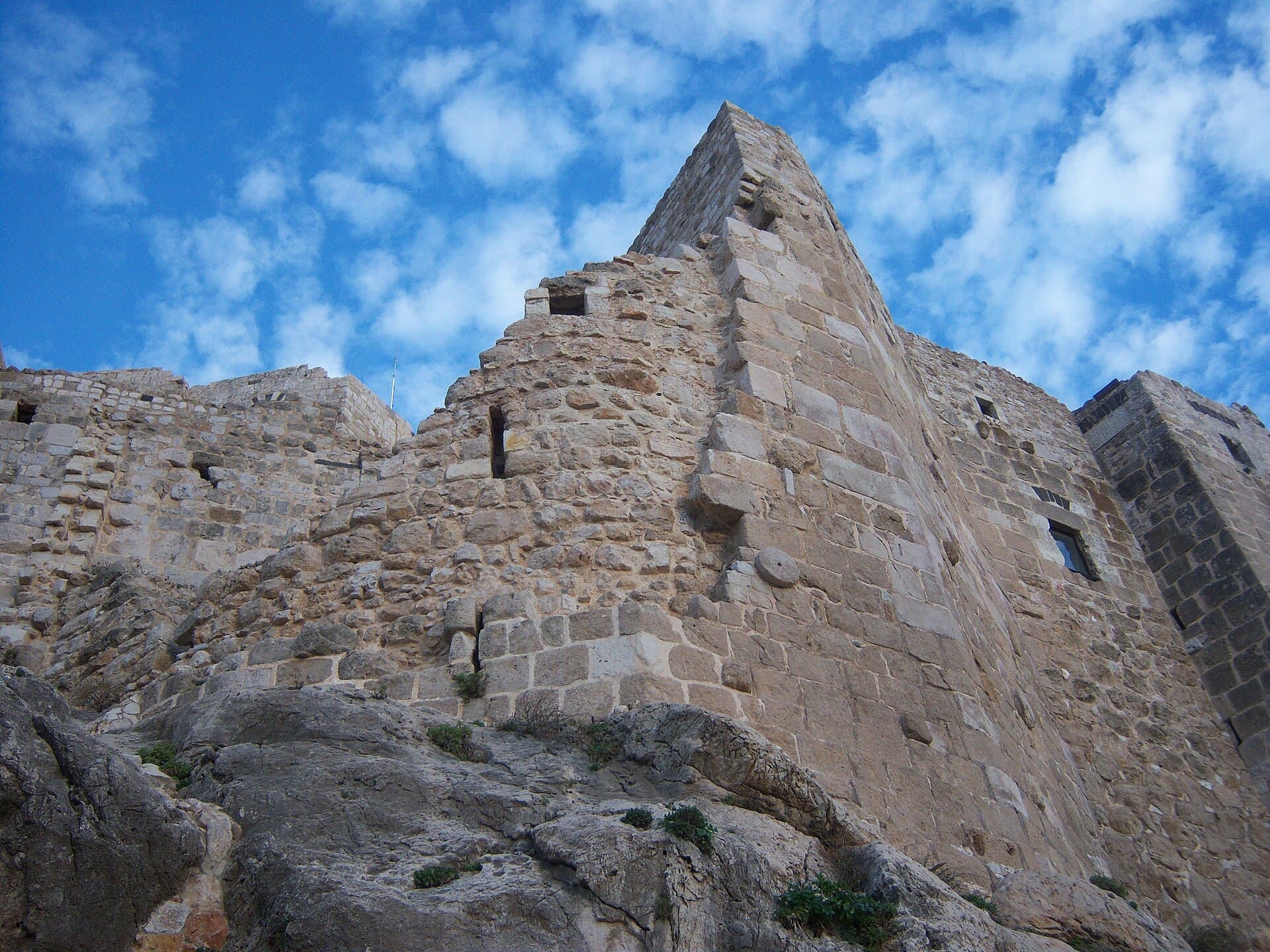
Walk up to the castle from the village and give it an hour. The plan is oval, about 75 by 30 metres at its widest, on three floors. Enter by the tower-guarded gate in the northwest and go down through the vaulted rooms to the lowest floor, where some of the stores reach 20 metres into the ground. Rashid al-Din Sinan re-fortified the castle after 1162. Ibn Battuta named it in 1355 together with Al-Kahf, Qadmus, Ulayqa and Maniqa. Come down at 11:15 and you are in Wadi al-Uyun at 11:50.
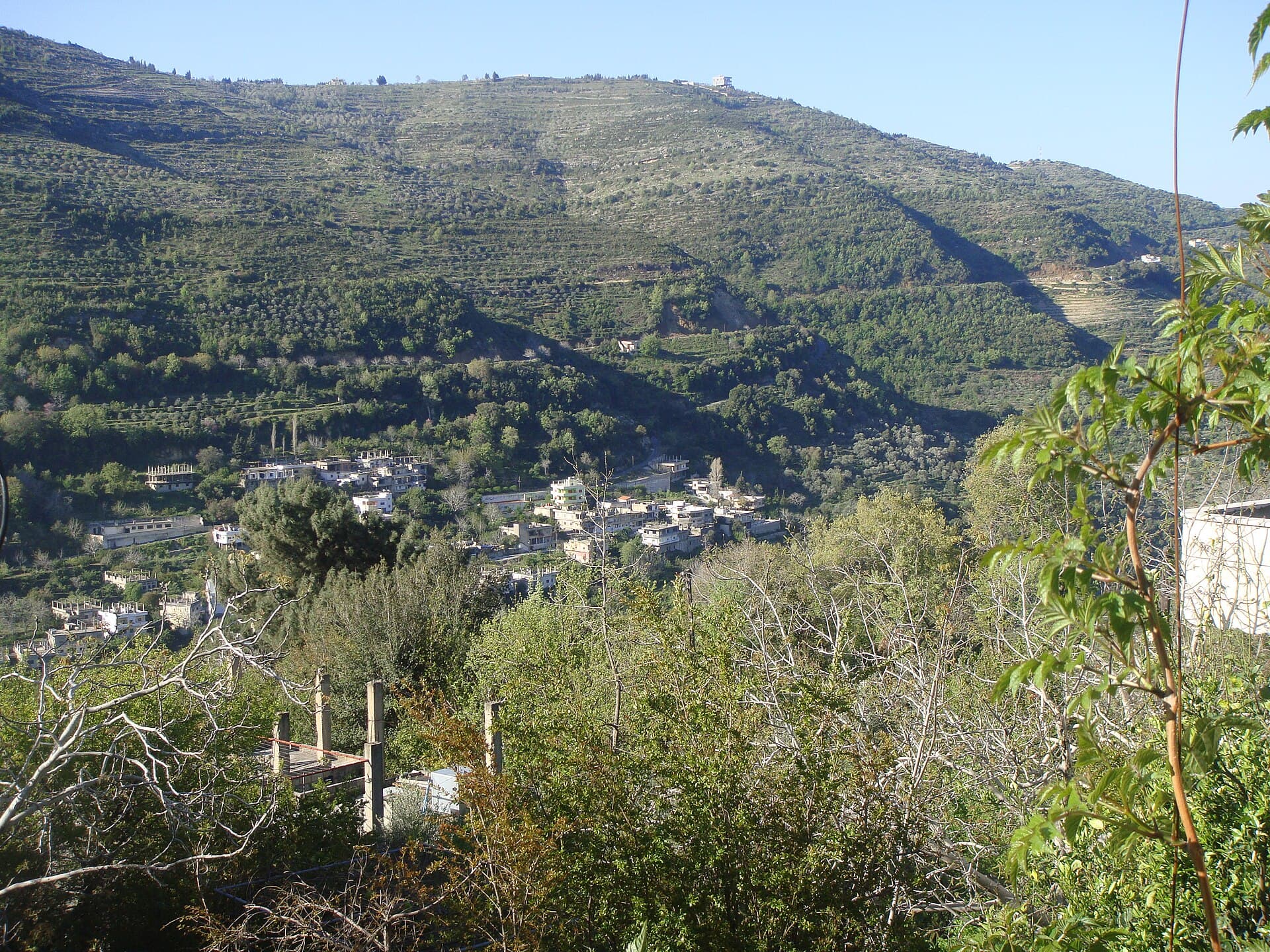
Give the valley two and a half hours and take your lunch break here; bring food and sealed bottled water from Masyaf. The town spreads over both sides of the valley between 450 and 900 metres. You can walk into the waterfall and climb onto the mossy rocks, so spare clothes are useful. The only water mill still standing is on the valley floor next to the Beit al-Hindi bridge; ask the way in town. In the Beit Shalhum quarter there is a tomb cut into the rock. If there is time, see the plane tree in the village of Ain al-Karm: it is more than 400 years old, with a trunk about 21 metres around. Leave at 14:20 and you are at Husn Suleiman by 15:10.
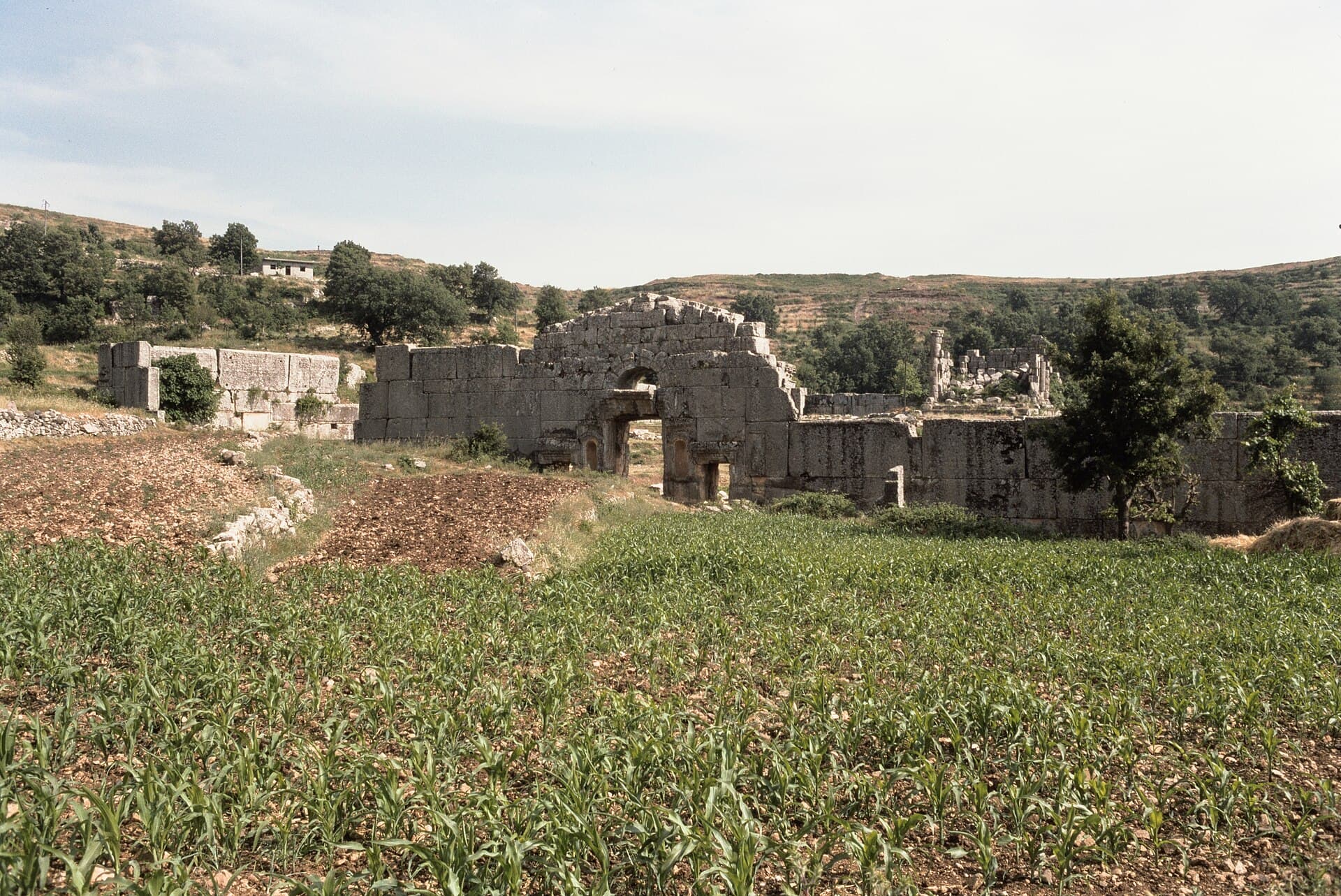
An hour is enough for the temple. The courtyard wall has a gate on each of its four sides, the grandest on the north. Step under the west gate and look up: an eagle with spread wings is carved on the underside of the lintel. Greek and Latin inscriptions cut into the wall stones record the privileges of the sanctuary. Start back at 16:10 and you are in Masyaf around 17:00 and in Hama around 18:15.
Take care
Between 11 and 16 July 2026, 769 cases of acute diarrhoea were recorded in Masyaf. Cholera tests came back negative, but many water and food samples failed; drink sealed bottled water and be careful with raw food. The route runs through the countryside of the coastal mountains. The rural areas of the coastal provinces saw armed violence twice in 2025, and the risk from landmines and war remnants remains in the countryside. Ask about the route where you stay, do not leave the asphalt or the clear paths, and do not drive mountain roads at night.
The lowest floor at Rusafa is dark and uneven underfoot; take a torch. The castle is overgrown, so long trousers and closed shoes help. The mossy rocks at Wadi al-Uyun are slippery. Husn Suleiman is at 950 metres and windy; take a light layer even in summer. Fees and opening hours vary at every stop, so check at the entrance. May to September is the best period; in winter mist can close the road in these mountains.
The route on a map
Stops along the route
- 01
- 02
- 03
- 04
Transparency
- How this was chosen
- The stops and their order were set by hand. The line on the map is real road geometry, not a straight hop between pins; distance and duration belong to that itinerary.
- Facts checked
- September 2026
- Last updated
- September 15, 2026