What is Hama famous for?
Hama is known for the wooden water wheels on the Orontes, the norias. The surviving wheels stand on the central stretch of the river and turn whenever the water is high enough; the largest are over twenty metres across. The city's other well-known building is the Azm Palace of the eighteenth century. Apamea, Qasr Ibn Wardan and Masyaf Castle around it make Hama the best base in central Syria.
Highlights
- The norias and the aqueduct on the Orontes
- The eighteenth-century Azm Palace
- The colonnaded street of Apamea to the northwest
- Qasr Ibn Wardan out in the steppe
- Masyaf Castle on its rock to the west
What to see
- Apamea · Hellenistic–Roman
The Roman Theatre at Apamea
On a slope above the Orontes valley, Apamea's theatre was 139 metres across, among the largest in the Roman world. Only an eighth is excavated; access unconfirmed.
- Salamiyah · date disputed
Qalaat al-Riba (Riba Castle), Salamiyah
A semicircular fortification on a basalt hill 12 kilometres north of Salamiyah: dry-laid basalt blocks, a single gate on the west and Roman-era tombs on the slopes.
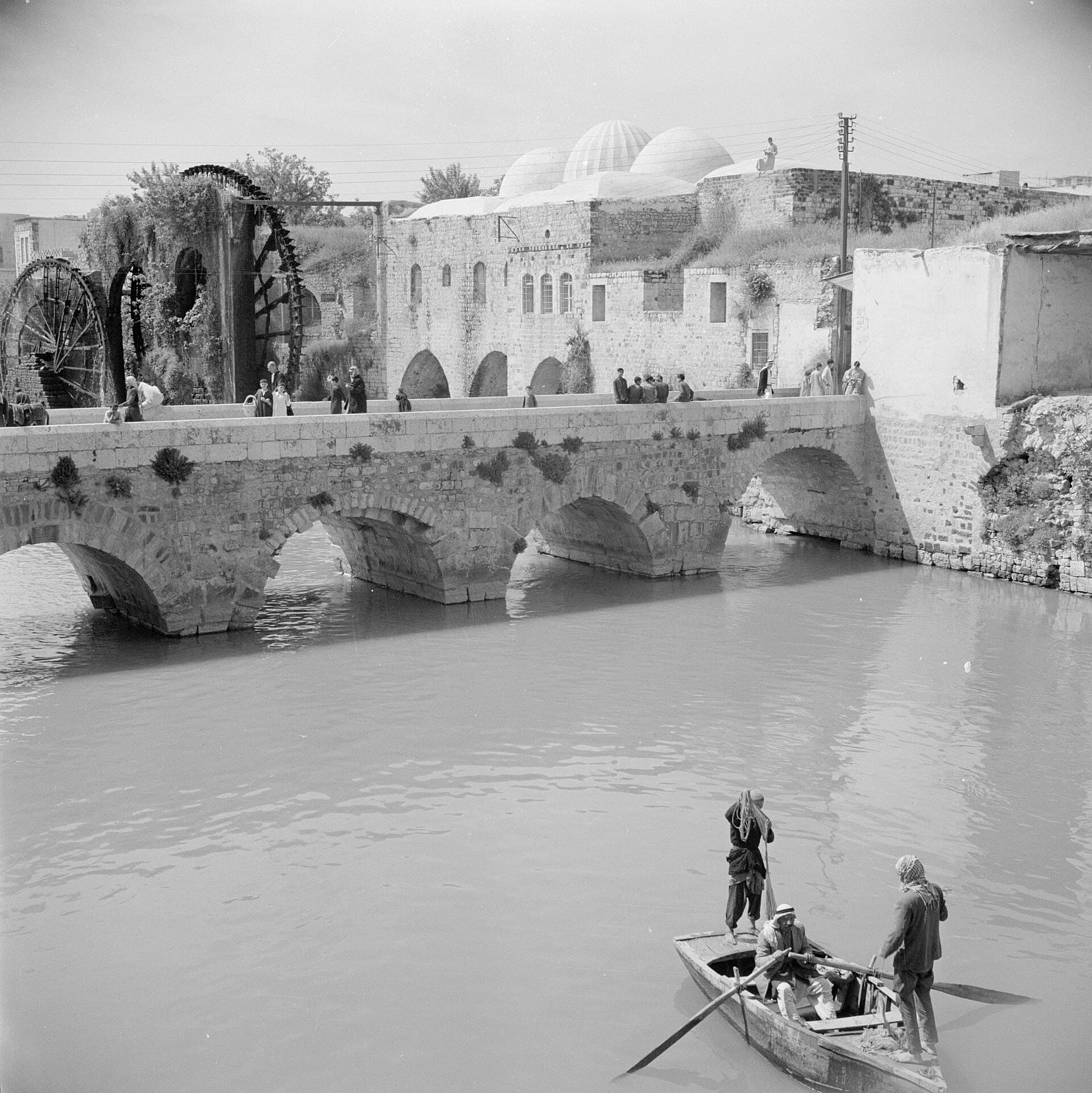 Hama · 14th century
Kilaniyya Bridge, Hama
A Mamluk stone bridge across the Orontes in central Hama: early 14th century, 5 arches, 40 metres long, with the al-Nuri Mosque at one end and the norias beside it.
- Ghab Plain · Iron Age to Mamluk period
Qastun and Tell Qastun
A town and its mound on the east bank of the Orontes in the northern Ghab Plain: the Aramaean Iron Age town of Qatan, a 16-hectare ancient site and a medieval fort.
- Hama · 1738
Khan As’ad Pasha al-Azm, Hama
An Ottoman caravanserai on al-Murabit Street, Hama, built in 1738 by As'ad Pasha al-Azm: a black-and-white stone portal, a later upper floor. Restoration began 2026.
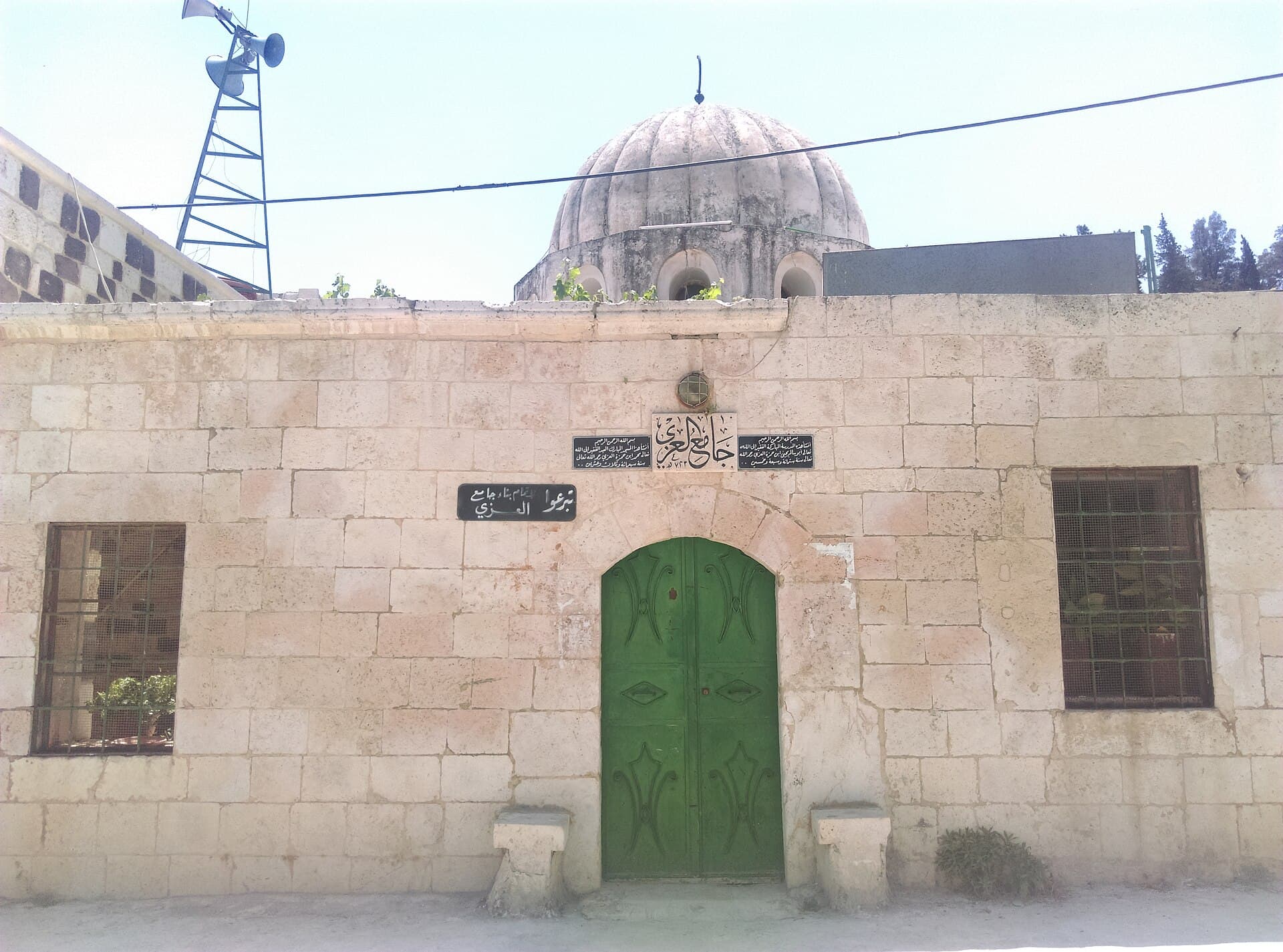 Hama · 1323
The al-Izzi Mosque, Hama
A small Mamluk mosque of 1323 in Bab al-Jisr, just north of the Hama citadel. Of the madrasa its founder added next door, only an inscription on the wall remains.
Where to eat
- Salamiyah · Eid pastry
Salamiyah Eid Ka’ak (aqras al-eid)
Salamiyah's Eid ka'ak: a disc scented with anise, fennel, mahlab and nigella, patterned by hand, baked in the last week of Ramadan at the neighbourhood oven.
- Hama · the winter soup of Salamiyah and Masyaf
Malqasa (bulgur dumpling soup)
Small balls of fine bulgur and flour turn into a winter soup with garlic, lemon or pomegranate molasses. Malqasa in Masyaf and Salamiyah, laqqasat on the coast.
- Hama · the pie of Masyaf and Salamiyah
Masyaf Ma’jouka (lamb pie)
Minced lamb and tail fat braided into the dough, with another layer on top: a double-thick pie about 30 cm wide. Breakfast in Masyaf, a student staple in Salamiyah.
Ready-made routes
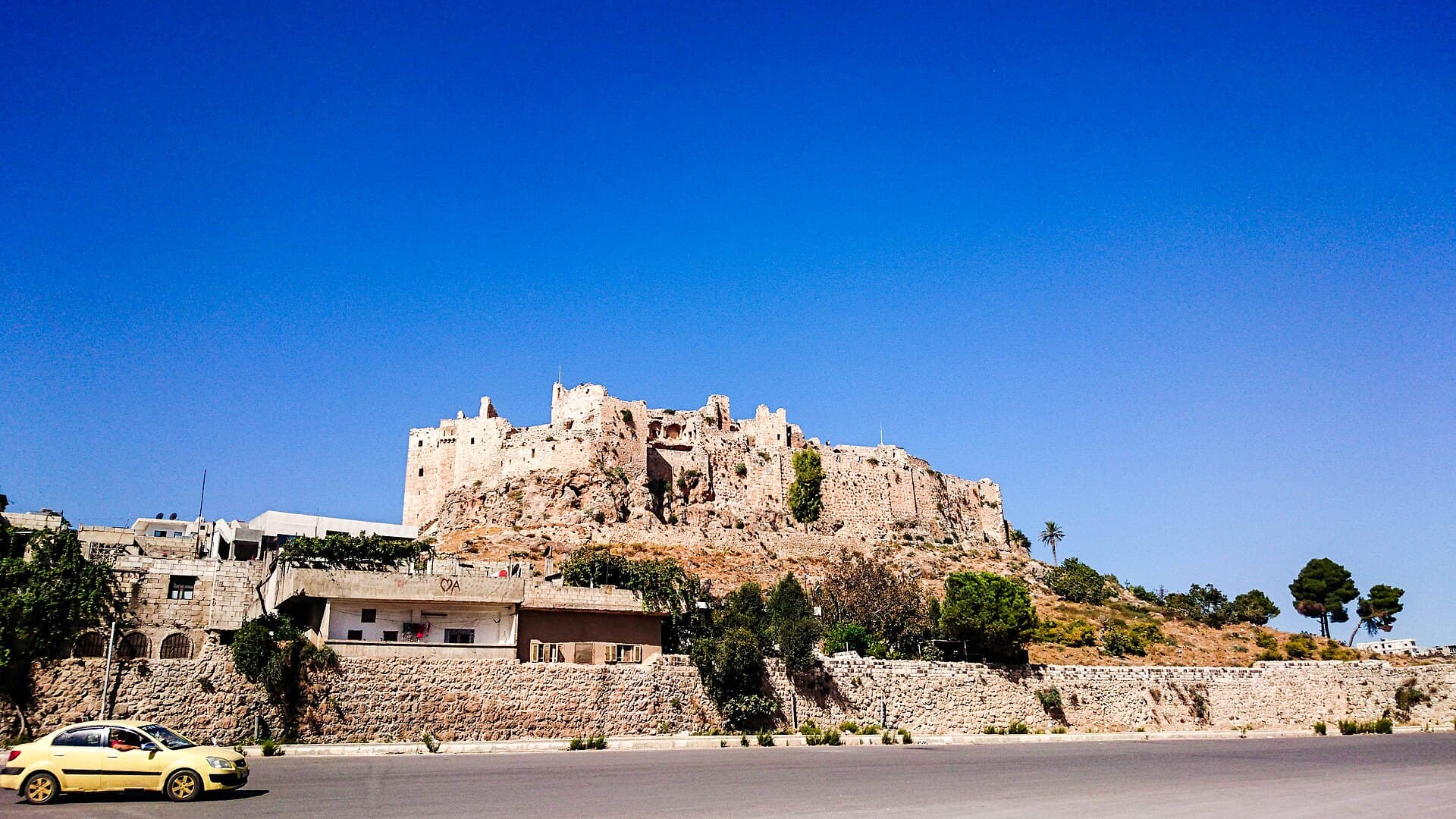 By car · 1 day
From Masyaf to Wadi al-Uyun: Rusafa Castle and the valley of springs
A 68-kilometre mountain day southwest of Masyaf: its Ismaili castle, tree-covered Rusafa, the waterfalls of Wadi al-Uyun and the Roman temple at Husn Suleiman.
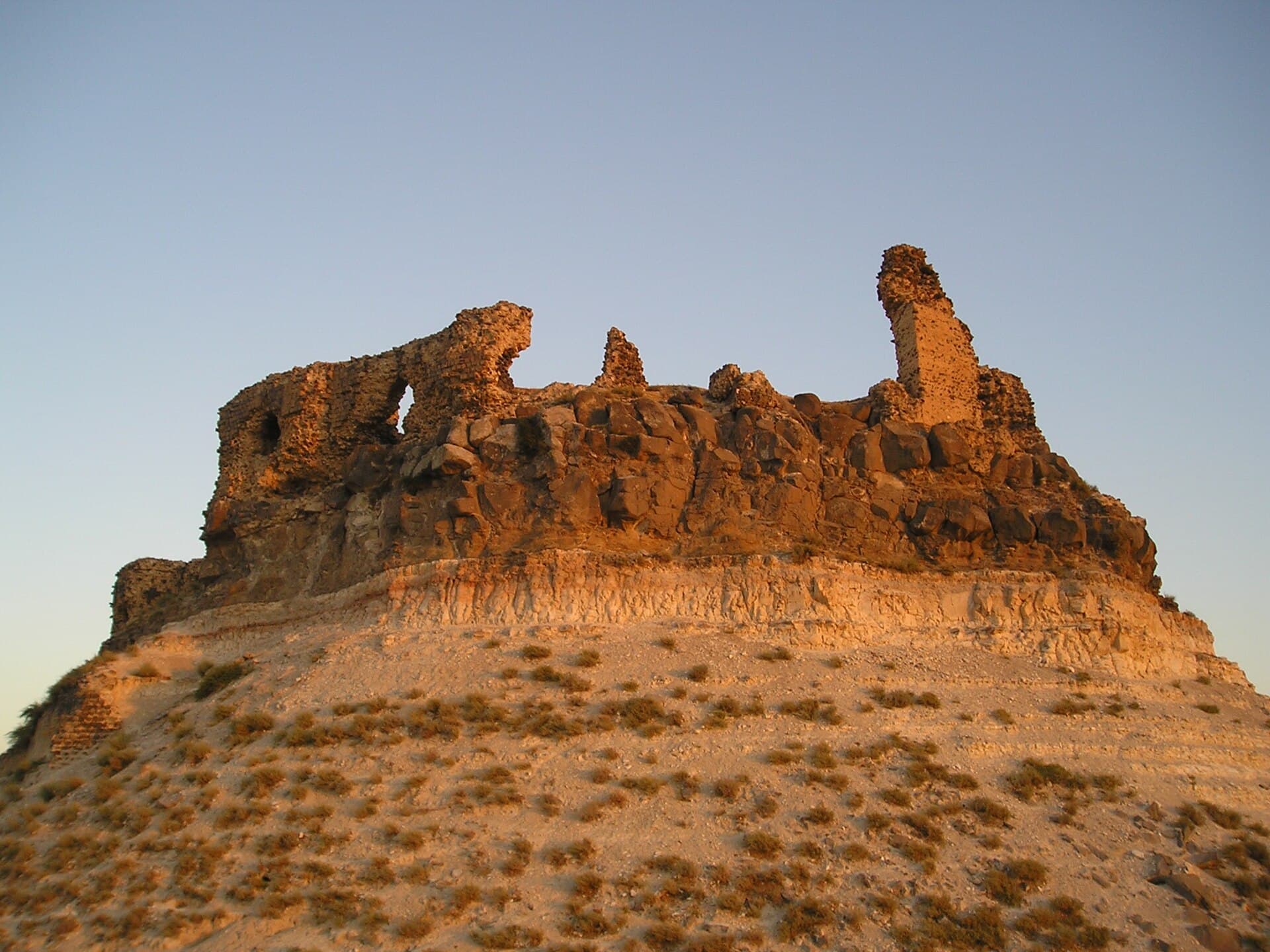 By car · 1 day
Hama to Salamiyah day trip: Riba fortress, Shmemis Castle and the Ismaili town
An 87-kilometre day east of Hama: the dry-stone basalt ring at Riba, Shmemis Castle on its extinct volcano, and Salamiyah, the town the Ismailis rebuilt in 1849.
 By car · 1 day
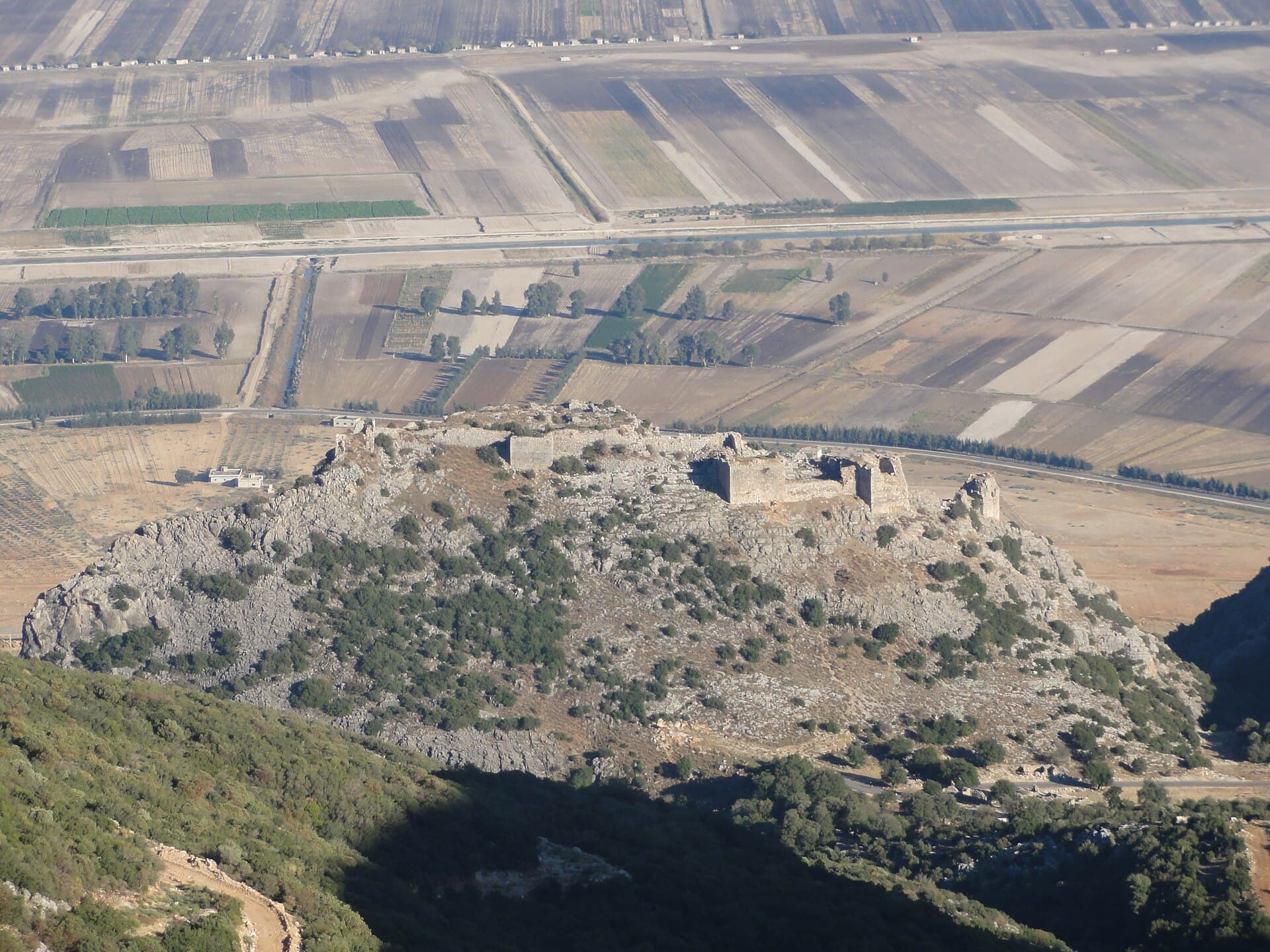
A day on the edge of the Ghab: Bourzey Castle, the theatre of Apamea and Suqaylabiyah
A long 185-kilometre day from Hama: Bourzey 450 metres above the Ghab, lived-in Qalaat al-Mudiq, the theatre of Apamea and the Hagia Sophia copy in Suqaylabiyah.
Transparency
- How this was chosen
- The answer on this page is written by hand. The lists are built from published records tied to this city and grow on their own as records are added.
- Facts checked
- August 2026
- Last updated
- September 15, 2026