What is Idlib famous for?
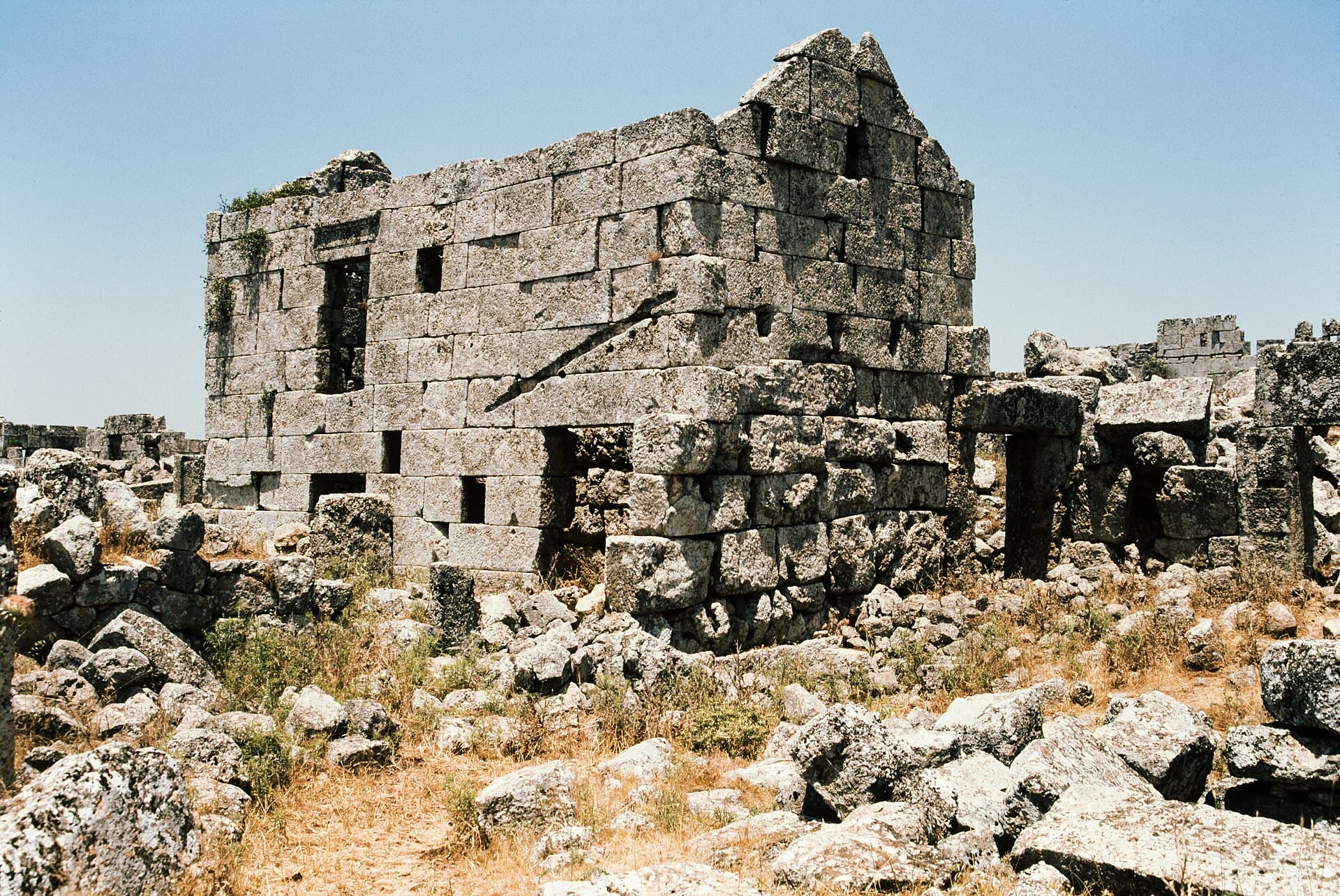
Idlib is known for the Dead Cities around it: Byzantine villages built and abandoned between the 1st and 7th centuries, most of them still standing. UNESCO listed them in 2011 as the Ancient Villages of Northern Syria and moved them to the List of World Heritage in Danger in 2013. Serjilla is the best preserved, al-Bara the largest, and the church at Qalb Lozeh the one that weighs most in architectural history. The city's own museum holds cuneiform tablets from the royal archive of Ebla. The governorate is also known for its olives and olive oil.
Highlights
- The bath house at Serjilla and the andron facing it: roofless, walls complete
- The pyramid-roofed tombs of al-Bara, standing in olive groves
- The twin-towered west front of the church at Qalb Lozeh
- Olive presses on an industrial scale among the ruins
- The Ebla tablets in the Idlib Museum — if it is open
What to see
- Idlib · Bronze Age — Iron Age
Tell Tuqan (Tell Touqan)
Tell Tuqan, 15 km from Ebla near Saraqib, is a 27-hectare Bronze Age mound ringed by two walls, excavated by an Italian team, with an Ottoman-era village on top.
- Idlib · Iron Age I
Tell Mastuma (Ancient Astamaku)
Tell Mastuma, just south of Idlib, is an Iron Age town a Japanese team dug for 15 years, likely Astamaku, taken by Assyria in 848 BC and named on the Balawat Gates.
- Idlib · Ismaili and Mamluk town
Sarmin, the Ismaili Soap Town East of Idlib
Sarmin, east of Idlib: an Ismaili mission house, Crusader rule from 1106, soap Ibn Battuta saw sent to Cairo, two old bathhouses, rock-cut caves, Roman cisterns.
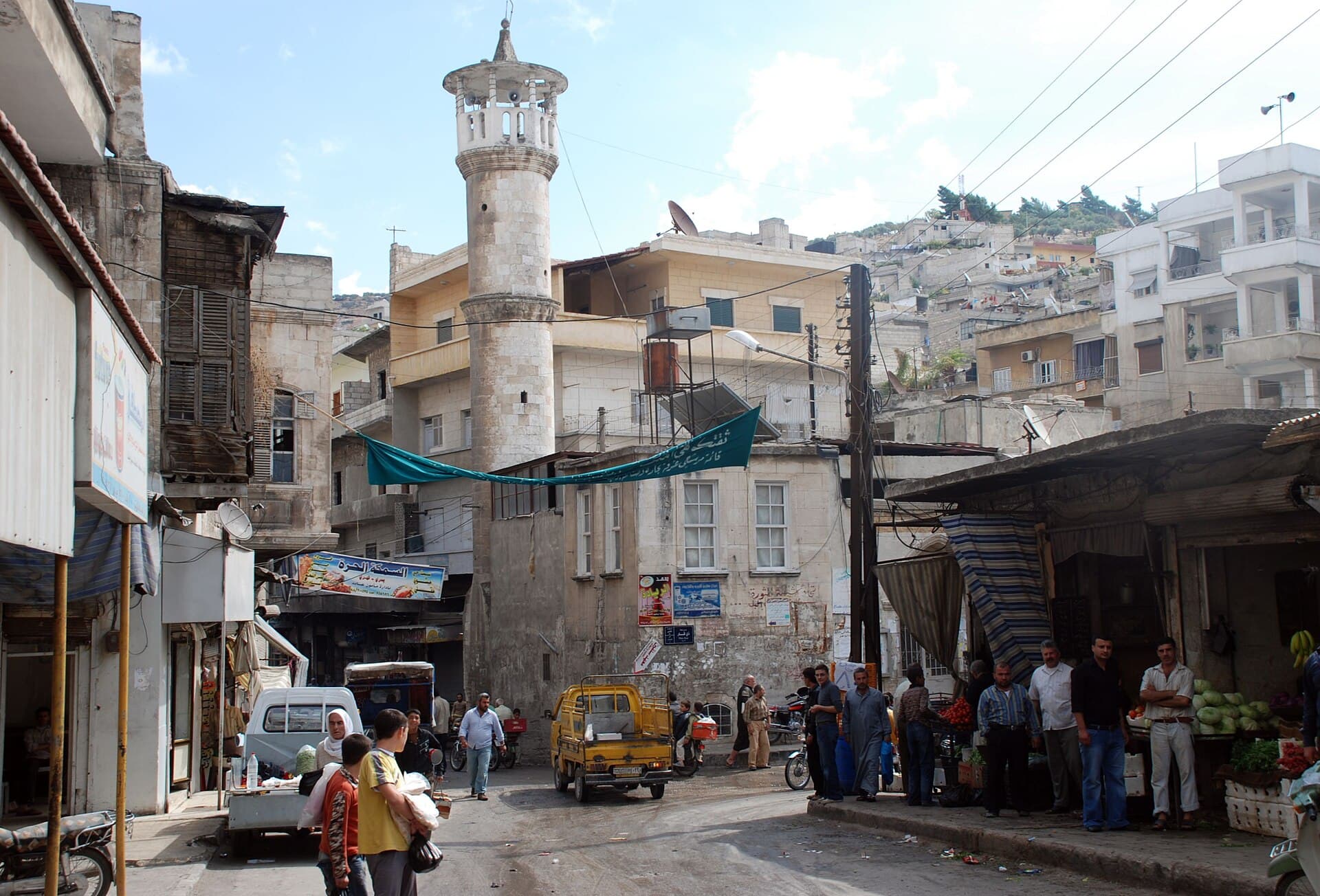 Idlib · olive town in the Orontes valley
Salqin, an Olive Town above the Orontes Valley
A town 46 km north-west of Idlib, at 460 metres above the Orontes valley: Surani olives, spring-fed orchards and a ruined castle listed by Ibn Shaddad.
- West of Idlib · drained lake basin
The Ruj Plain, a Drained Lake Basin West of Idlib
An 804 square kilometre basin ringed by the Harim hills: a lake drained before 1955, the Neolithic mound of Tell Ain el-Kerkh, and a route used by Assyrian armies.
- Idlib · olive town on an old road
Kafr Takharim, Hananu’s Hometown on the Old Antioch Road
An olive town 12 km south of Harim, between two ridges, where stones of the old road to Antioch survive and Ibrahim Hananu, who led the 1919 revolt, was born.
Where to eat
- Idlib · the orchards of Ariha
Ariha cherries, the orchards of Idlib
In Ariha, below Jabal al-Zawiya, cherries have been the leading tree since the 1950s. The varieties, the June harvest and the link to mahleb rootstock, explained.
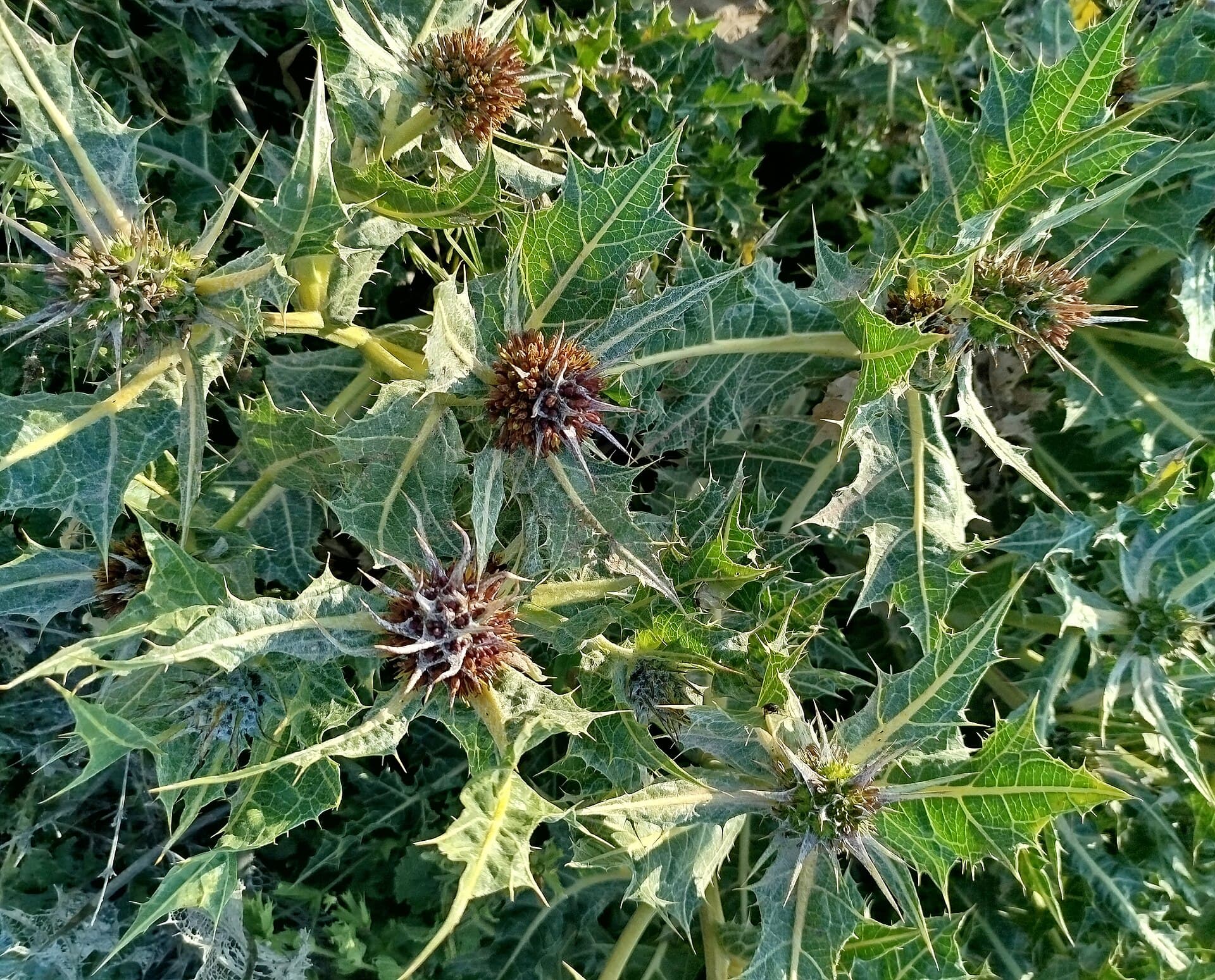 Idlib · spring foraging
Akkoub, the spring thistle
A thorny wild thistle of spring. What is eaten is the unopened flower head and the young stem, picked between March and May and, in Syria, baked into pies.
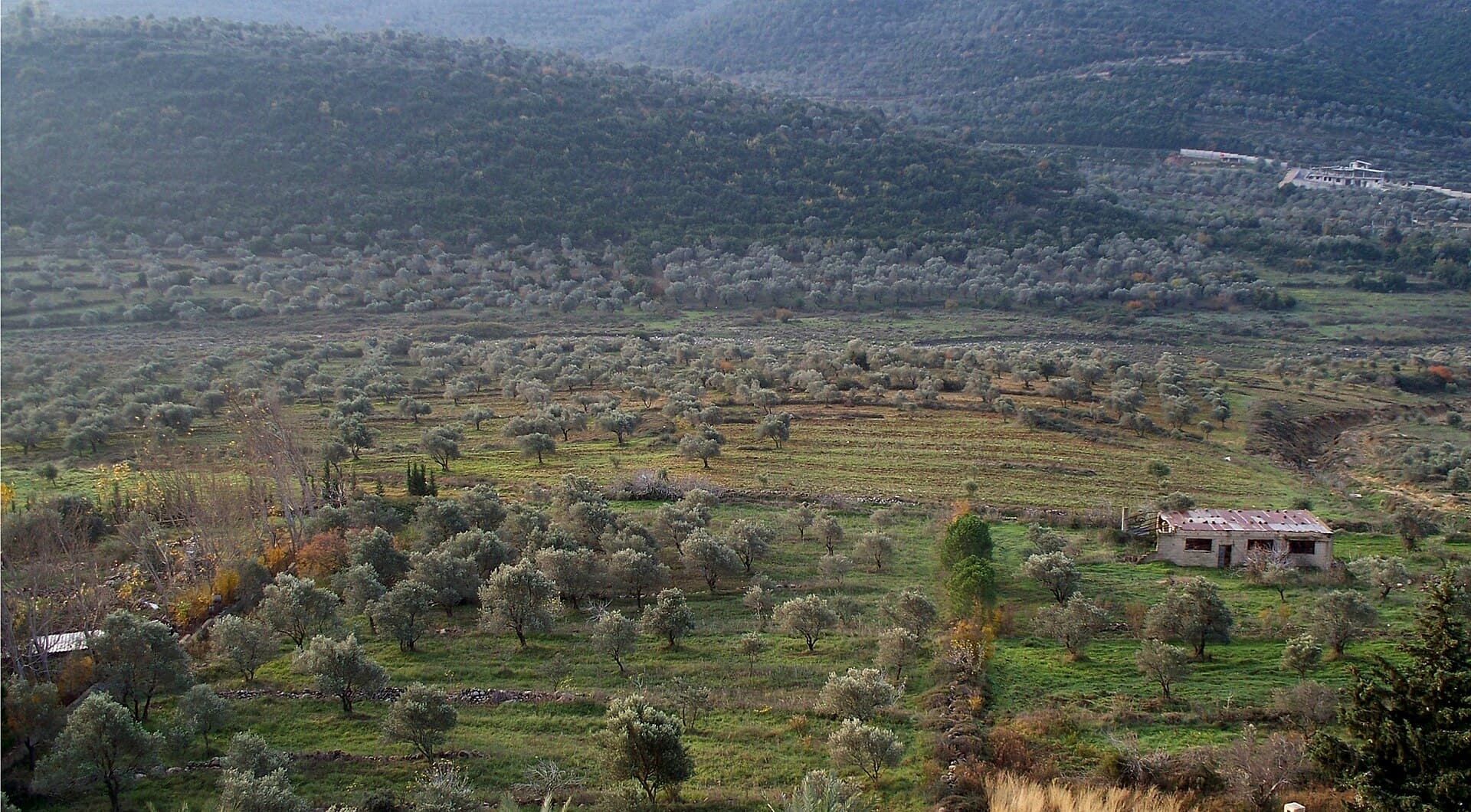 Idlib and the north · the base of the table
Olives and olive oil
The layer beneath the Syrian table. In bowls at breakfast, poured over the mezze, used for the cooking; Idlib and the Aleppo countryside are the groves.
Ready-made routes
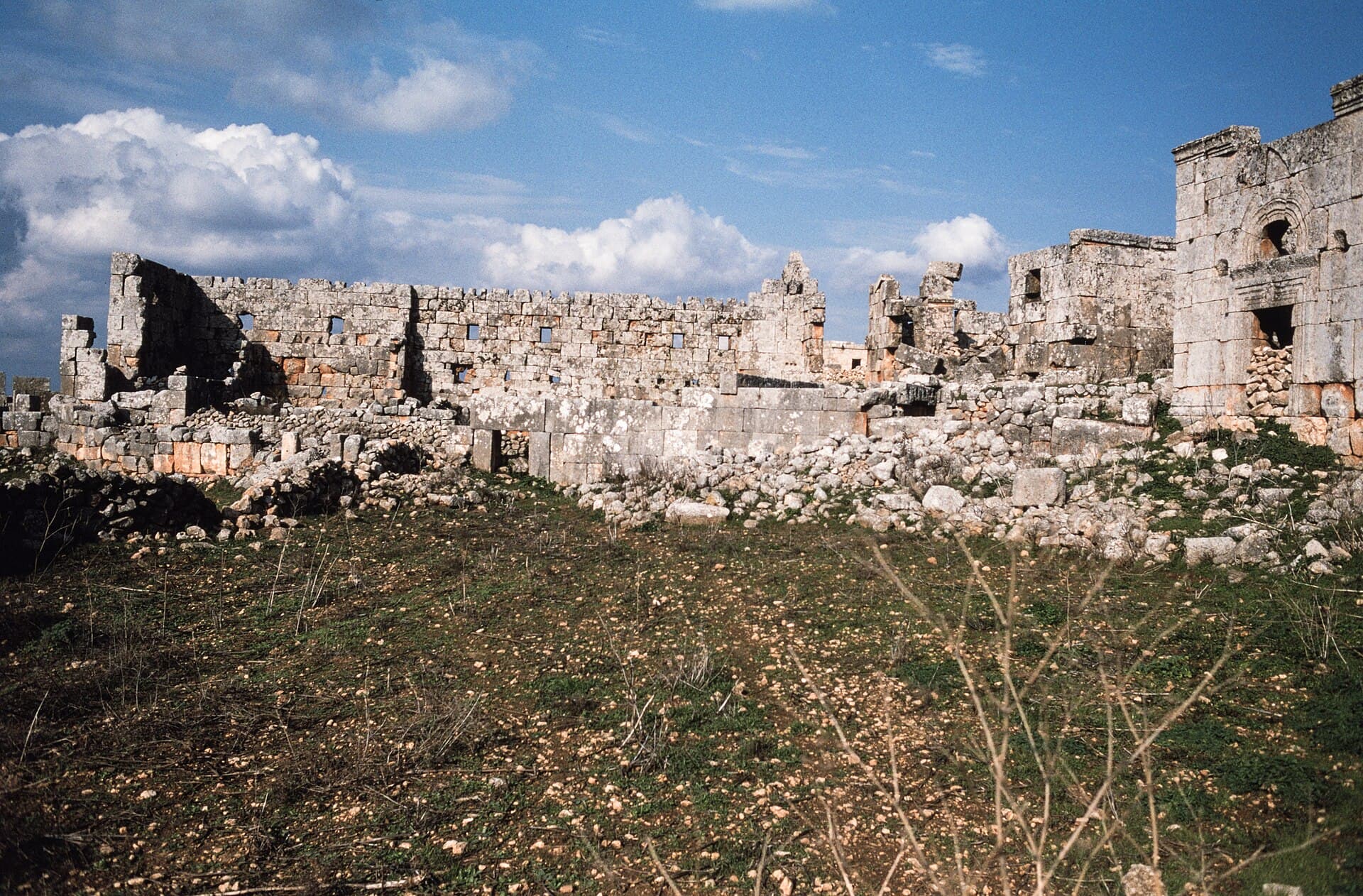 By car and on foot · 6 hours
Jebel Barisha’s northern slope in a day: Khirbet al-Khatib to Ksejbe
Five Dead Cities on the north of Jebel Barisha: Khirbet al-Khatib, Deirouni, Dar Qita, Ba'uda and Ksejbe. Inscriptions from 392 to 537, six hours by car and on foot.
 By car · 1 day
A day from Idlib to Jabal Barisha: the museum and three dead cities
116 kilometres around Idlib: a museum open with two halls, a house church inside a Roman house, a dated market building and one facade stone in an olive grove.
 By car · 1 day
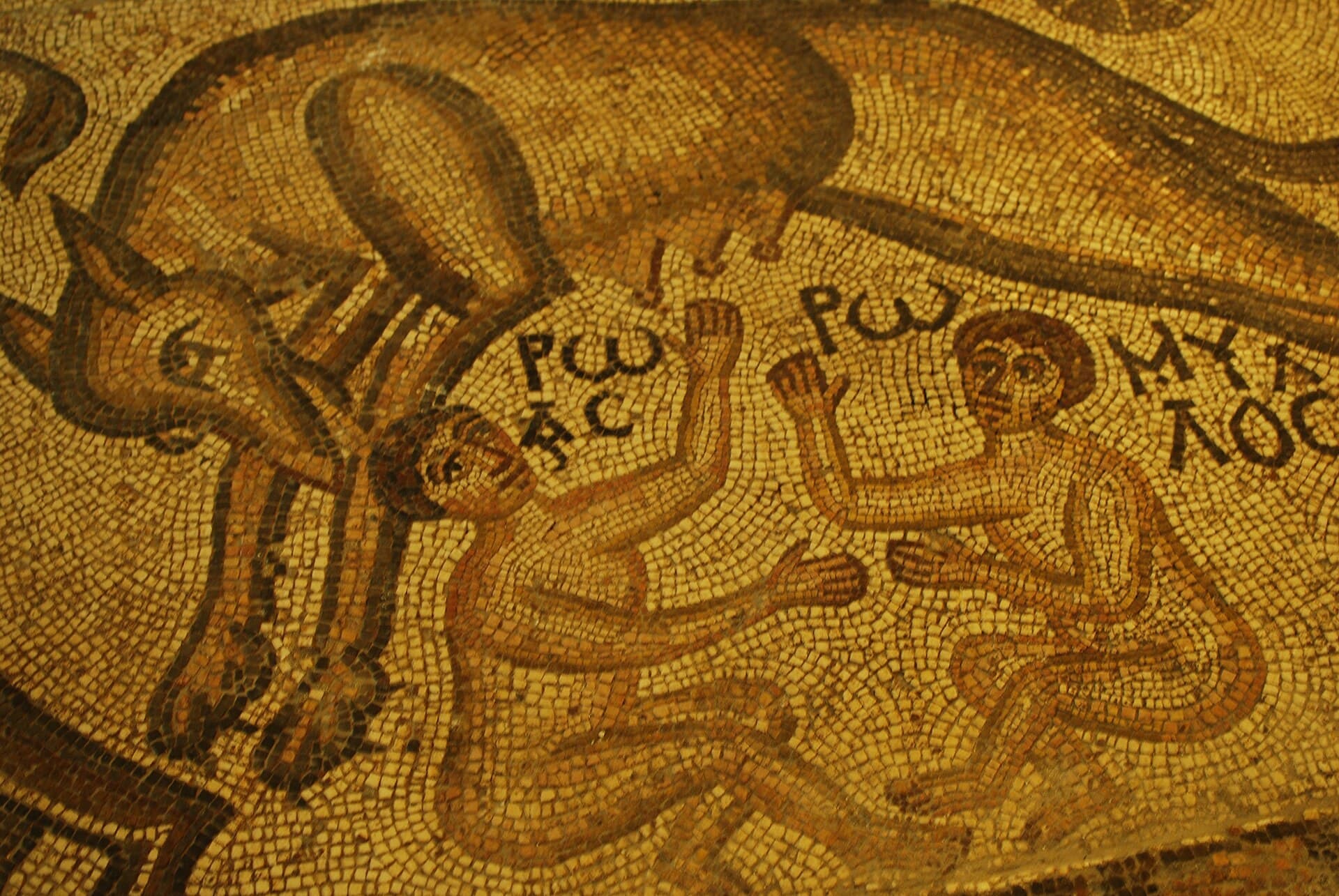
Idlib to Maarat al-Numan: a day along the Aleppo–Damascus road
A town mosque in the morning, a third-millennium mound at noon, mosaics in a caravanserai in the afternoon. 52 kilometres on the Aleppo–Damascus line.
Transparency
- How this was chosen
- The answer on this page is written by hand. The lists are built from published records tied to this city and grow on their own as records are added.
- Facts checked
- August 2026
- Last updated
- September 15, 2026