Jebel Barisha’s northern slope in a day: Khirbet al-Khatib to Ksejbe
Five Dead Cities on the north of Jebel Barisha: Khirbet al-Khatib, Deirouni, Dar Qita, Ba’uda and Ksejbe. Inscriptions from 392 to 537, six hours by car and on foot.
- Duration
- 6 hours
- Distance
- 10.4 km
- Difficulty
- Moderate
- Best season
- March–May, October–November
- stops
- 5
- City
- Idlib
On the northern slope of Jebel Barisha, five Dead Cities, the abandoned stone villages of northern Syria, line up along one route, and the inscriptions over their doors give their dates in turn. This route starts at Khirbet al-Khatib in the west, passes Deirouni Chapel and Dar Qita, and reaches the row of shops at Ba’uda and the hill of Ksejbe. About 10 kilometres by car, with one leg on foot; six hours in all. The church inscriptions run from 392 to 537.
The route
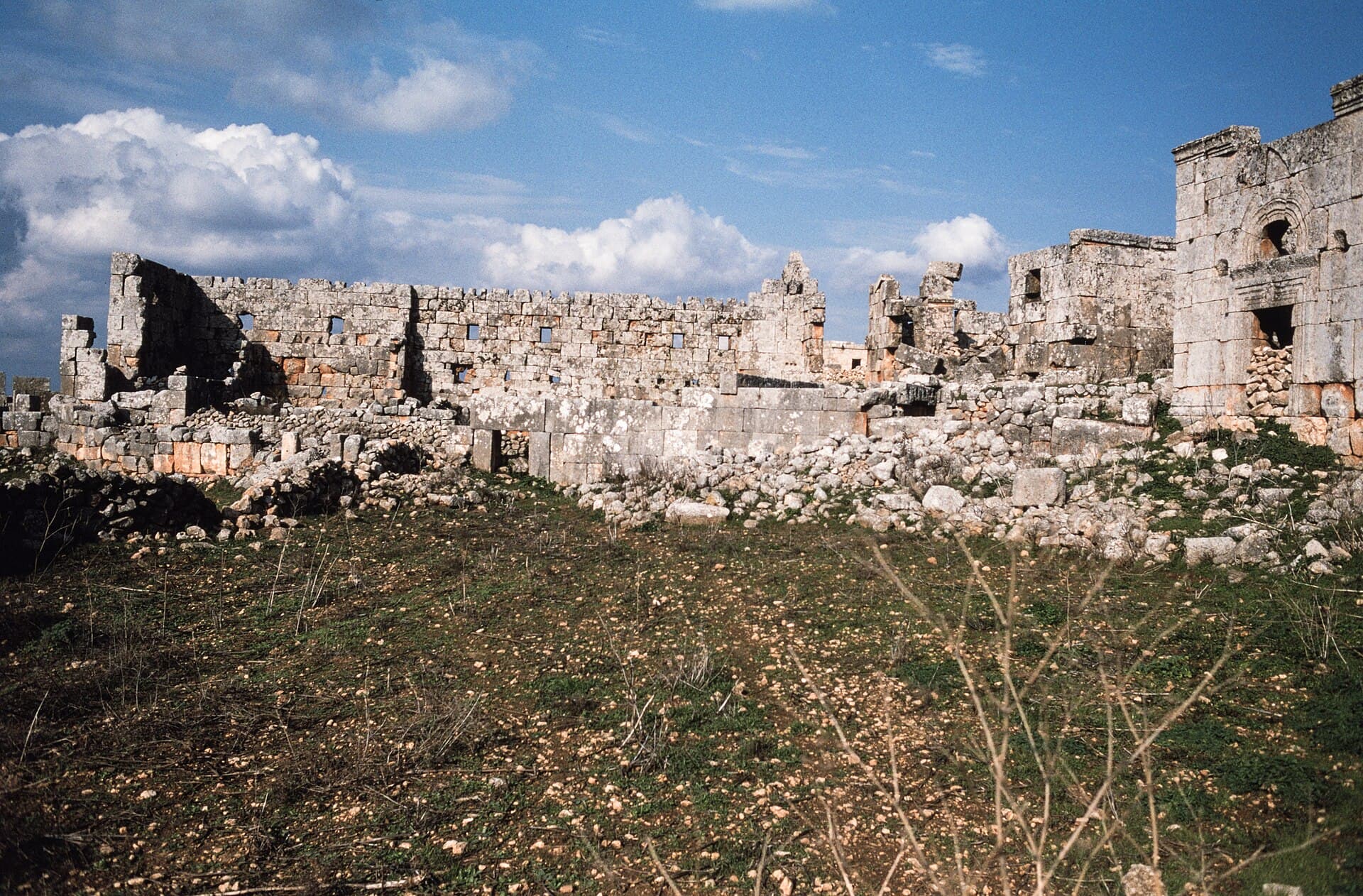
At Khirbet al-Khatib three layers share one site: remains of a temple from the 2nd and 3rd centuries, a church dated by its inscription to 473, and a baptistery dated 532 about 5 metres south-east of the church. In the apse, look for a second moulding that projects halfway up. From here, drive east to the slope below Baqirha.
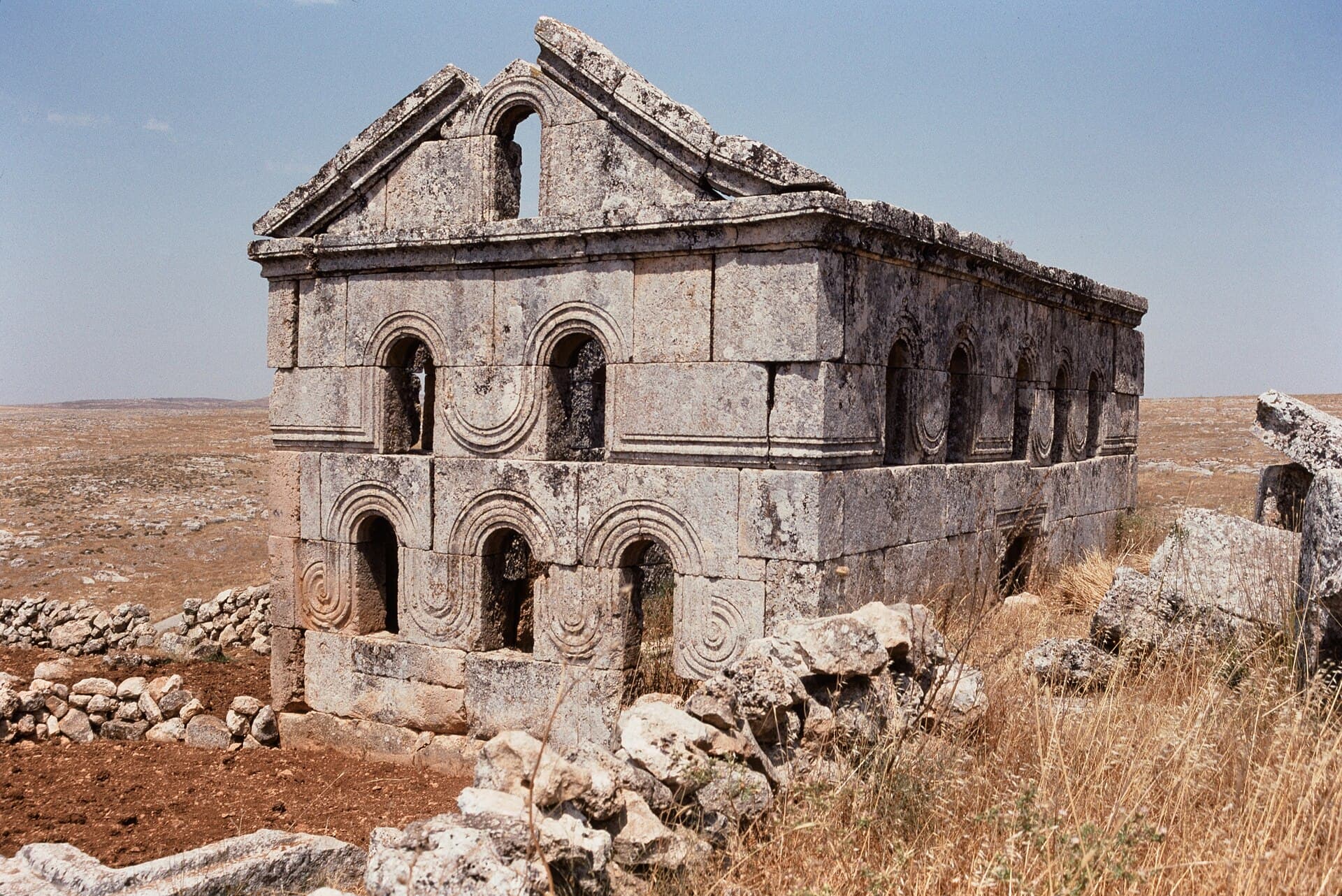
Deirouni Chapel stands alone on the slope. Its plan is a simple rectangle, and the decoration gathers around the windows. In the lower row of windows on the west front, the mouldings curl and end in spirals at both ends. From the chapel, walk up the slope to Dar Qita, 685 metres north-east. Have the driver bring the car round to Dar Qita.
Dar Qita keeps three churches, two baptisteries and some forty houses. The Church of Saints Paul and Moses was finished in 418, according to its inscription. The baptistery at its south-west corner is dated 515, and the Church of Saint Sergius 537. Look for dates on the door lintels; the oldest is over the door of a house, 295/296.
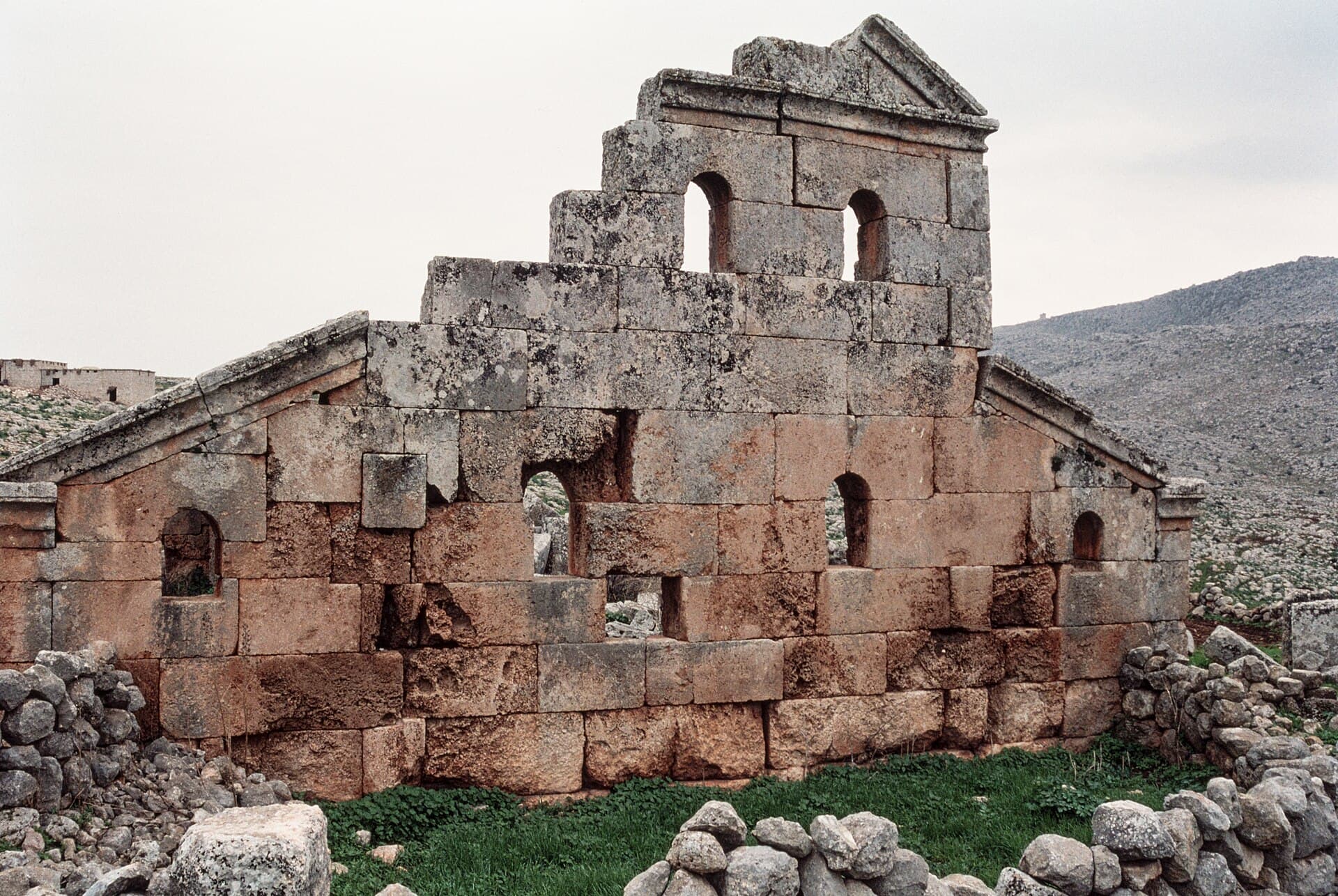
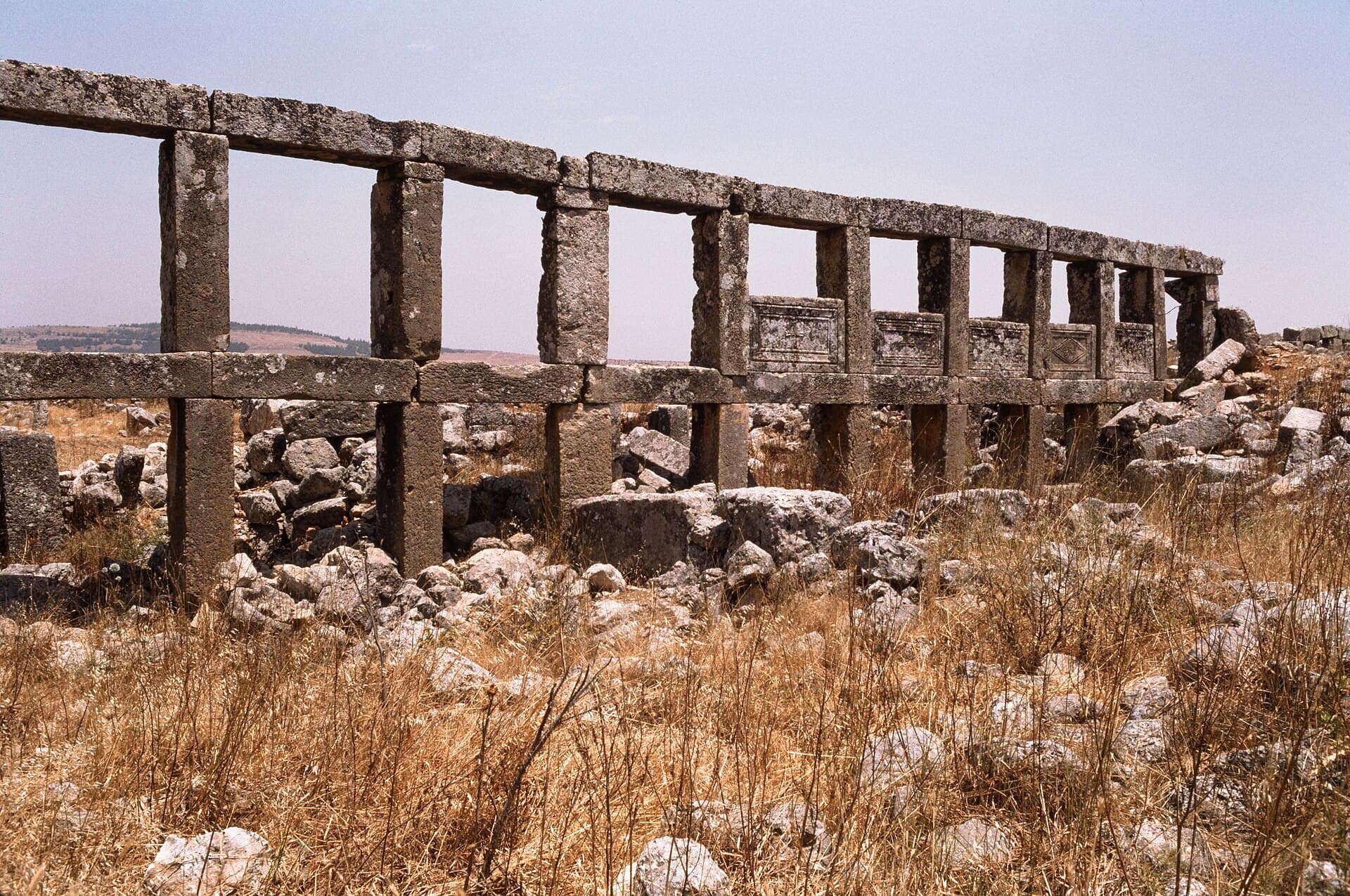
From Dar Qita, drive to Ba’uda, about ten minutes. At Ba’uda the houses stand in rows with two-storey stone porticoes in front: shops below, living quarters above. One of the parapet slabs on the upper floor carries a cross in relief. The Greek inscription of the small church, dated 392, was set into the wall upside down.
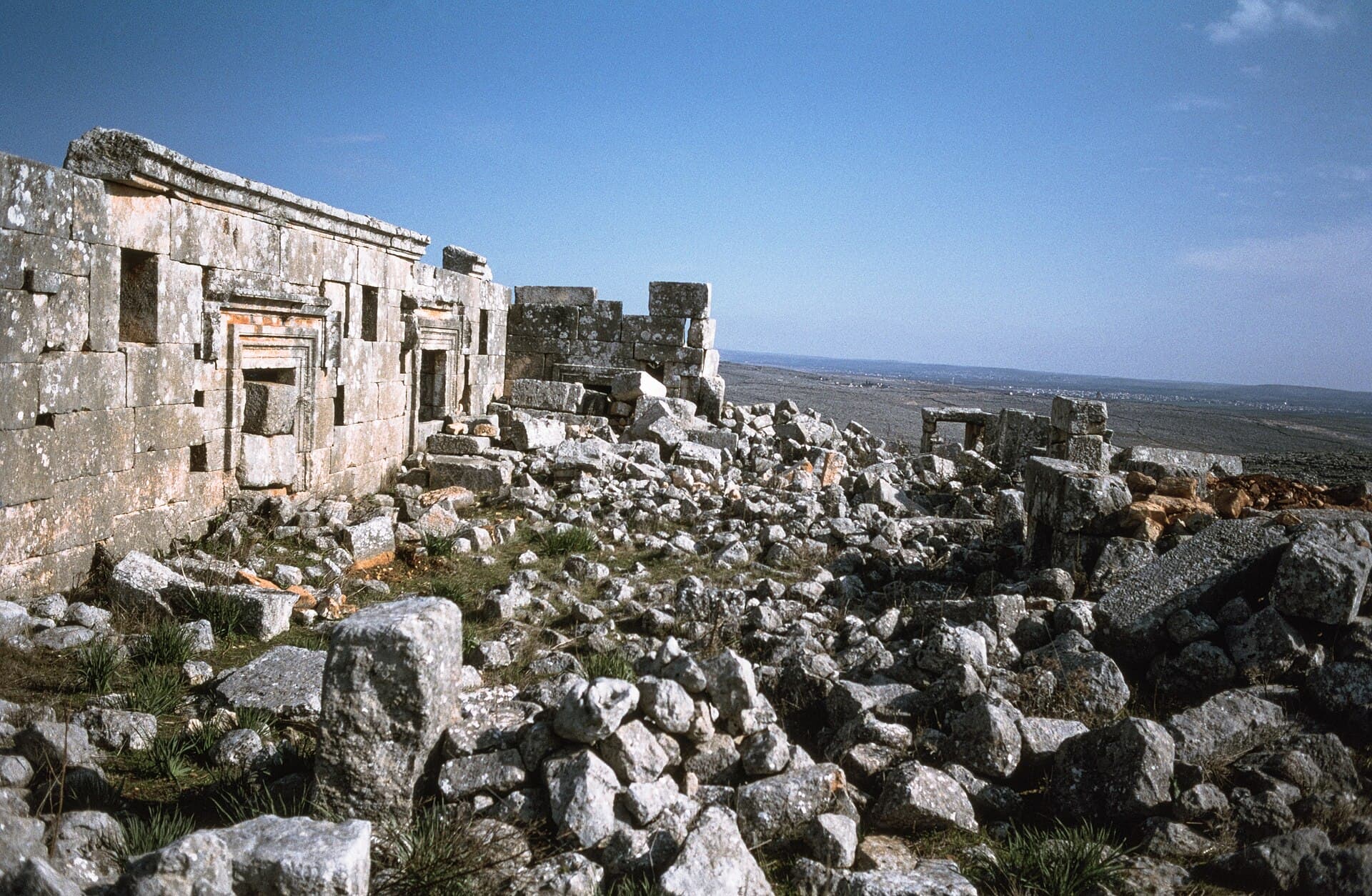
Ksejbe is on the hill about a kilometre to the south-east. The south front of the Great Church still stands with its two decorated doors. The lintel over the south-east door gives the date 414 and the name of the architect, Markianos Kyrillas. The capitals fallen into the nave are each carved differently: Corinthian, disc and basketwork side by side. The same architect’s name turns up three times on this route: Markianos Kyris at Dar Qita and on the east door at Ba’uda, Markianos Kyrillas at Ksejbe.
Timing
Be at Khirbet al-Khatib at 08:30 and stay forty-five minutes. Reach Deirouni at 09:30. Morning light brings out the mouldings on the east and south faces with shadow; half an hour is enough. Start walking to Dar Qita at 10:00 and give it an hour, more if you plan to read the lintels one by one.
Drive to Ba’uda at 11:30; forty-five minutes is enough. Be at Ksejbe around 12:30. Allow between forty-five minutes and an hour to walk among the capitals. On a clear day the Sarmada plain shows from the hill. All the sites are open ground; the plan runs in the morning to finish before the summer heat builds.
Take care
There is no public transport; people hire a car with a driver from Idlib or Sarmada. There are no signs at the sites; a driver who knows Baqirha will find the others. Khirbet al-Khatib also appears in sources as Khirbet al-Katib, so give the driver both names. There is a second Ba’uda on Jebel Zawiya; to avoid confusion, ask for the Ba’uda near Bab al-Hawa.
The route is a few kilometres from the Bab al-Hawa border crossing, and road conditions change. Do not set out before talking through that day’s situation with the driver. During the war, displaced families took shelter in these Dead Cities; people may be living in the buildings, so call out before approaching and do not enter a lived-in space. Unexploded ordnance is a reported risk in rural Idlib: stay on the path and do not touch metal objects on the ground. At the farm south-west of Ba’uda, ancient buildings are used as animal sheds; do not enter the yard without permission. At Ksejbe the stones are fallen and unstable. Entry fees change, so confirm them at the entrance.
The route on a map
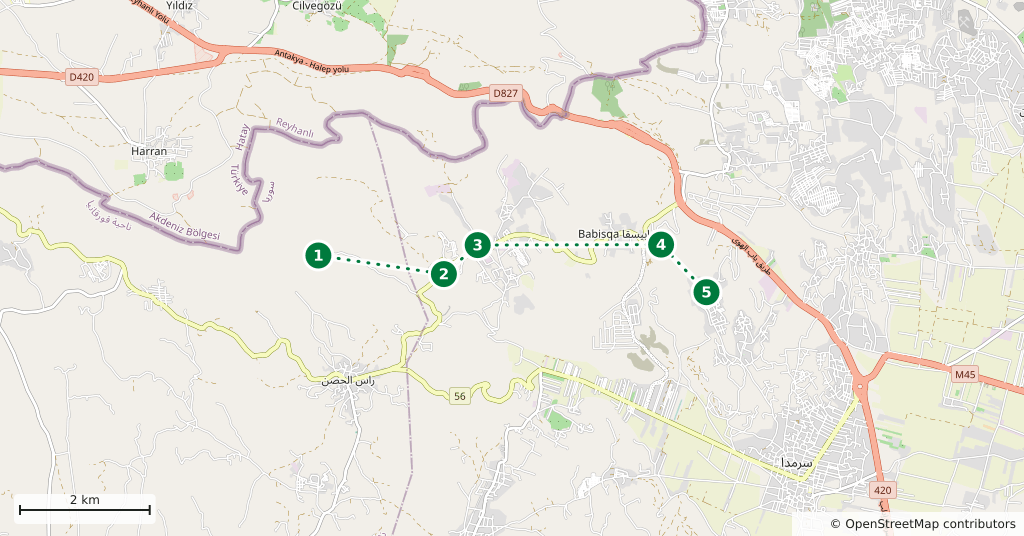
Stops along the route
- 01
- 02
- 03
- 04
- 05
Transparency
- How this was chosen
- The stops and their order were set by hand. The line on the map is real road geometry, not a straight hop between pins; distance and duration belong to that itinerary.
- Facts checked
- September 2026
- Last updated
- September 15, 2026