Freekeh
Wheat cut green and set alight in the field. The smoke stays inside the grain, and northern Syria builds both its soup and its pilaf on this one cereal.
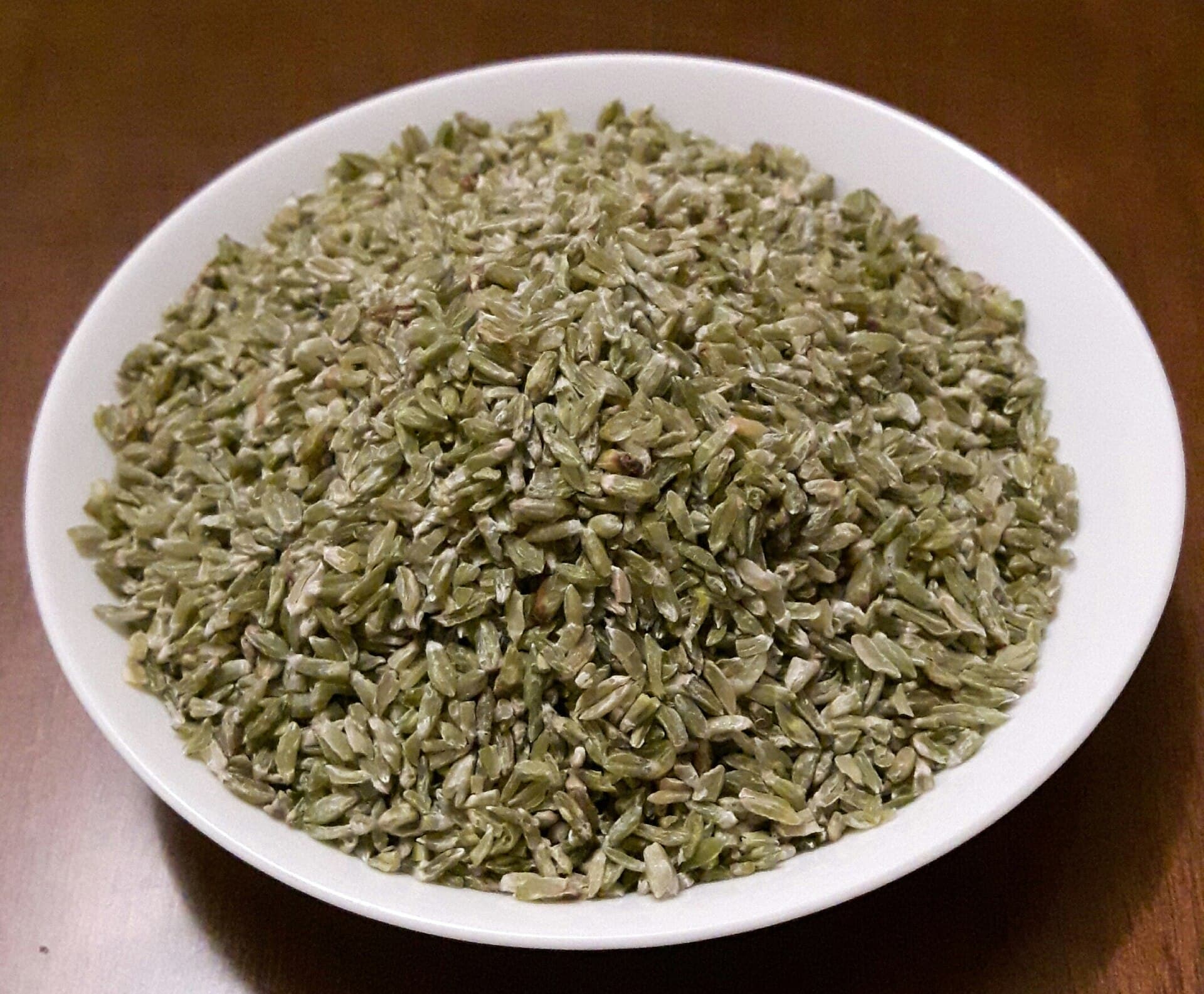
- Where to eat it
- At home-style kitchens, as soup or as pilaf, mostly at lunch. Raw grain is sold by weight at spice merchants in the market.
- Price
- Variable — ask the price of a plate when you order
- When it is eaten
- Lunch, from the pot; the harvest itself is at the end of May
The wheat is cut while still green, when the grain is soft and milky. The sheaves are piled in the field and set alight: the dry straw and chaff burn while the moisture inside the grain protects it. What is left is threshed, dried in the sun and sometimes cracked like bulgur. The name comes from that last step — farake in Arabic means to rub, and the burnt chaff is rubbed off the grain by hand.
Where it is made
This is northwest Syrian work. In the Idlib and Aleppo countryside the harvest starts at the end of May, when the leaves of the wheat are only beginning to yellow. In towns like Taftanaz the piles are burned at the edge of the field, and the smell of smoke carries into the village. Lebanon, Palestine, Jordan and Egypt make it too. What is different in Syria is that the grain carries a culinary identity of its own.
How it reaches the table
Two main routes. One is soup: cooked down in chicken or lamb stock until it thickens, sometimes with chickpeas. The other is pilaf: fried in butter, cooked in stock, topped with lamb, almonds or pine nuts and cinnamon. In Aleppo it is an everyday grain. The further south you go, the more it becomes food for a gathering.
What it tastes like
Smoky, with a faint bitterness behind it. Firmer than bulgur, more filling than rice. The grain runs green and stays green after cooking; the colour on the plate is not dye.
Where a traveller finds it
On menus it is usually one line — freekeh, then whatever meat comes with it. Home-style kitchens that cook in pots put it out at lunch, and it is easier to find then than in the evening. Raw grain is sold by weight at spice merchants in the market, and because it is dry and light it is one of the few things that travels well in a suitcase.
Tips
- If you do not see it on the menu, ask — many pot kitchens have it unwritten
- Say whether you want the soup or the pilaf; they are two different plates
- Buying it raw, ask for the cracked kind; whole grain takes much longer to cook
- It is not gluten free — this is wheat, only harvested early
Transparency
- How this was chosen
- Two kinds of record live here: the dish itself, and the place that serves it. Both are chosen and written by hand; ranking is not for sale and there are no sponsored entries. If a price range is not known for certain, it says so. Venues that serve alcohol are not listed on this site at all.
- Facts checked
- August 2026
- Last updated
- September 15, 2026