Sumac
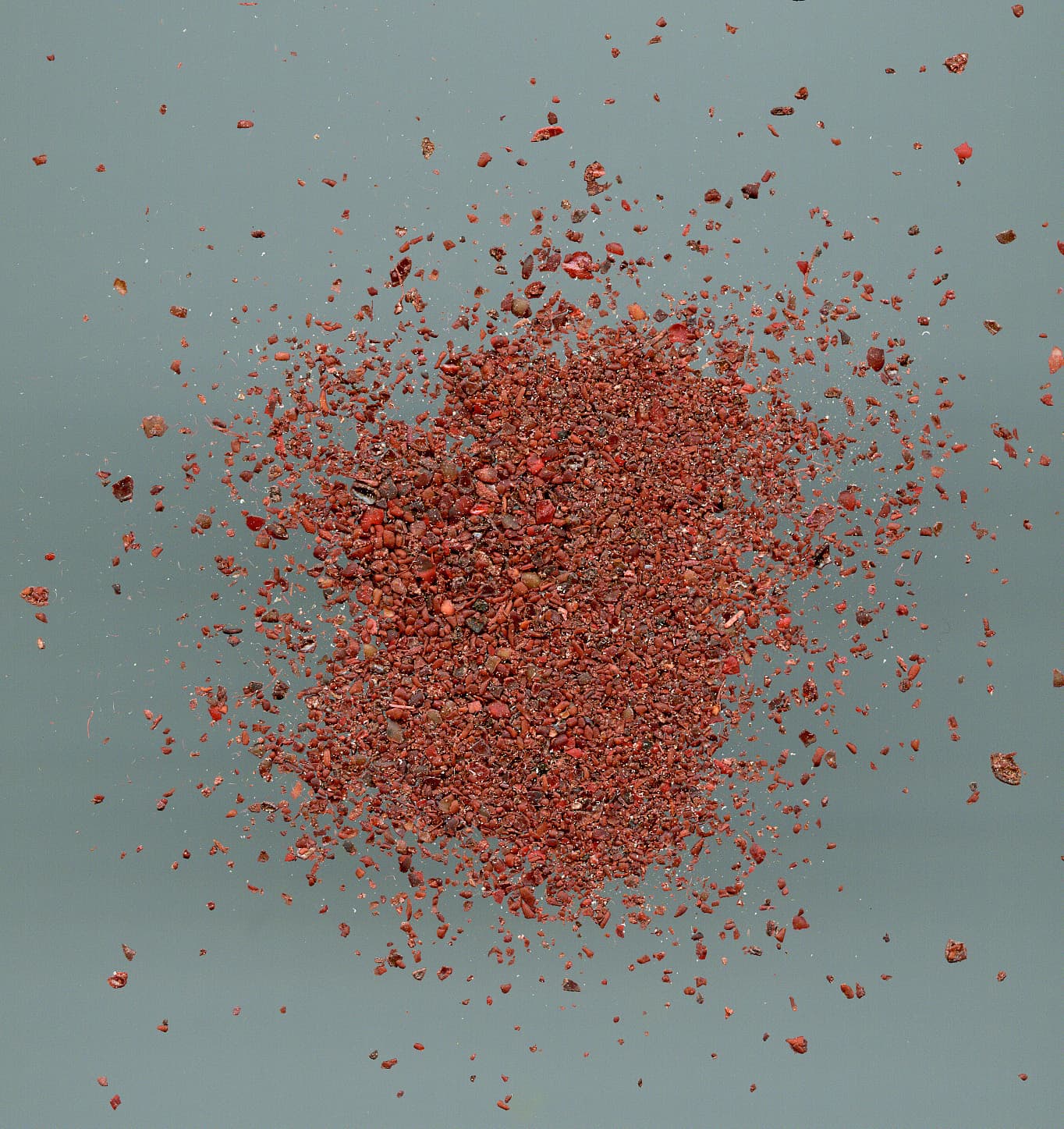
Dried, crushed dark red grains. Before lemons spread through the Mediterranean this was the source of sourness, and it still reddens za’atar and fattoush.
- Where to eat it
- Over fattoush, onion salad and grilled meat, and along the edge of hummus; sold by weight at spice merchants in the Aleppo and Damascus souqs.
- Price
- Sold by weight; a small amount lasts, so ask the price at the spice shop
- When it is eaten
- On the shelf all year
Sumac is a dried, crushed fruit: coarse rather than powdery, matte and dark red. The sourness it gives is not sharp the way lemon is. It sits behind the food and works with salt. On a Syrian table it goes over fattoush, over onion salad, over grilled meat, and along the edge of a plate of hummus. It is also the red, sour part of a za’atar mix.
Where the sourness comes from
Sumac comes from the fruit of a shrub, Rhus coriaria. The ripe berries are dried, then crushed and sieved. Before lemons spread through Mediterranean cooking this was the main source of sourness; the Romans used it in vinaigrettes for the job lemon does now. Its place in the kitchen is older than lemon, and it never gave that place up.
Where it lands on the table
It is a finishing spice, scattered over the food and usually at the last moment. In fattoush it carries the sourness that sits beside the fried bread. Thinly sliced onion, rubbed with sumac, loses its bite and arrives that way next to the grill. The red line along the rim of a hummus plate is the same thing. In Aleppo za’atar the sourness comes from sumac, not from citric acid; two mixes with the same name are not always the same mix.
How to choose it at the stall
Good sumac is matte, dry and deep red. Treat anything damp, glossy or eye-catchingly bright with suspicion. The quickest test is to ask the spice merchant for a pinch and taste it: sourness should come first, and if salt arrives before it the mix has been weighted with salt. It is sold by weight, and a small amount lasts a long time.
Before the spice: the tanner’s shrub
The leaves and bark of the same plant do not go to the kitchen. They go to the tannery, because they are high in tannin, and one of the plant’s Arabic names comes straight from that trade. Different parts of it yield red, yellow, black and brown dyes. The grains on the spice merchant’s shelf come from the same plant that supplied the dyer and the tanner.
Tips
- Buy the matte, dry one; be suspicious of anything damp, glossy or too bright
- Taste a pinch; if salt arrives before the sourness, the mix has been weighted with salt
- Za'atar takes its sourness from sumac; a mix made with citric acid is not the same thing
- Keep it in a closed jar away from light; once the colour fades the taste has gone too
Transparency
- How this was chosen
- Two kinds of record live here: the dish itself, and the place that serves it. Both are chosen and written by hand; ranking is not for sale and there are no sponsored entries. If a price range is not known for certain, it says so. Venues that serve alcohol are not listed on this site at all.
- Facts checked
- September 2026
- Last updated
- September 15, 2026