Su boereg: the Armenian water borek of Aleppo
The sheets are boiled before they ever reach the oven, which is where the name comes from. In Aleppo it is feast food, baked at the neighbourhood oven.
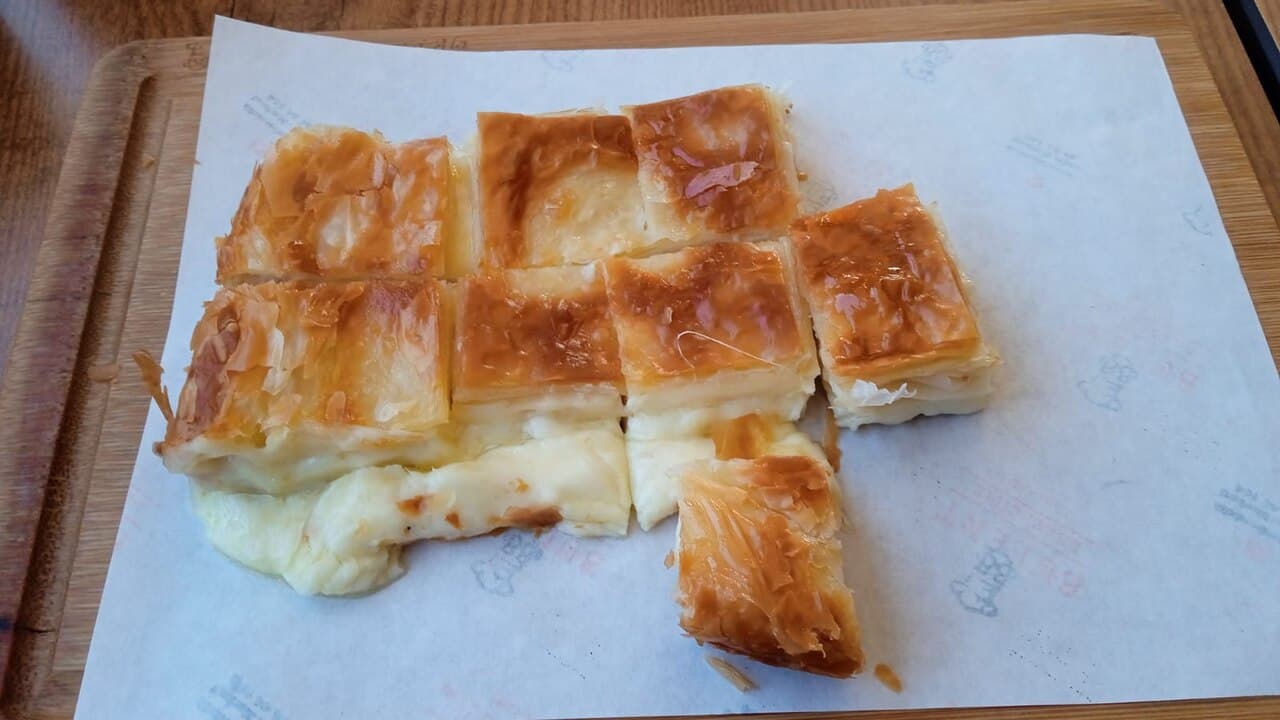
- Where to eat it
- Baked by the tray at the Armenian bakeries of Aleppo; at home it is food for feasts, weddings and large gatherings.
- Price
- Variable — sold by the tray or the slice at the bakery; ask at the counter
- When it is eaten
- Feast and wedding season, straight out of the oven
Su boereg separates itself from every other borek by one step: the pastry sheets are boiled in water before they go into the oven. That is where the name comes from — water borek. Boiled dough does not dry out, the layers settle into each other, and what comes out is not a crisp leaf pastry but a soft stack closer to lasagne. In Aleppo it belongs to feasts, weddings and large gatherings rather than to an ordinary evening.
The step that names it
Hand-rolled sheets go briefly into large pots of boiling water, straight into iced water, and then to drain. They are laid in an oiled tray layer by layer: butter or clarified butter between the layers, white cheese and parsley through the middle. The top few sheets stay unboiled, because that is the face that has to brown. It bakes until the top colours and is cut while still warm. Cut it hot and the layers slide under the knife.
The Aleppo version
In Aleppo the filling is built from a mix of four cheeses, with parsley and Aleppo pepper beside it. The pepper is not there for heat. It is there for scent, and it lifts the flat taste that boiled dough otherwise leaves. That detail ties the pastry to the city’s own kitchen, because the same technique elsewhere is worked with one cheese and no spice.
Whose dish it is
Su boereg is an established pastry in Turkish cooking, and most sources place it there. It entered Aleppo by a separate road: it came with the bakeries of the Armenian community that settled in the city after 1915, and spread from them into the rest of the city. Being on an Aleppo table does not make it Syrian. It is a shared pastry. Aleppo has its own version.
Why it goes to the neighbourhood oven
The preparation is long and the tray is wide. A home oven will not take most trays, and when it does it browns the base unevenly. So the pastry is assembled at home, the covered tray is carried to the neighbourhood oven, and it comes back baked. For a traveller that means one thing: rather than looking for su boereg on a restaurant menu, ask for it at the Armenian bakeries of Aleppo or at a feast table.
Tips
- Cut it warm; hot layers slide under the knife
- For the Aleppo version, ask for the one with four cheeses and Aleppo pepper
- It appears on menus only now and then; the bakery and the feast table are the real address
- Ask whether the sheets were boiled; unboiled, it is an ordinary borek, not this one
Transparency
- How this was chosen
- Two kinds of record live here: the dish itself, and the place that serves it. Both are chosen and written by hand; ranking is not for sale and there are no sponsored entries. If a price range is not known for certain, it says so. Venues that serve alcohol are not listed on this site at all.
- Facts checked
- September 2026
- Last updated
- September 15, 2026