Kibbeh nayyeh
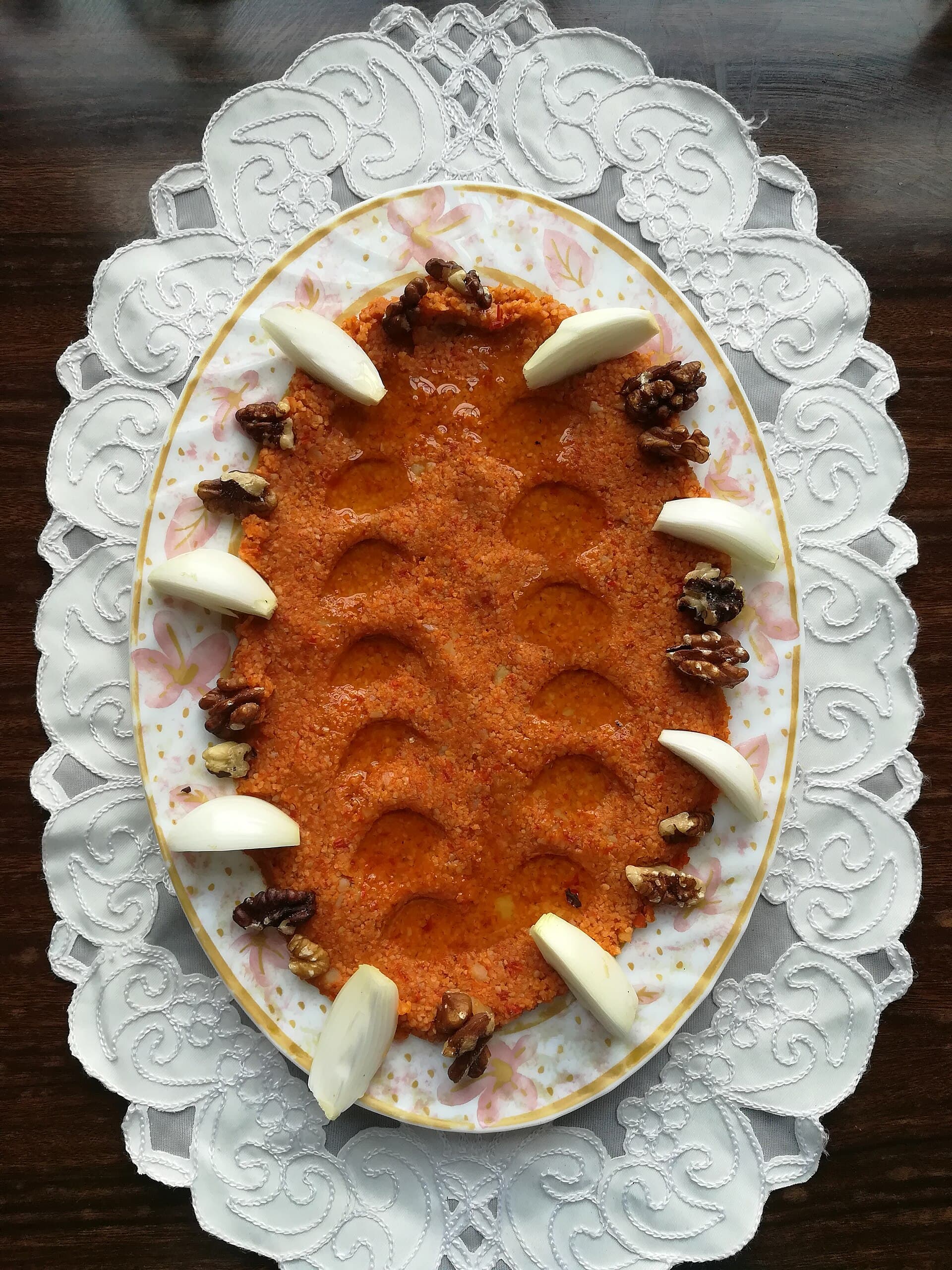
Raw kibbeh: lamb pounded the same day with fine bulgur and spice, spread flat and pooled with olive oil. Aleppo’s dish for guests, and never a day old.
- Where to eat it
- At gatherings and guest tables, and in the mezze section of busy restaurants in Aleppo and Damascus. The tray version is for a crowded table.
- Price
- Variable — ask the price of a plate when you sit down
- When it is eaten
- Feasts and gatherings; in a restaurant the first service of the day is the freshest
Kibbeh that never meets the fire. Lean lamb or beef is pounded together with fine bulgur, seasoned, and spread across a plate; the dents pressed in with the fingertips are filled with olive oil. That is where it parts from the fried or tray baked versions: no shell, no filling, no heat at all.
Where it came from
The strongest account points to Aleppo, where animals were slaughtered on Sundays and feast days and the fresh meat was eaten raw. A second account puts it in thirteenth century Mount Lebanon. Both produce the same plate today, and it stands at the head of the dozens of kibbeh varieties on an Aleppine table. The tray version served there is called kibbeh nayyeh bi-siniyeh, scattered with pounded spice, walnut or almond and dried breadcrumb.
When it appears
It is a dish for guests. It comes out at gatherings, at feasts, at a crowded table, and it is fixed on the Christmas and Easter tables of Levantine Christians. Whatever is left is cooked the next day into something else rather than thrown away.
What goes with it
Fresh mint leaves, spring onion, radish, plenty of olive oil and thin bread. No spoon; a piece of bread does the lifting. Tabbouleh and pickles share the table.
Where to find it, and when to skip it
In busy, well used restaurants in Aleppo and Damascus, and more often at a home table. One rule governs it: the meat has to have been pounded that day. Do not eat a plate that has been waiting on a counter, sitting in the heat, or that nobody can date. On a hot day, in a quiet restaurant, or in your first days before you know how your stomach is handling the trip, skip this one — cooked kibbeh is always there.
Tips
- Order it only somewhere busy with fast turnover — the meat must have been pounded that day
- Skip it on hot days and in quiet restaurants
- It is lifted with a piece of bread, not a spoon; eat it with the mint
- For the cooked version ask for kibbeh maqliyeh, the same mix fried
Transparency
- How this was chosen
- Two kinds of record live here: the dish itself, and the place that serves it. Both are chosen and written by hand; ranking is not for sale and there are no sponsored entries. If a price range is not known for certain, it says so. Venues that serve alcohol are not listed on this site at all.
- Facts checked
- August 2026
- Last updated
- September 15, 2026