Manakish
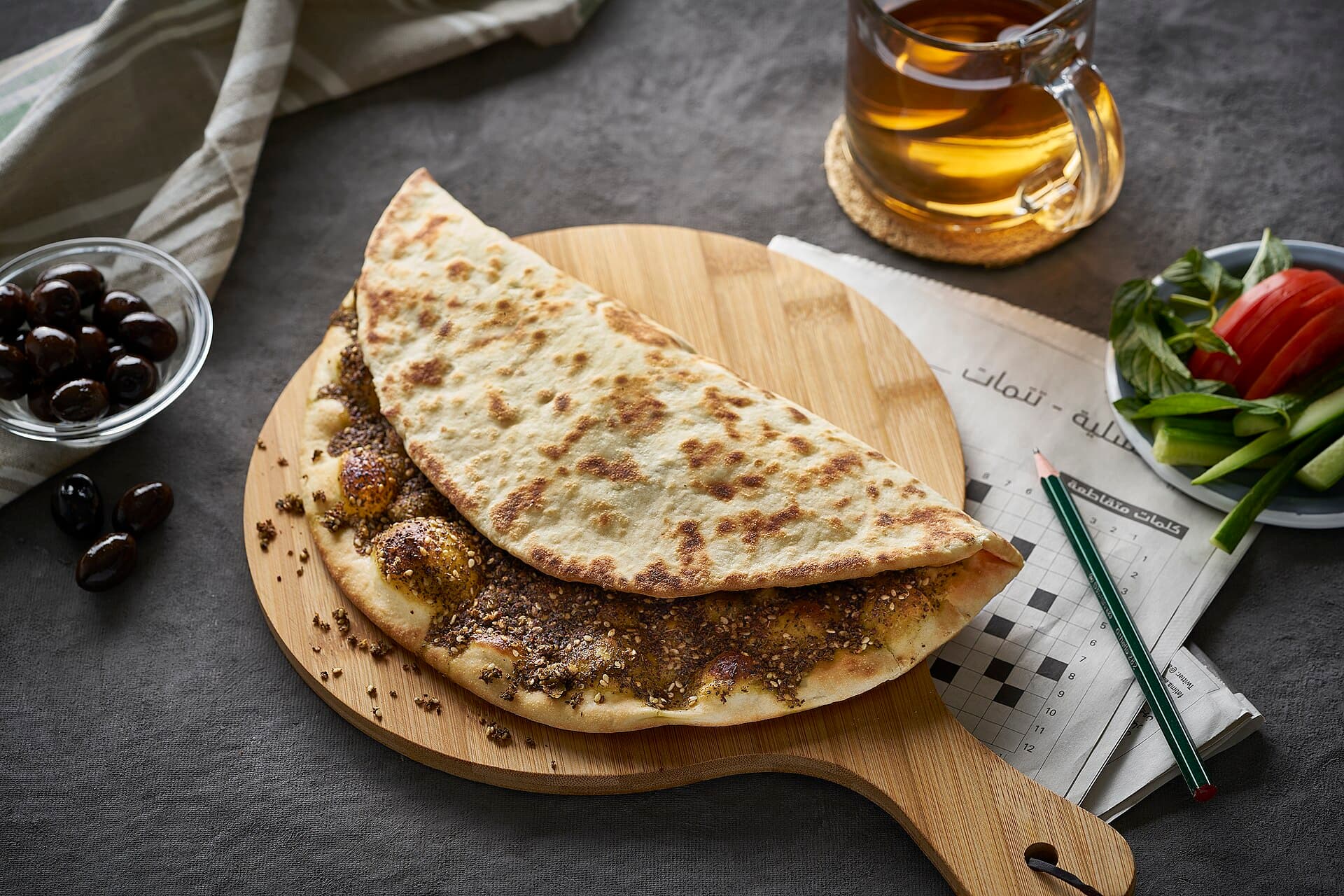
Dough dimpled with the fingertips, then spread with za’atar, cheese or minced meat. Aleppo starts its morning at the bakery door, standing up and hot.
- Where to eat it
- At the door of neighbourhood bakeries, from early morning until midday. Standing, or at the few tables the bakery keeps, with tea.
- Price
- Variable — za'atar and cheese are priced apart, ask at the counter
- When it is eaten
- Morning; by midday the ovens go back to bread
The name comes from the act itself: naqasha means to engrave. Small dips are pressed into the rolled dough with the fingertips so the topping stays where it is put instead of running off. It then goes onto the stone floor of the oven and comes out in a few minutes. One is a man’ousheh; several are manakish.
Three versions
Za’atar is the common one: thyme, sumac, toasted sesame and salt, loosened with olive oil and spread across the dough. The cheese version, bil-jibne, is heavier and what children ask for. There is a minced meat version too, but Aleppo’s own meat flatbread is sfiha — worth knowing the difference before you order, because they are separate plates.
Why Aleppo
Manakish is the shared morning of the whole Levant, from Damascus to Beirut, and UNESCO listed it in 2023 as a culinary practice of Lebanon; the Syrian historian Khayr al-Din al-Asadi likewise tied the word to Beirut. Aleppo’s claim is not the dough but what goes on it. Za’atar is a product of this region and the city’s spice merchants blend it to their own measure. The same dough with a different za’atar is a different thing.
The bakery habit
Manakish is not restaurant food; it belongs to the furn. Neighbourhood women once carried the morning dough to a communal oven and had small pieces topped separately while the day’s bread baked. The counter you see now grew out of that. The convex saj plate and the clay taboon oven are still in use as well.
How it is eaten
Straight out of the oven, folded in half, in the hand. Tea, black olives, cucumber, tomato and fresh mint go beside it. By midday the ovens turn back to bread, so go in the morning.
Tips
- Eat it hot; carried back to the hotel the dough loses its spring
- The za'atar version is vegan, the cheese one is not — both sit on the same counter
- Ask for tea and black olives; most bakeries keep both
- If you want the meat one, Aleppo's own plate is sfiha — ask for it by name
Transparency
- How this was chosen
- Two kinds of record live here: the dish itself, and the place that serves it. Both are chosen and written by hand; ranking is not for sale and there are no sponsored entries. If a price range is not known for certain, it says so. Venues that serve alcohol are not listed on this site at all.
- Facts checked
- August 2026
- Last updated
- September 15, 2026