What to wear and how to behave
Dress in Syria is a measure, not a list of bans: shoulders and knees covered, clothes loose. What a mosque, a church and a family home each expect of you.
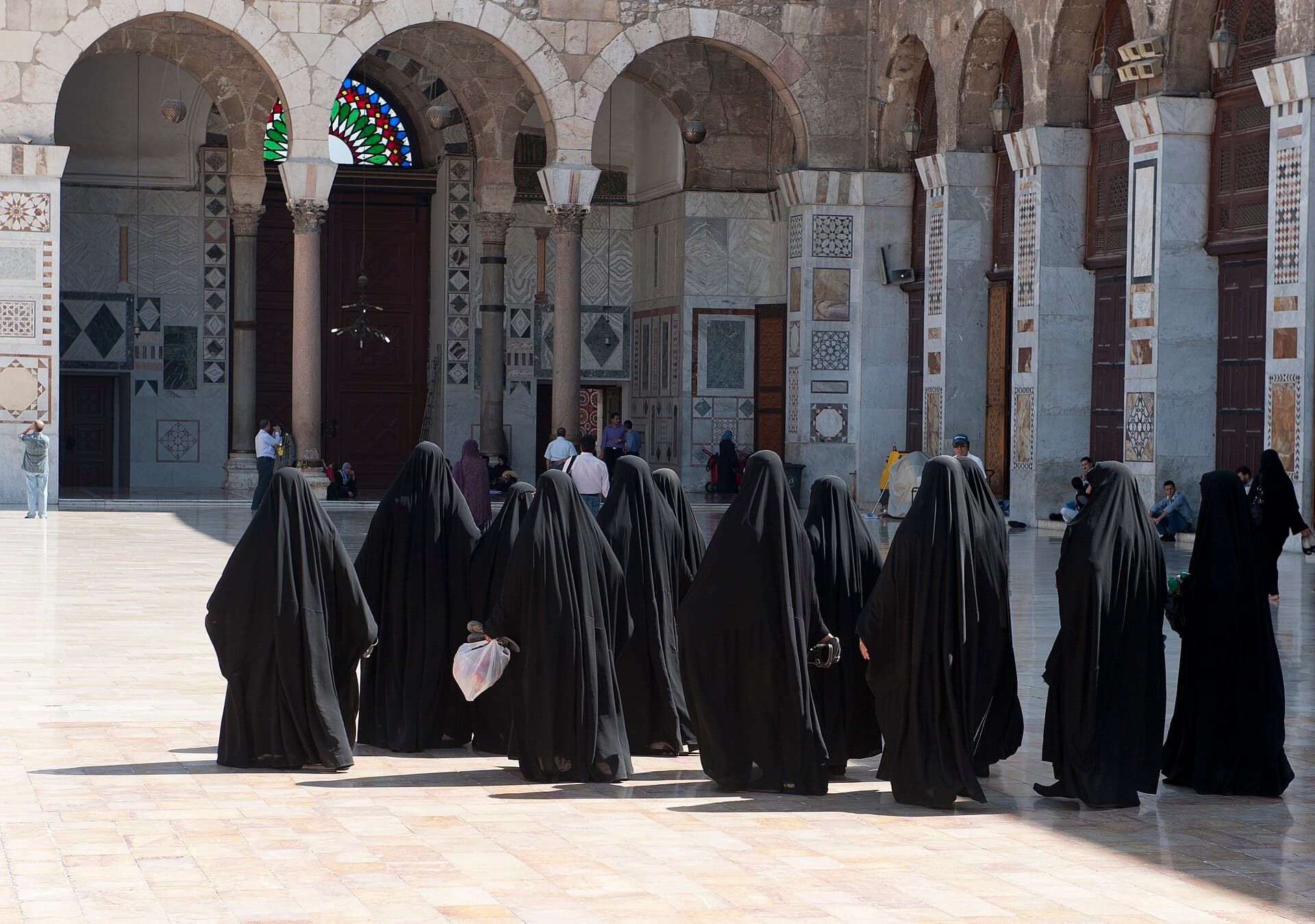
Dress in Syria is a measure rather than a list of bans. The measure is this: shoulders and knees covered, clothes loose. The rest shifts with the quarter, the day and the building you walk into — and being able to read that difference makes the trip itself easier.
The measure, in one line
Shoulders and knees covered, fabric loose, nothing low-cut. It applies to men as well: shorts and vests draw looks in the street and will not get you into a mosque. Women do not need a headscarf in the street; inside a mosque they do. Carry a thin scarf. It earns its place several times a day, for mosques and for sun.
Syria is not one thing
Alongside the Sunni majority the country has large Shia, Christian, Druze and Alawite communities, and smaller ones besides. Kurds, Armenians and Syriacs are peoples of the country, not guests in it. That variety shows on the street: dress is relaxed around Bab Touma and in the newer districts of Damascus, and conservative in Idlib and in the countryside. The measure changes between two quarters of the same city.
What this means in practice is simple. You do not have to imitate anyone; matching what you see around you, one notch more careful, is enough. Everyone can tell you are a visitor, and nobody expects you to belong to a group. All that is expected is attention.
In a mosque
Shoes come off at the door and you go in wearing socks. Women cover their hair and arms; at places used to visitors, such as the Umayyad Mosque, a cloak is handed out at the entrance. Men wear long trousers. Inside, do not walk in front of someone at prayer and do not frame anyone in prostration.
Prayer time is not a bad time to visit, but the middle of it is. The half hour after the call to prayer belongs to the rows forming; spend it in the courtyard and go in afterwards. Friday midday is its own case: the mosque is full end to end, and a visit waits until the afternoon.
In a church or monastery
The measure is the same as in a mosque: shoulders and knees covered. Most churches do not ask for a headscarf; monasteries such as Saidnaya and Maaloula expect women visitors to cover their hair. You may go in during a service, but stay quiet and do not walk around filming. Nobody objects to lighting a candle, and leaving something in the box is the custom.
In the souq and on the street
A trader opens with a greeting, so open with one too. Asking a price does not commit you to buying; looking, thanking and walking on is read as normal. Do not go through the goods on the stall yourself — cloth and soap are handed to you.
If tea is offered, take it. The offer is not sales pressure and it puts you under no obligation to buy. Turning it down, on the other hand, reads as cold.
Visiting a home
An invitation home comes easily in Syria, and it is meant. Shoes come off at the door. Do not arrive empty-handed: sweets, fruit, or chocolate if there are children. Coffee can be stopped after the second cup, and a small shake of the cup means “enough, thank you”.
Being shown around the house is normal. Even so, do not photograph rooms without asking, and do not put the women of the household in frame. You will be pressed to stay when you leave; sitting down once more is the courteous answer.
Greetings
Men shake hands. Between a woman and a man a handshake is not automatic: if the other person puts out a hand, take it, and if not, a hand to the heart with a nod does the whole job. It is not a refusal but a common form of respect, and it puts nobody out.
The greeting itself works everywhere. “As-salamu alaykum” is known to the non-Muslim neighbour too; in the Christian quarter “marhaba” is more usual. You are expected to give your name in return, because that is usually where the conversation starts.
Ramadan and Fridays
During Ramadan you are expected not to eat, drink or smoke in the street in daylight. You are not expected to fast. Indoors and in your hotel room none of this applies. Dressing one notch more carefully suits the mood of the month.
On Friday morning much of the city is shut and the markets open in the afternoon. Giving that morning to a museum or an archaeological site pays better than giving it to a souq.
Tips
- Shoulders and knees covered, fabric loose — men included
- Carry a thin scarf: for mosques, and for the sun
- Wait out the half hour after the call to prayer in the courtyard
- Between a woman and a man, the other person starts the handshake
- Do not photograph rooms in a home, or the women of the household
Transparency
- How this was chosen
- This page carries the fastest-ageing information on the site: visa rules, exchange rates, border crossings and SIM prices change several times a year. The verification date above says when the facts were last put through their sources; for anything later, check your own foreign ministry travel advice and a Syrian consulate. No figure that is not known for certain is written here.
- Facts checked
- August 2026
- Last updated
- September 15, 2026