Two days in Hama: how to plan them
Day one for the norias, the Azm Palace and the khans; day two for the museum and east bank, or Apamea after lunch. When the wheels turn and how to get around town.
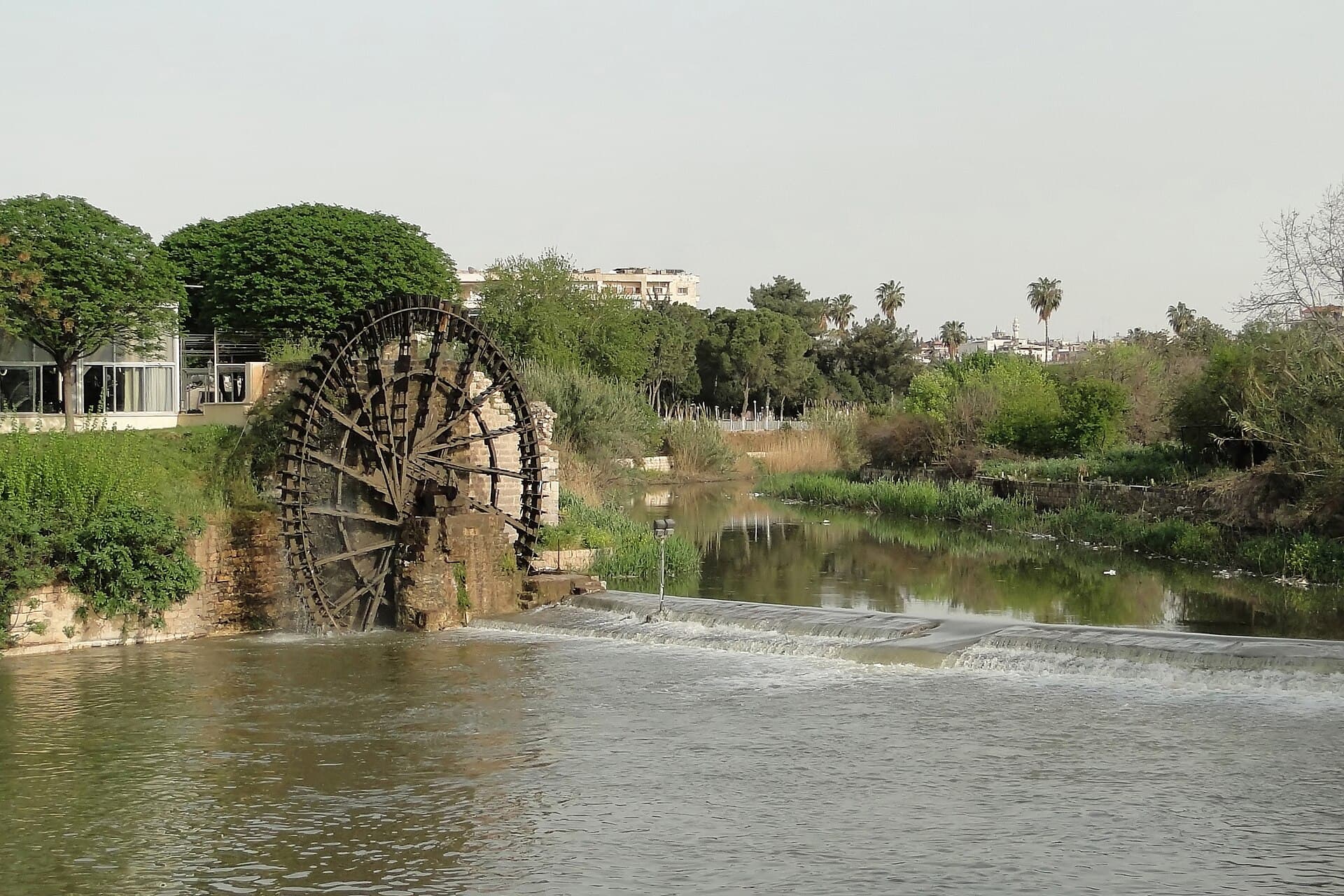
The centre of Hama is not a continuous old city like those of Damascus and Aleppo. Most of the old quarters were destroyed in 1982, and today a plan is built around the river and the individual buildings still standing. That divides two days neatly: day one for the river, the palace and the khans, day two for either the museum and the east bank or a half-day trip out. The plan below rests on the Hama routes on this site, and every half day is a walk that has actually been mapped.
What this plan assumes
You are staying in the centre by the river; the largest norias, the great wooden waterwheels, are about a kilometre away, and both days are mostly on foot. Town minibuses gather at Asi Square and run on a single fare: in November 2025 it was 2500 old pounds, which is 25 new pounds today. After the diesel rise of 13 September 2026 fares are being recalculated, so ask before you get in. You need a car only for the Apamea option on day two.
In May 2026 the first foreign tourist group in 14 years, 40 people from Germany and Turkey, toured Hama with a tourist police escort. Their route matched the core of this plan: the old souqs, Khan Rustem Pasha, the Tawafira quarter, the Azm Palace, the al-Nuri Mosque and the norias. This page has no dated source on how independent travellers are received; ask your hotel about the situation that week.
Are the norias turning?
This is the part of the plan that changes most. The wheels turn only when the Orontes has enough flow, and the past year showed that clearly. According to a 7al.net report in November 2025, the Orontes dried up completely for the first time on record and the Rastan Dam fell to its lowest level. In January 2026 the Hama reservoirs began to rise, and after heavy rain in April 2026 the river flooded. So the water came back in spring 2026.
The general rule holds: spring is the safest season, and in late summer or a dry year some wheels stop. Ask before you go whether they are turning that week; if they are not, the morning walk still works, only without the sound.
Day one: the river, the palace and the khans
Morning. Be at the norias at 09:00. Traffic is still light, and the creak of wet timber carries without the rest of the city’s noise. Cross the bridge to the south bank; the Azm Palace is 550 metres on, its courtyard in shade at that hour and its painted wooden ceilings in need of daylight. Then follow the riverside path west, pass through the courtyard of the Great Mosque and walk on to the al-Muhammadiyah noria. The whole river walk is a little over three kilometres and takes two hours including the return.
Afternoon. The khans walk follows the city’s trading side. It starts at Khan Burhan in the al-Hader quarter and crosses the Orontes to Khan Rustem Pasha, dated 1556, and the Long Souq laid out under the Ayyubids. It ends at the foot of the citadel mound, at the Cathedral of Saint George, dated 1839. Five stops, 2300 metres, three hours. At Khan Rustem Pasha, stop at the end of the passage: the arch frames the domed prayer room in the middle of the courtyard exactly.
Late afternoon. Climb the citadel mound. The top is a park today and no castle stands there, but towards sunset the line of the river, the norias and the Abu al-Fida Mosque come into one frame.
Day two: two options
If you stay in town. Start at the Hama National Museum; its opening and closing hours are not fixed, so go before noon. The archaeological collection is in this building, while the Azm Palace houses the museum of popular traditions. The minbar of the al-Nuri Mosque, dated 1163, is here too, in the fifth hall. Then walk to the mosque itself: its square minaret with bands of black and white stone is easy to spot from a distance. 900 metres along the bank, the south front of the Abu al-Fida Mosque looks straight onto the river. The afternoon is left for the Tawafira quarter and the souqs.
If you want a trip out. Give the morning to the museum and the east bank, then head northwest after lunch: Apamea is 55 kilometres away, an hour by car. The colonnaded street reads best in late-afternoon light and runs for nearly two kilometres without shade; take water and a hat, and start back before dark. Other full-day trips and road notes are on the page day trips from Hama.
Calendar: the August festival
In 2026 the “Syrian Summer” festival was planned for nine days from 15 August: the first three days in Hama, in Umm al-Hasan park, then in the cultural centres of Masyaf, Salamiyah, Mhardeh, Suqaylabiyah and Bishnin. No announcement has said whether it will return on the same dates every year; if you travel in August, ask locally about the programme.
Where to stay
The city is small, and staying in the centre by the river is enough: the wheels and the Azm Palace are within walking distance. This site names no hotels and recommends nowhere that serves alcohol. Booking, payment and registration rules are on the page where to stay in Syria.
Tips
- Reach the norias at 09:00; the creaking carries before the traffic starts
- Ask before you go whether the wheels are turning; the flow changes with year and season
- Enter the museum before noon; its closing time is not fixed
- Put Apamea in the late afternoon of day two
- Ask the minibus fare before you get in; fares changed in September 2026
Transparency
- How this was chosen
- This page carries the fastest-ageing information on the site: visa rules, exchange rates, border crossings and SIM prices change several times a year. The verification date above says when the facts were last put through their sources; for anything later, check your own foreign ministry travel advice and a Syrian consulate. No figure that is not known for certain is written here.
- Facts checked
- September 2026
- Last updated
- September 15, 2026