Al-Qaryatayn
An oasis town in the desert between Homs and Palmyra: its Roman bath complex, its mud-brick quarters and Syriac churches, and what the war left behind in 2015.
- Opening hours
- Open town, all day
- Entry
- Free
- Duration
- 120 minutes
- Best time
- Spring and autumn; the desert fringe is punishing in summer
- Period
- Roman — Ottoman
- Address
- Al-Qaryatayn, south-east of Homs, on the edge of the Syrian Desert
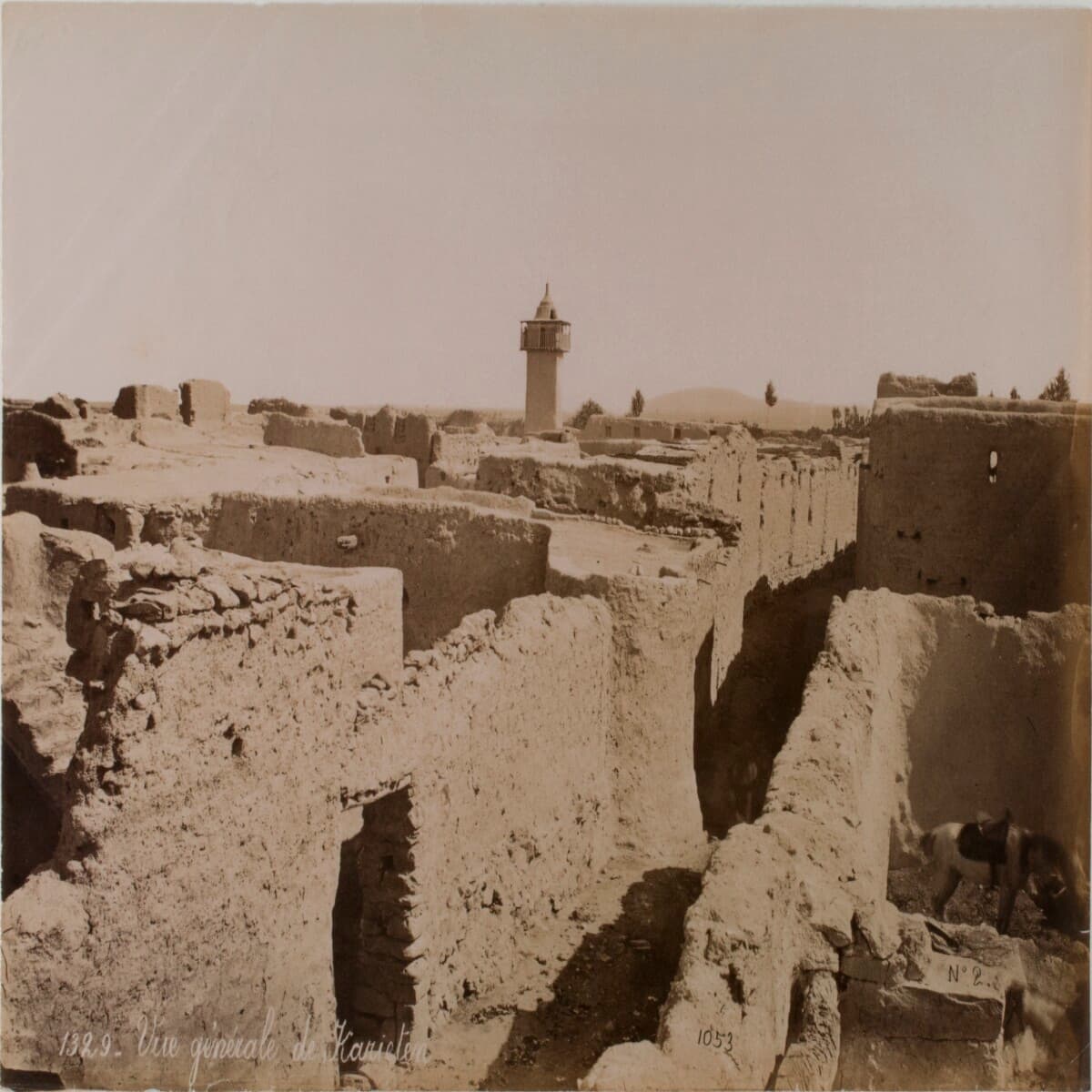
The name means “the two villages”. Al-Qaryatayn sits on an oasis in the Syrian Desert, with Homs to the west and Palmyra to the north-east, and for centuries it was the staging post between them. The 2004 census counted 14208 people; they are Sunni Muslims and Syriac Christians.
Getting there
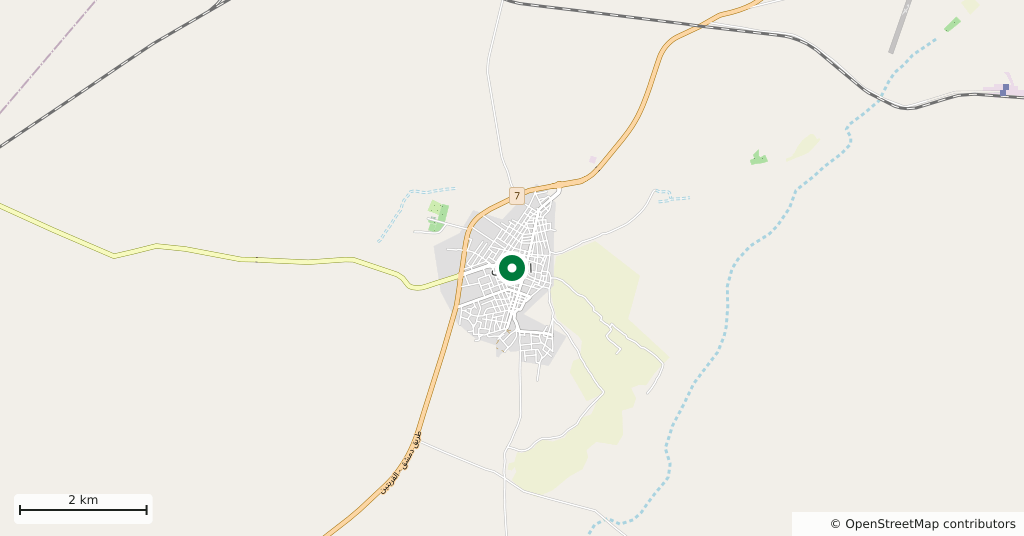
South-east of Homs on the desert road. Furqlus lies to the north, Mahin, Huwwarin and Sadad to the west, Qarah, Deir Atiyah and al-Nabk to the south-west, and the road to Palmyra runs through here. There is no regular public transport to the town, so people hire a car.
What to see
The town holds a number of Greco-Roman buildings. The largest is an extensive health complex known as Hamaam Balkis; under Roman rule this was a spa settlement and also a base for a cavalry unit. Corinthian columns and marble ornaments survive from the same era. Palmyrene inscriptions dedicated to the “Great God of Nazala” were found here too.
Its history
In the summer of 634 the inhabitants invited the army of Khalid ibn al-Walid in. The Umayyad caliph al-Walid used the town as a base of operations. The geographer Yaqut al-Hamawi passed through in the early 13th century and wrote of “a large village belonging to Hims, on the desert road, two marches from Tadmur”. In the 19th century the economy rested on camel transport; once the steamship and the train arrived, pilgrim caravans thinned and the income fell away. In 1908 the Czech explorer Alois Musil recorded six quarters, four Muslim and two Christian.
Where things stand
Al-Qaryatayn fell to ISIL in August 2015; Christian civilians were held and the Monastery of Saint Elian outside the town was demolished. The area was retaken in April 2016. The town has recovered part of its population, and damaged buildings stand alongside repaired streets.
Tips
- Carry water; there is little shade in the town
- Ask for Hamaam Balkis — it is the oldest structure here
- The Monastery of Saint Elian sits outside the built-up area, a separate stop
- Breaking the drive to Palmyra here shortens the day
Transparency
- How this was chosen
- Written by hand; opening hours, entry fee and coordinates are kept as data. A field that is not known for certain is marked as variable rather than guessed.
- Facts checked
- September 2026
- Last updated
- September 15, 2026