Al-Rastan (Arethusa)
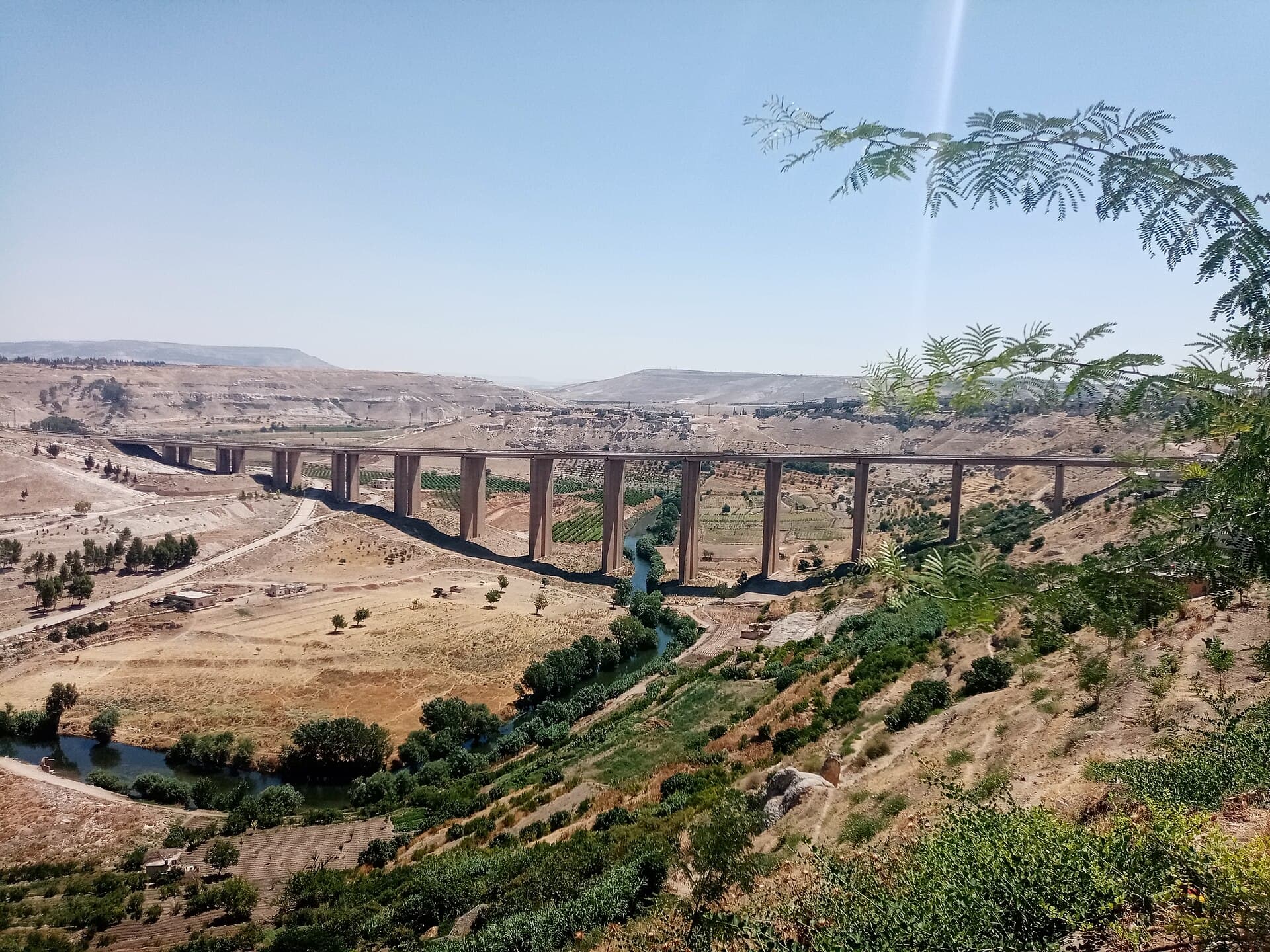
A black basalt town above the deep gorge the Orontes has cut midway between Homs and Hama: the site of ancient Arethusa, the old bridge and the reservoir.
- Opening hours
- An open town; no set visiting hours
- Entry
- Free
- Duration
- 90 minutes
- Best time
- Late afternoon, as the gorge goes into shade
- Period
- Seleucid — Roman — Ottoman
- Address
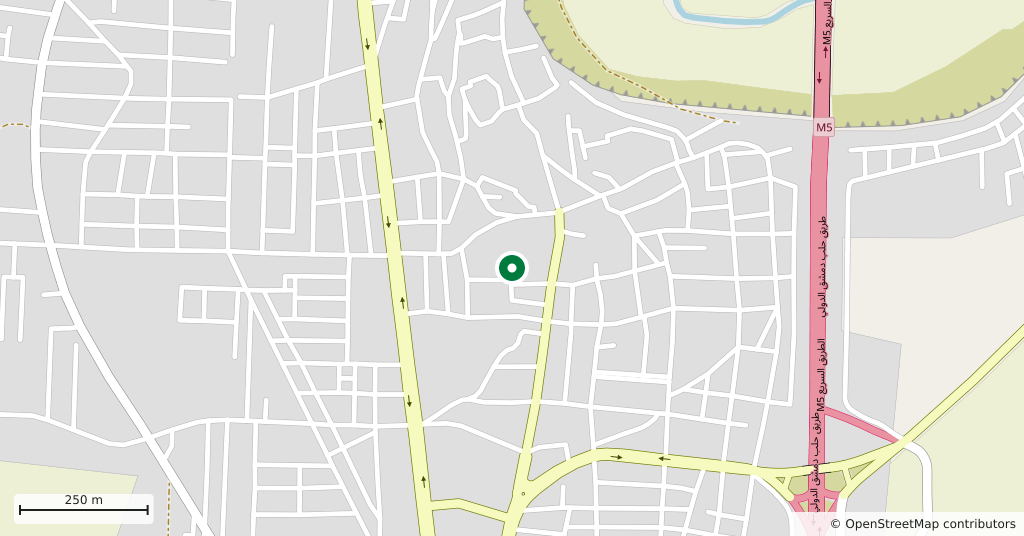
- On the Homs–Hama road, Orontes gorge, Homs Governorate
A town halfway along the road between Homs and Hama, built on the east slope of the gorge that the Orontes has cut some seventy metres below the surrounding plain. The houses are black basalt, some of them set with white limestone. The ground under them is ancient Arethusa: the city was founded by Seleucus I Nicator, who started the Seleucid line, and named after Arethusa in Macedonia. For a time it was the first capital of the kingdom of Emesa.
Getting there
The Homs–Hama highway runs past the edge of the town and the minibuses between the two cities stop here. It is half an hour from Homs. The town saw heavy fighting between 2011 and 2018 and much of its building stock is damaged; ask on the spot which quarters can be walked.
How long it takes
An hour and a half. The lanes of the old quarter are narrow and many end blind, so it is walked; the terrace road along the edge of the gorge is where the town shows itself best.
What to see
The old bridge over the Orontes links north to south; the mill that stood on it was removed after the dam was built. To the north are the Rastan Dam, finished in 1961, and its reservoir. Little of the ancient city stands — when Yaqut al-Hamawi came in 1226 he already wrote of an old, small town that was now a ruin. The Roman sarcophagi lifted from here are in the National Museum in Damascus.
What most people miss
Khirbat al-Ballur, on the east side of the dam. Maronite tradition holds that Maron, the saint the church is named for, was buried somewhere between Hama and Homs. The 19th-century bishop Yusuf al-Dibs named that place as Rastan, and later scholars placed the monastery at Khirbat al-Ballur. The site carries traces of a monastery, baths and a cemetery. It has never been excavated, so what you see is not an answer but a question still open.
Tips
- Walk the terrace road along the gorge; the plan of the town only reads from there
- Ask at the entrance which quarters can be walked — the damage is patchy
- The east side of the reservoir looks across to Khirbat al-Ballur
- For the sarcophagi go to the National Museum in Damascus; they are not here
Transparency
- How this was chosen
- Written by hand; opening hours, entry fee and coordinates are kept as data. A field that is not known for certain is marked as variable rather than guessed.
- Facts checked
- September 2026
- Last updated
- September 15, 2026