Apamea
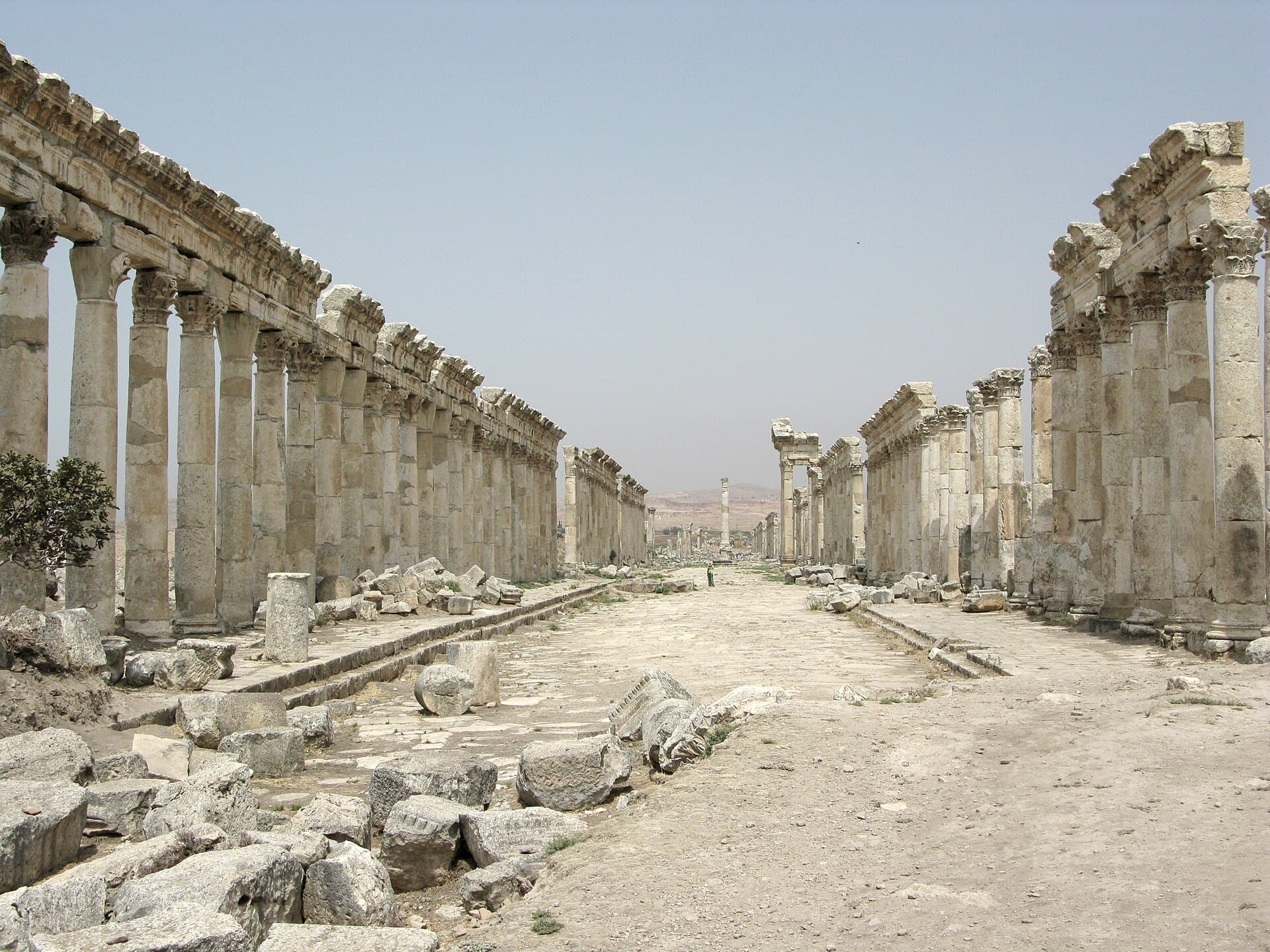
A Hellenistic city on a plateau above the Orontes northwest of Hama. Its colonnaded street runs nearly two kilometres, lined with twisted fluted columns.
- Opening hours
- Open ground; if there is a keeper, confirm on site
- Entry
- Variable — confirm on site
- Duration
- 120 minutes
- Best time
- Late afternoon; the columns read best in raking light
- Period
- Hellenistic foundation — Roman street
- Address
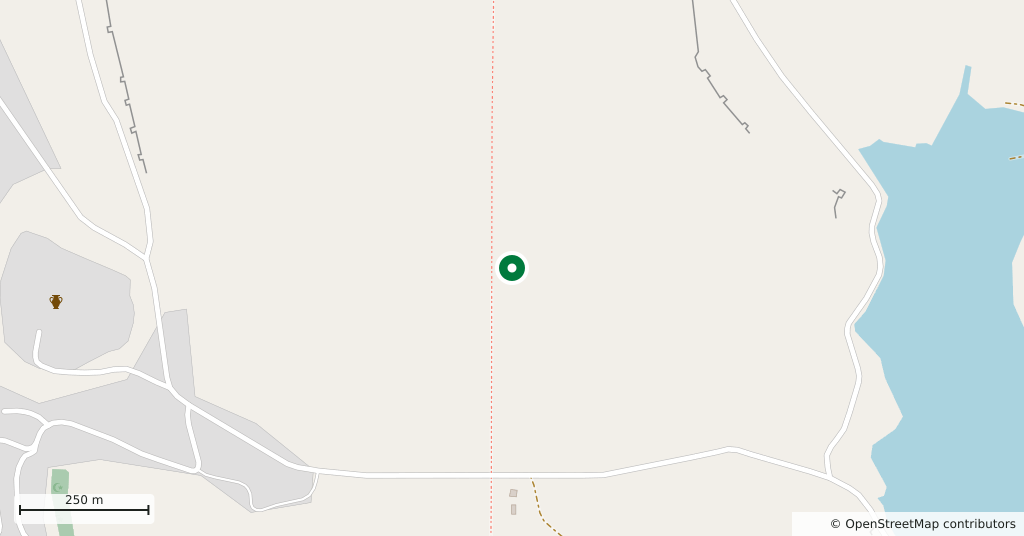
- Near Qalaat al-Madiq, 55 km northwest of Hama
On a plateau above the Orontes valley. The city was founded in the Hellenistic period as one of the four great foundations of Seleucus, grew under Rome, and the colonnaded street standing today is Roman work. The street runs to nearly two kilometres — among the longest colonnaded streets of the ancient world.
Getting there
About fifty-five kilometres northwest of Hama, near Qalaat al-Madiq. An hour by car, and done from Hama in an afternoon.
How long it takes
Two hours. The street is long; entering at one end, walking it and coming back takes that time.
What is there
Re-erected rows of columns with paving between them. Some of the shafts are twisted and fluted — a spiralling channel running up the column, and workmanship rarely seen in the region. Along both sides run shop fronts and the remains of a temple and a theatre. The site was heavily looted after 2011; pits and emptied ground are visible in places and are not concealed.
What most people miss
Look for the twisted fluted columns. Not all of them are like that; they are grouped along one stretch of the row, and side by side the difference is immediate.
Tips
- The street is close to two kilometres; take water and a hat
- Go in late light, when the shafts are readable
- The twisted columns are grouped along one stretch — look for them
- Qasr Ibn Wardan is the other way; do not do both in one day
Transparency
- How this was chosen
- Written by hand; opening hours, entry fee and coordinates are kept as data. A field that is not known for certain is marked as variable rather than guessed.
- Facts checked
- August 2026
- Last updated
- September 15, 2026