Azm Palace, Hama
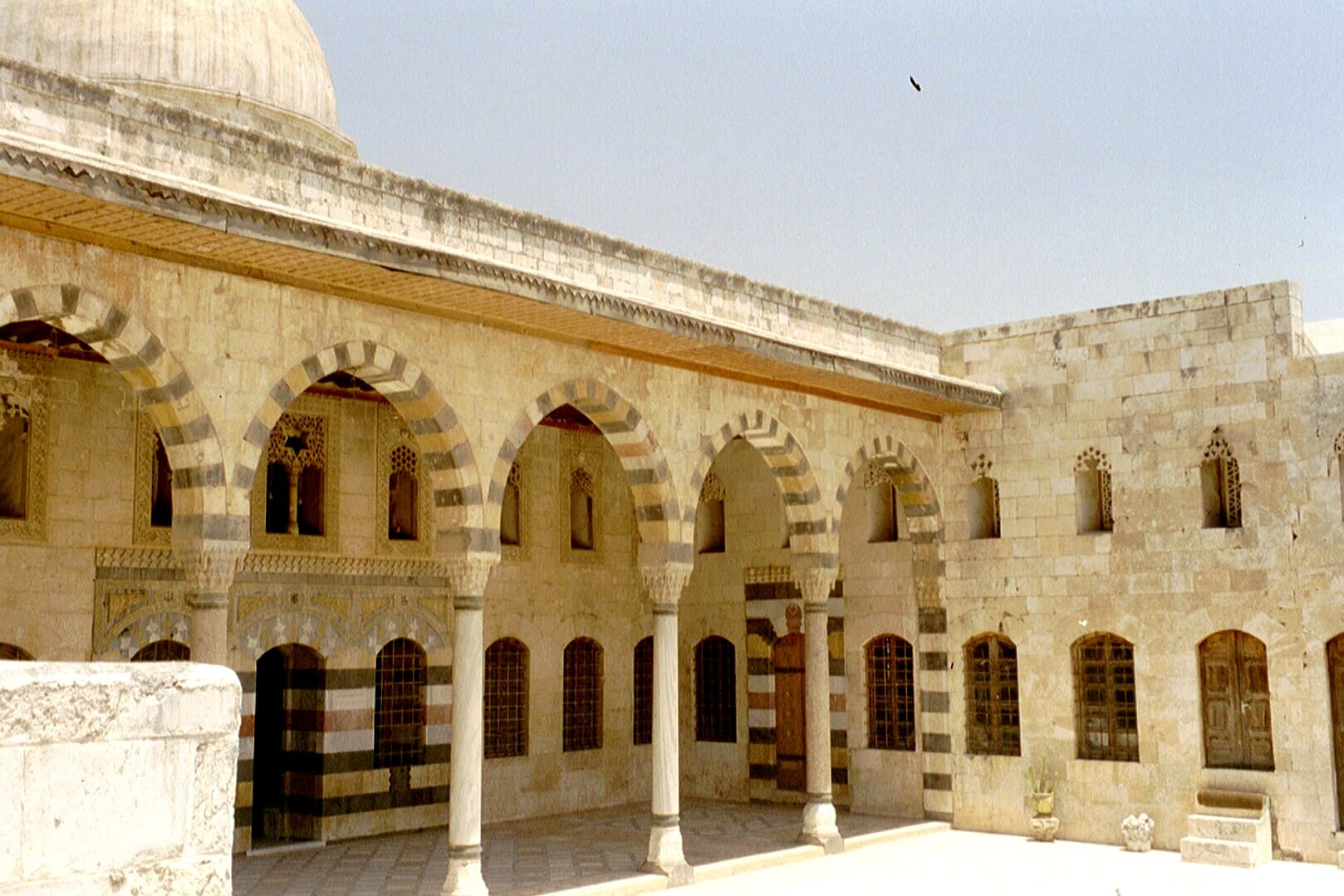
The governor’s mansion the Azm family built in Hama before moving to Damascus. Courtyard, iwan and painted ceilings — an 18th-century Syrian house entire.
- Opening hours
- Variable — confirm at the door
- Entry
- Variable — confirm at the door
- Duration
- 60 minutes
- Best time
- Morning, while the courtyard is in shade
- Period
- Ottoman — 18th century
- Address
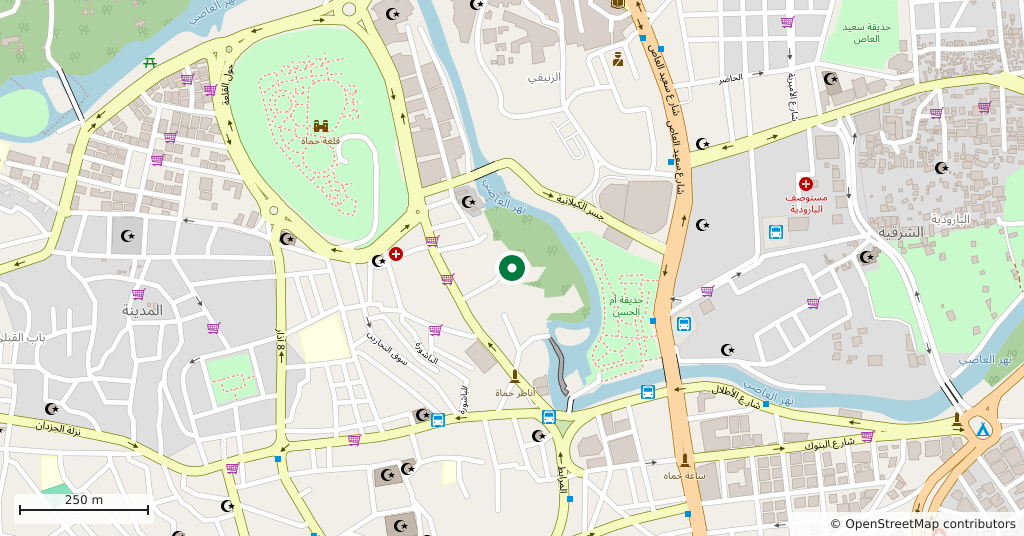
- City centre, ten minutes south of the norias, Hama
In the centre of town, a few streets back from the river. As’ad Pasha al-Azm had it built in the middle of the eighteenth century while he was governor of Hama; a few years later the same family moved to Damascus and raised the larger palace there. What stands here is the forerunner of the Azm Palace in Damascus.
Getting there
Ten minutes on foot from the norias. The street is narrow and the way in is through an arched stone door.
How long it takes
An hour: the courtyard, the iwan and the rooms upstairs.
What is there
A courtyard with a pool at the centre, an open iwan on the south side, and two storeys of rooms around it. The wall banded in black basalt and pale limestone shows the stone language of central Syria here as well. The wooden ceilings of the rooms are painted and part of the work is original to the period. The building was damaged in 1982 and later repaired; it is used as a museum today.
What most people miss
The centre of the iwan ceiling. The painted coffering gathers into a star, and that knot is the best preserved part of the room.
Tips
- The painted ceilings need daylight; go before midday
- If you have seen the Azm Palace in Damascus, compare — this came first
- Sit by the pool in the courtyard; the iwan reads whole from there
- The norias are ten minutes away; do both in one walk
Transparency
- How this was chosen
- Written by hand; opening hours, entry fee and coordinates are kept as data. A field that is not known for certain is marked as variable rather than guessed.
- Facts checked
- August 2026
- Last updated
- September 15, 2026