The Norias of Hama
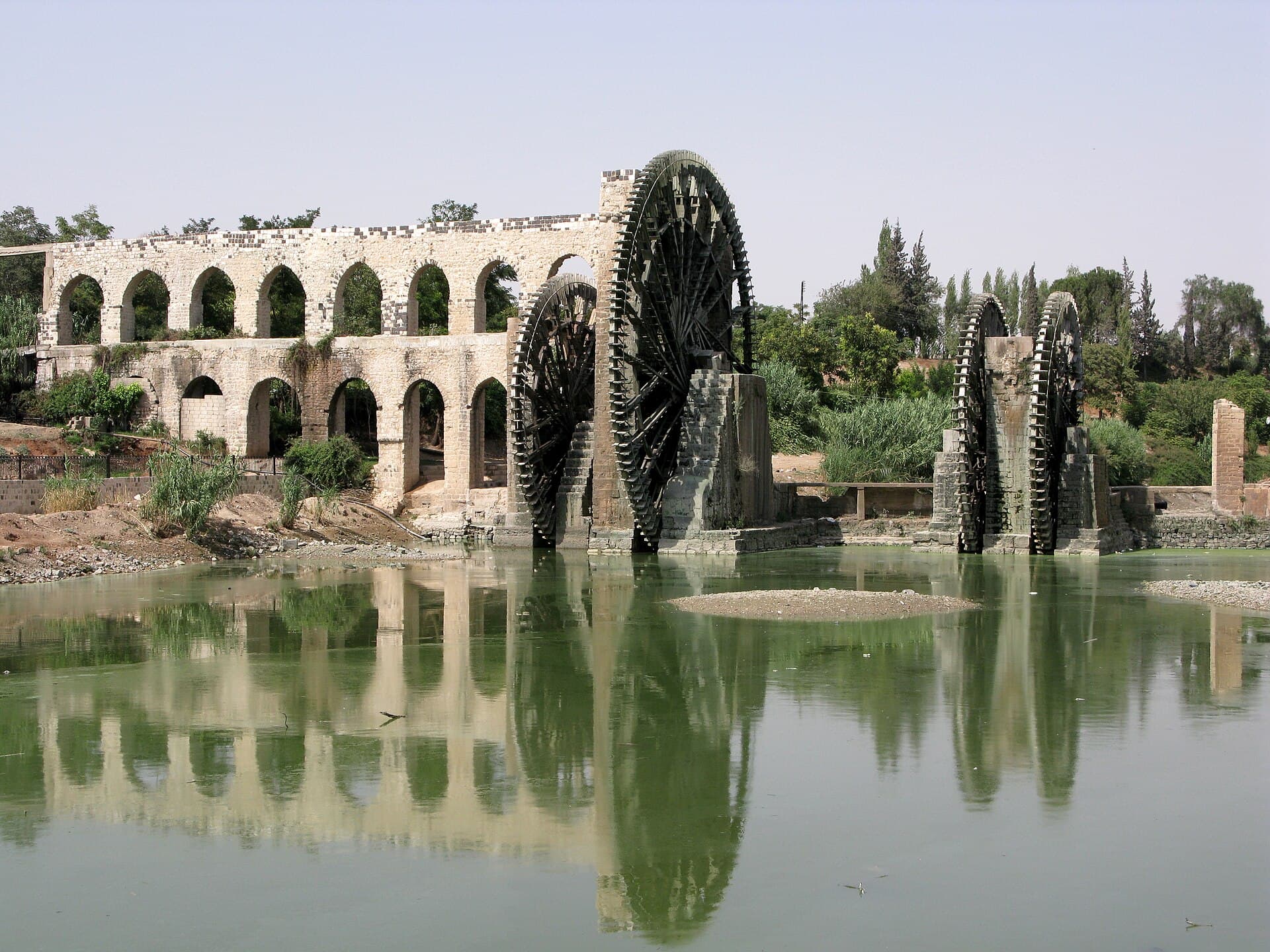
Wooden wheels standing in the Orontes. They lift the river into the aqueducts, and the groan they make as they turn is taken as the sound of the city.
- Opening hours
- Open ground, any hour
- Entry
- Free
- Duration
- 60 minutes
- Best time
- Spring, when the flow is high and the wheels turn
- Period
- Maintained since the Mamluk period
- Address
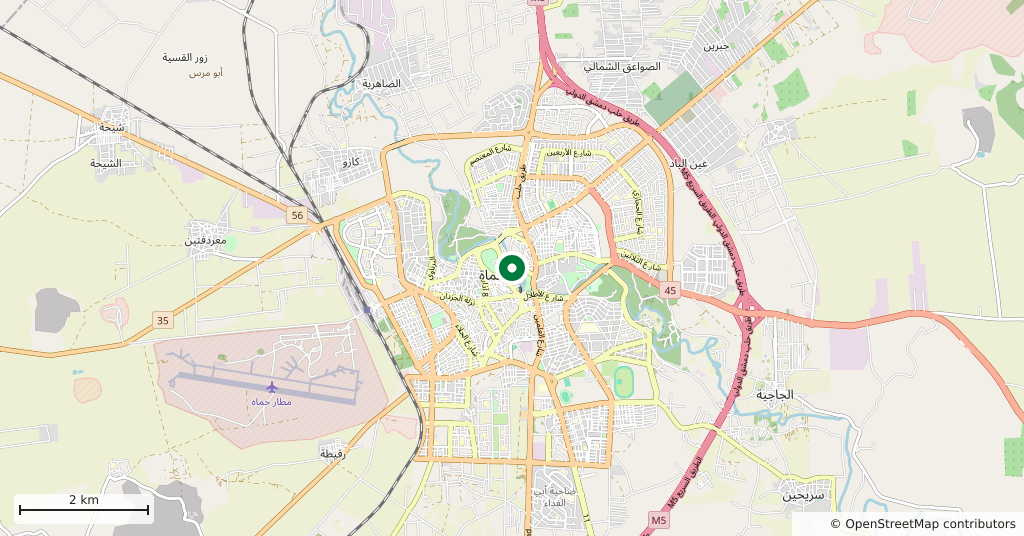
- Bank of the Orontes, city centre, Hama
Giant wooden wheels set on a horizontal axle in the river. The buckets dip into the water, fill as the wheel comes round, and empty at the top into the aqueduct. The power source is the current itself; there is no motor, only the river. The largest of the surviving wheels are over twenty metres across.
Getting there
On foot from the centre of town. The riverside walkway passes both of the largest wheels and carries on along the aqueduct.
How long it takes
An hour: walking the bank, going down under the wheels and seeing where the aqueduct begins.
What is there
Wheel, stone base and aqueduct, the three of them together. The moment the buckets tip is best seen from below. The wheels have been maintained since the Mamluk period and their timber is renewed at intervals, so the wheel you are looking at is old and its wood is new.
What most people miss
The sound. The axle turns on wet timber and gives out a low, continuous groan; it is worth stopping in the middle of the city to listen. When the water drops some of the wheels stand still, and that is usually late summer.
Tips
- Some wheels stop when the water is low; go in spring
- Go down to bank level under a wheel to hear it
- Walk along the aqueduct; that is where you see where the water goes
- The Azm Palace is a ten-minute walk away
Transparency
- How this was chosen
- Written by hand; opening hours, entry fee and coordinates are kept as data. A field that is not known for certain is marked as variable rather than guessed.
- Facts checked
- August 2026
- Last updated
- September 15, 2026