The Camp of Diocletian
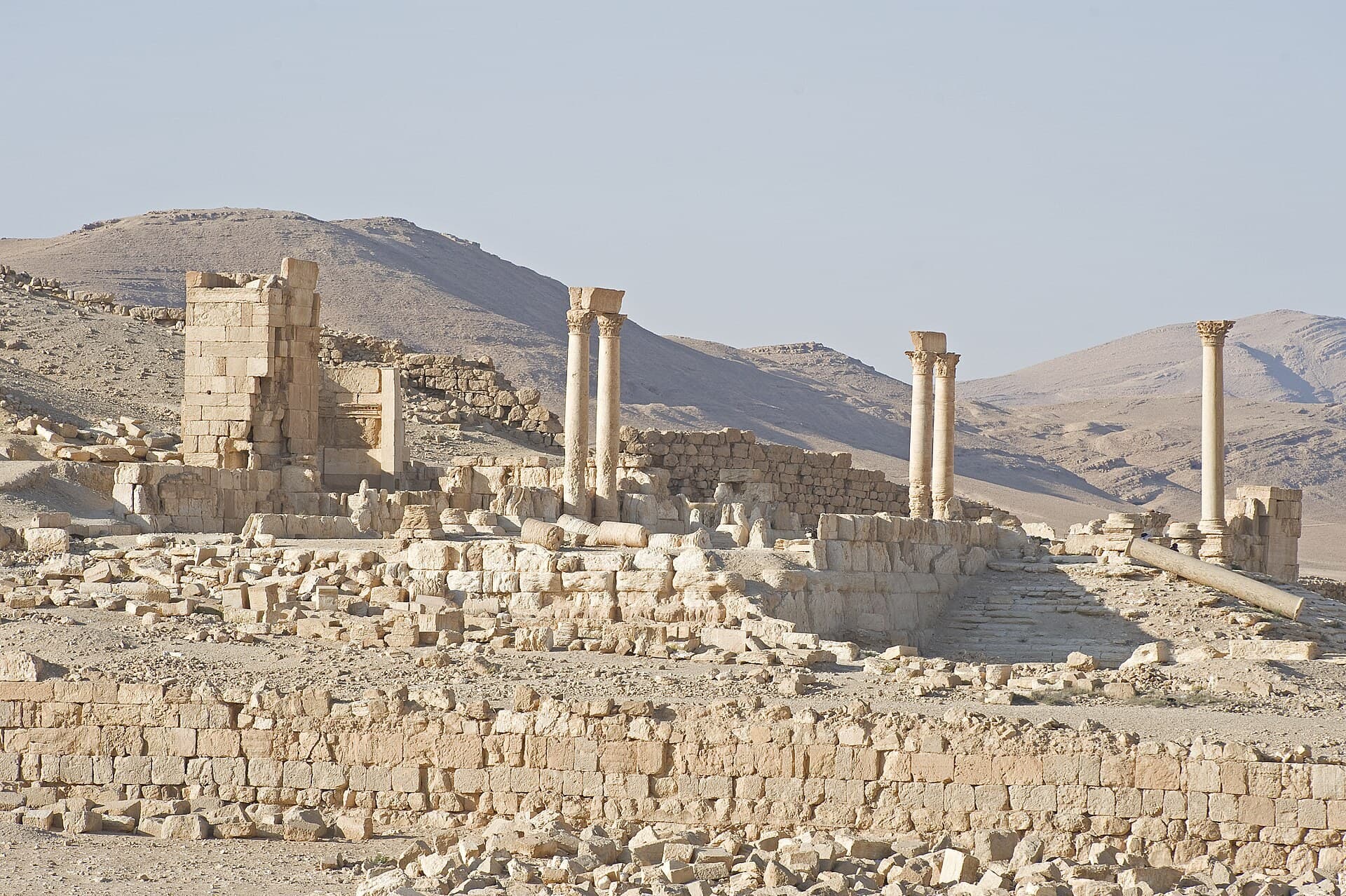
The late Roman army base at the west end of Palmyra: a stepped terrace, the hall of the standards, and the older Temple of Allat enclosed inside its walls.
- Opening hours
- Daylight hours — conditions change, confirm
- Entry
- Varies — confirm at the gate
- Duration
- 45 minutes
- Best time
- Late afternoon; the terrace faces west
- Period
- Roman
- Address
- West end of the ruins, Palmyra
Where the colonnaded street ends in the west, the road brings you out onto a stepped stone precinct: the base the Roman army built at Palmyra. After the city was sacked in 273 Palmyra stopped being a trading centre and became a frontier garrison. The camp is that change in stone; the city’s second life starts here.
Getting there
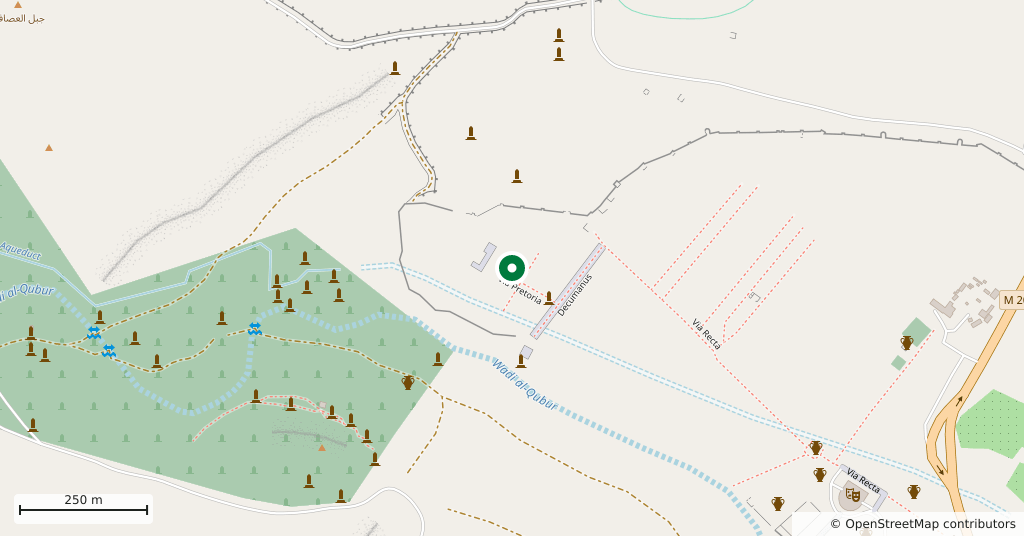
Walk the Great Colonnade west to its end. It leads straight to the monumental gate of the camp, the Porta Praetoria — 15 minutes from the theatre. There is no separate entrance.
How long it takes
45 minutes. The site is wide, but it is laid out on a single axis: you come in through the gate, climb to the terrace, and walk back the same way.
What to see
A stepped terrace and, above it, the hall where the legion kept its standards. The camp was built between 293 and 305; it was the base of the Legio I Illyricorum, and the gate inscription carries Diocletian’s name. A Polish team from the University of Warsaw excavated here. They uncovered guard rooms, staircases and side entrances; below them a first century residential layer, above it a Byzantine hoard of coins and jewellery.
What most people miss
The camp walls enclose a building older than themselves: the Temple of Allat. When the military quarter went up the temple was not pulled down but wrapped around. It stands north-east of the terrace, and most visitors walk past without registering it as a separate building.
What remains
Palmyra was held by ISIL between May 2015 and March 2016, and many buildings in the city were destroyed in that period. The camp was reported damaged as well. Satellite images taken at the end of March 2016 showed no visible change to the area; unlike the Temple of Bel and the tower tombs, this corner is largely standing.
Tips
- Walk the colonnade west to its end; there is no separate road to the camp
- The Temple of Allat is inside the camp walls, north-east of the terrace
- No shade: carry water and come early or late in the day
Transparency
- How this was chosen
- Written by hand; opening hours, entry fee and coordinates are kept as data. A field that is not known for certain is marked as variable rather than guessed.
- Facts checked
- August 2026
- Last updated
- September 15, 2026