A second walk in Palmyra: from the Baths of Diocletian to the Funerary Temple
A second half-day walk in Palmyra: the granite-columned baths, the Temple of Nabu, the agora with 11 gates and the only tomb inside the walls. Four stops, timed.
- Duration
- 3 hours
- Distance
- 1.1 km
- Difficulty
- Easy
- Best season
- April–May, October–November
- stops
- 4
- City
- Palmyra
The first walk in Palmyra runs from the Temple of Bel to the theatre and the colonnaded street. This second walk follows the buildings on the same street that fewer people photograph. It starts in the east at the granite columns of the Baths of Diocletian and crosses to the Temple of Nabu opposite. It stops at the agora, where caravans paid their taxes, and ends at the Funerary Temple at the west end of the street. Four stops, a little over a kilometre on foot, half a day starting in the morning. The stops are described from pre-war records; their present state has not been confirmed one by one.
The route
The baths stand on the north-east side of the colonnaded street, just north-west of the monumental arch. You pick out their four dark granite columns among the limestone ones by colour. The Temple of Nabu is directly opposite, on the south side of the street; just cross over. From Nabu follow the street west and pass in front of the theatre: the agora lies west of the theatre, on the south side of the street, about 300 metres on. From the agora return to the street and walk west to its end. You pass the site of the tetrapylon. The Funerary Temple stands at the north-west end of the street, about 700 metres from the agora. The route stops here on purpose and does not continue to the camp at the west end of the street; mine clearance is set to extend in that direction.
Timing
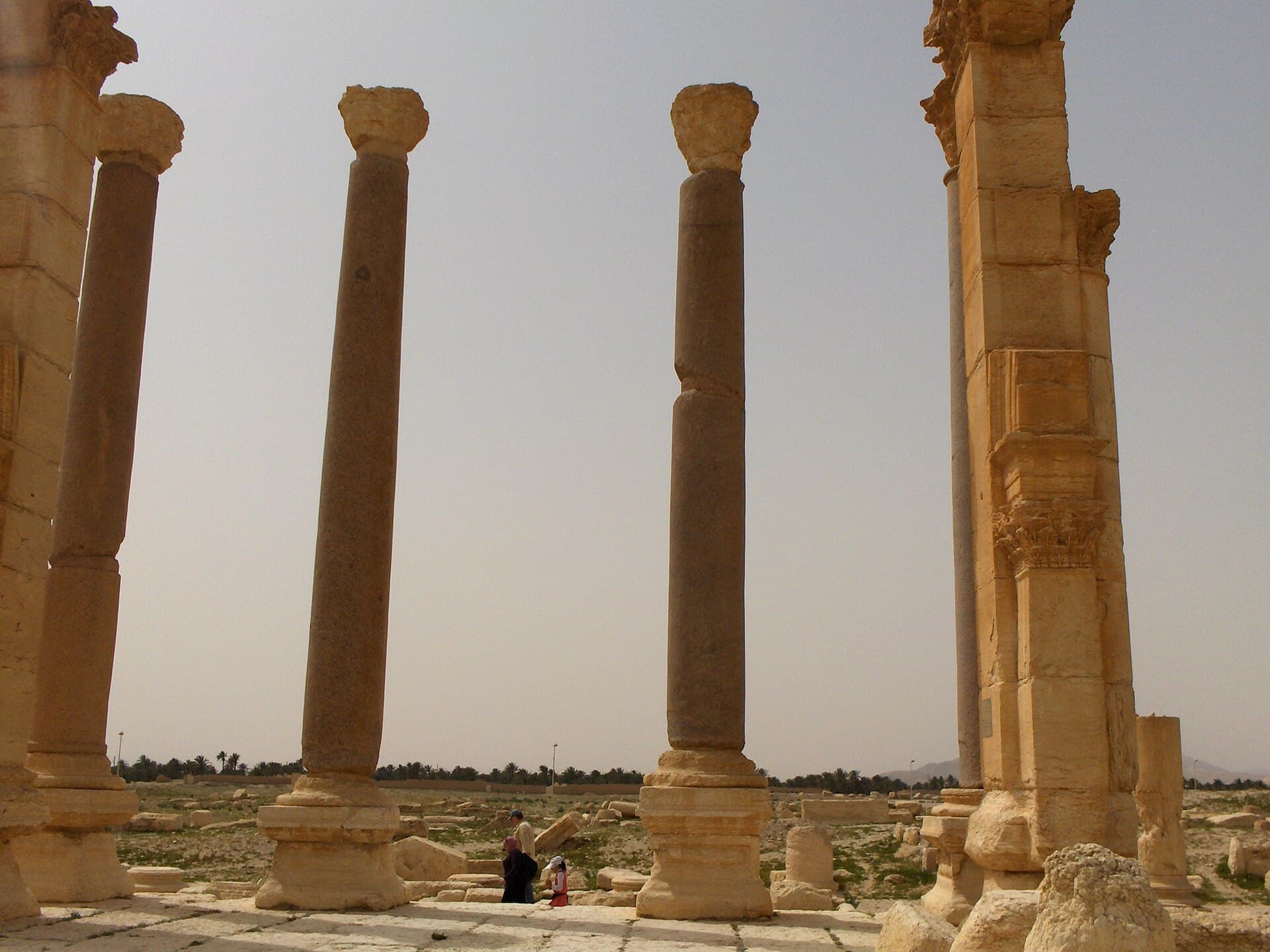
Be at the baths at 07:30; there is no shade on the street, and the stone heats up as the sun climbs. Each column weighs about 20 tons and stands more than 12 metres tall; the stone came from Aswan in Egypt. Step a few paces inside. You can make out the pool of the frigidarium, the cold room, and the floor and drain of the octagonal changing room. The name comes from a renovation under Diocletian (284-305). 15 minutes is enough.
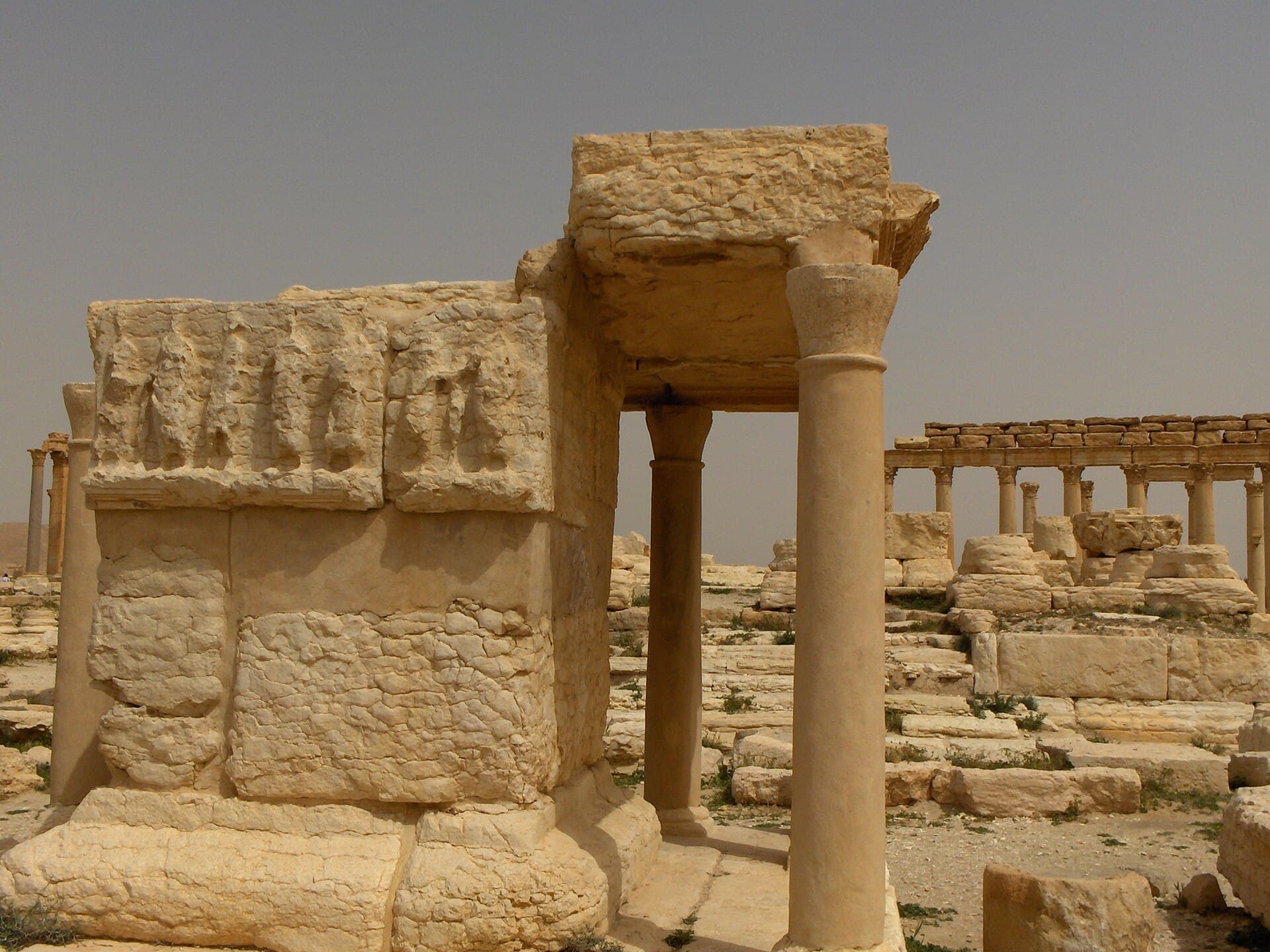
At 07:50 you are at the Temple of Nabu. It was dedicated to the Babylonian god of writing and wisdom in the 2nd century, under Hadrian. Even before the war only a high podium, a few columns and the outline of the courtyard remained. Look closely at the carved blocks along the edge of the podium. In March 2017 the Directorate-General of Antiquities and Museums reported no new damage here. 15 minutes.
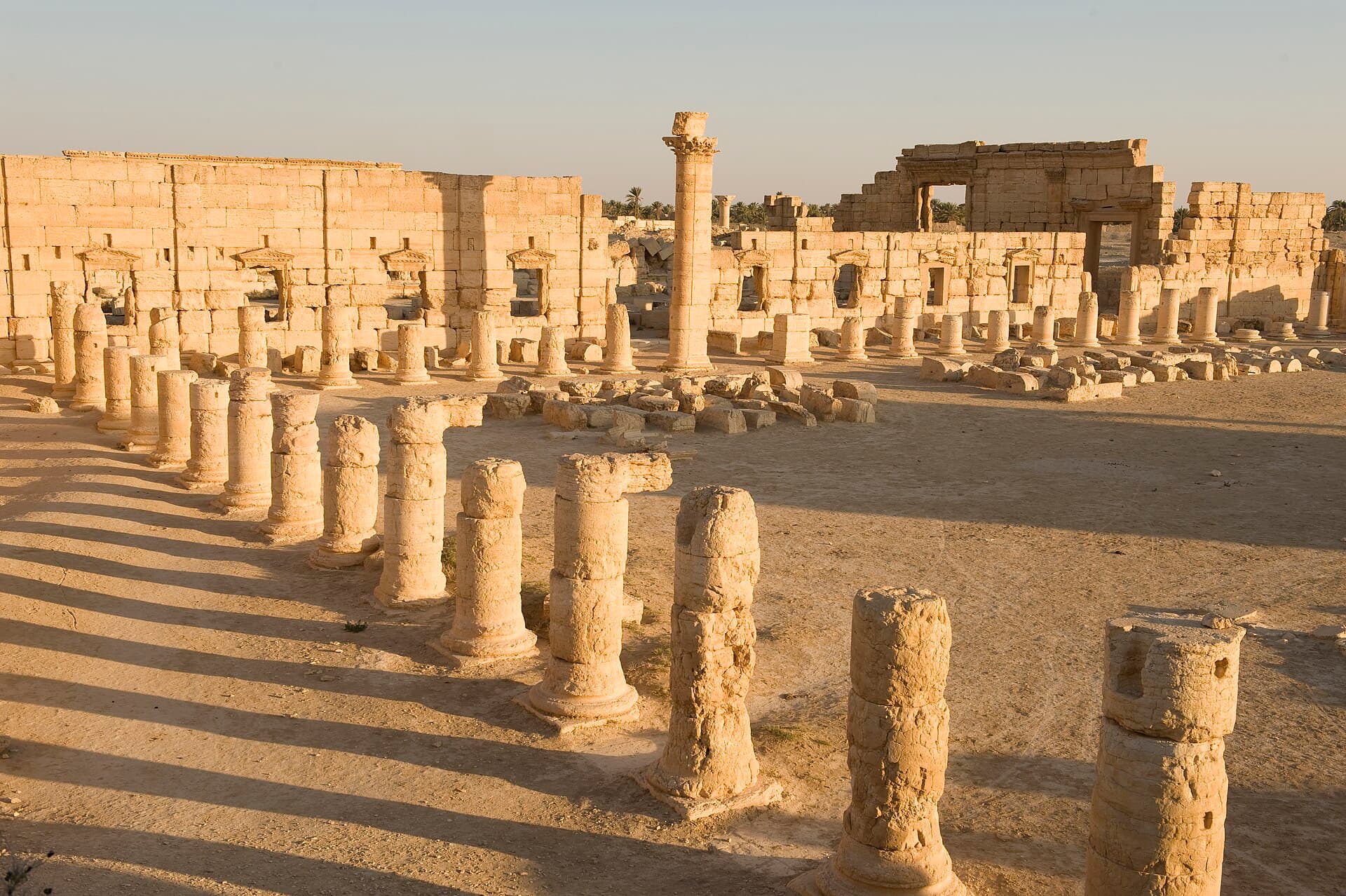
At 08:15 you are in the agora. The courtyard measures 71 by 84 metres, had 11 gates, and some 200 columns lined its four sides. The statues stood in set places: senators on the east side, city officials on the north side, soldiers on the west side, caravan chiefs on the south side. Look too at the triple gate of the Tariff Court on the south-east side. The city’s tax law, dated AD 137, was found in that court in 1881 and is now in the Hermitage Museum in St Petersburg. Allow 40 minutes for the agora.
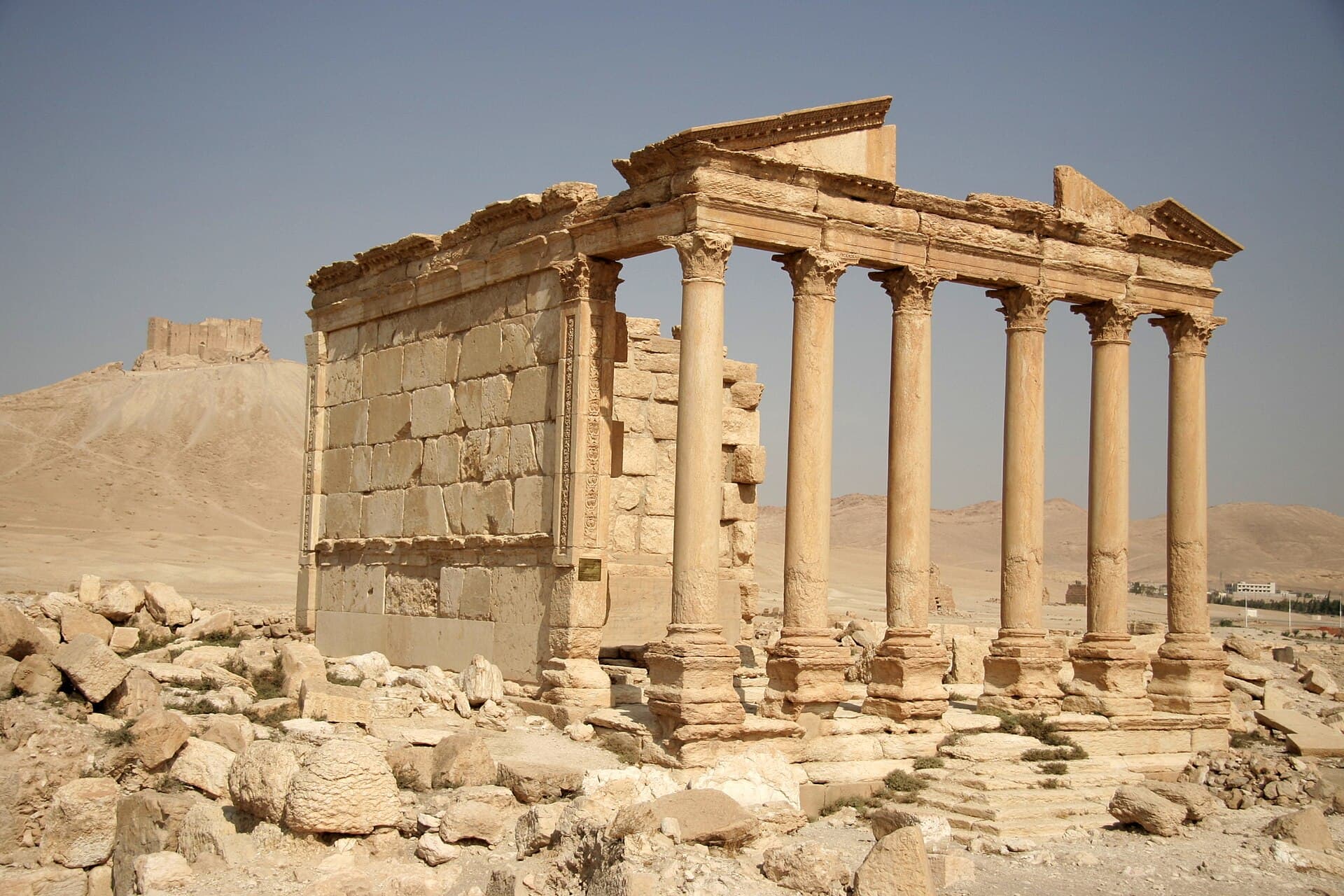
At 09:00 go back to the street and walk west. At 09:15 you reach the Funerary Temple. From the front it looks like a small temple, but it is a family tomb and the only tomb inside Palmyra’s walls. It is number 86 in Gawlikowski’s catalogue. Its portico of six Corinthian columns faces east and catches the morning light. The back wall and the left side wall were rebuilt in the 1970s; the original work is in the portico. Move to the east or south-east side and Palmyra Castle, on the hill behind, comes into the same frame. 20 minutes. At 10:00 start back and stay out of the midday heat.
Take care
The temples of Bel and Baalshamin were blown up in 2015; the tetrapylon and the stage front of the theatre were destroyed in January 2017. No dated source was found on the state of the baths or the Funerary Temple after 2015. The latest dated assessment for the Temple of Nabu and the agora is from March 2017. Ask on site which sections are open and do not push into a fenced area. In December 2025 the ruins were open and entry was free. Since May 2026 mine clearance has been under way in the northern cemetery sector and the hippodrome, and it will extend to the residential quarter to the west. Stay on clear paths and do not pick anything up. No water is sold on site; bring at least two litres each, a hat and closed shoes. Transport, permits and current closures are in how to get to Palmyra; the first walk, covering the Temple of Bel and the theatre, is half a day in Palmyra.
The route on a map
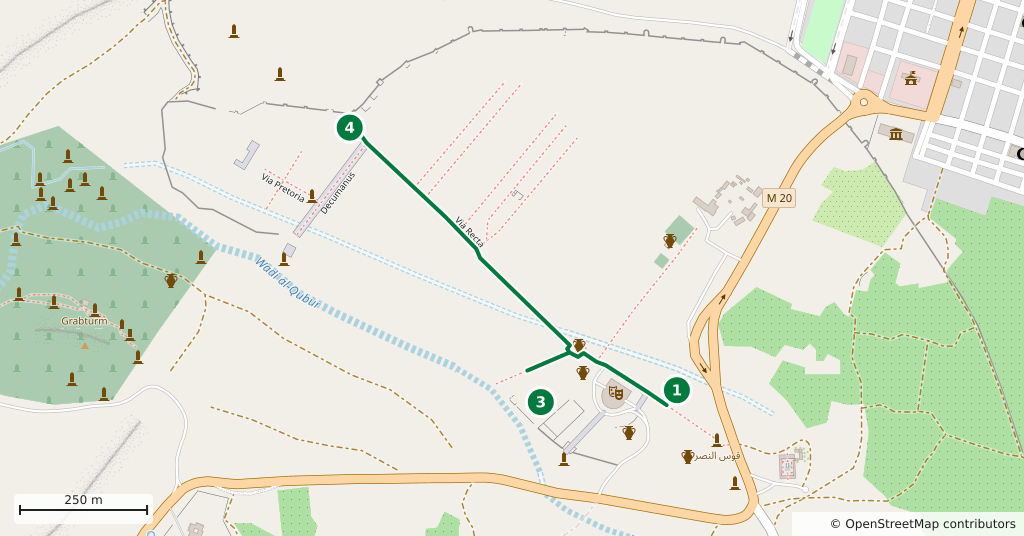
Stops along the route
- 01
- 02
- 03
- 04
Transparency
- How this was chosen
- The stops and their order were set by hand. The line on the map is real road geometry, not a straight hop between pins; distance and duration belong to that itinerary.
- Facts checked
- September 2026
- Last updated
- September 15, 2026