Desert palaces: two days from Palmyra to Damascus
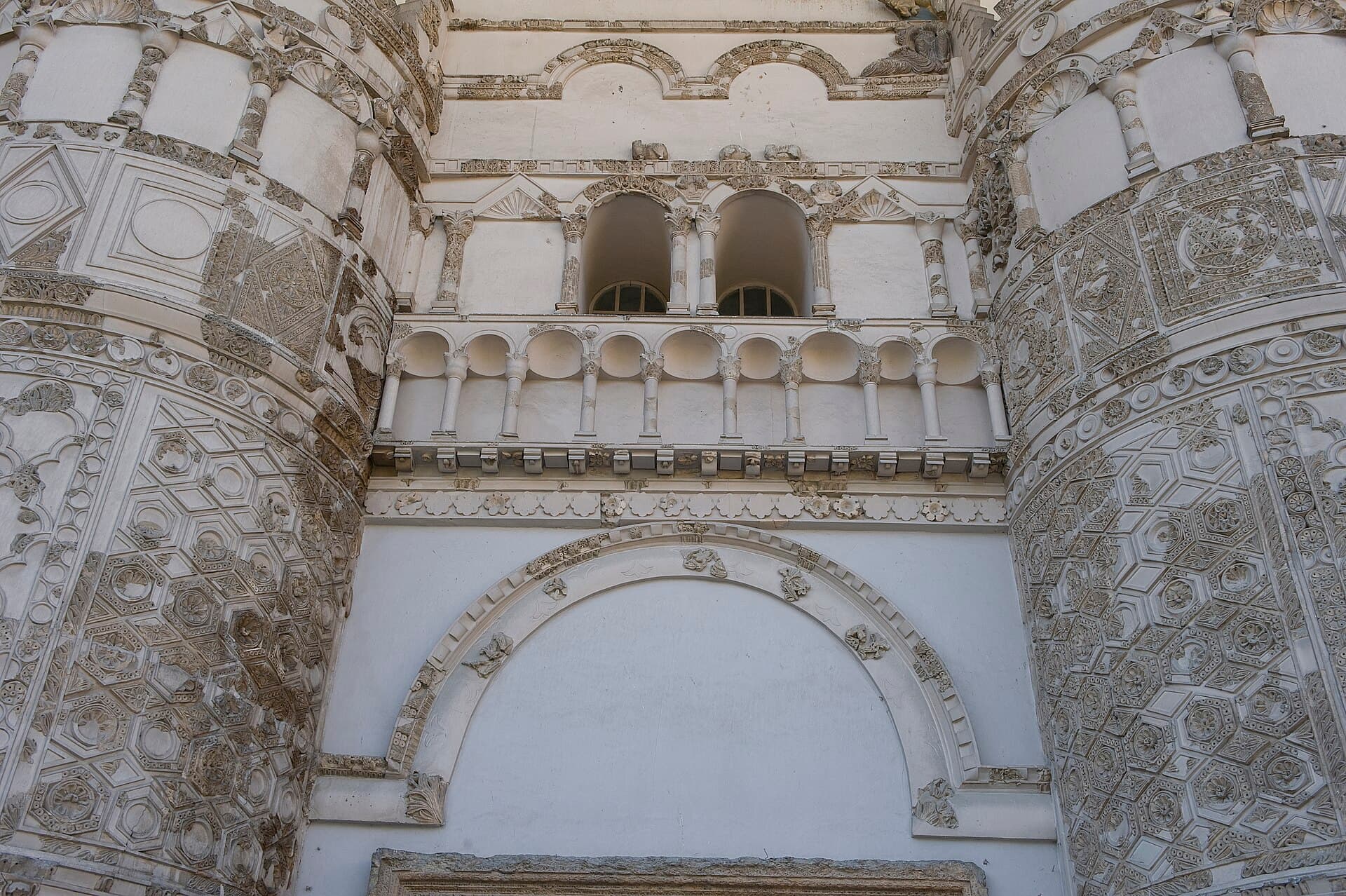
The two Qasr al-Hayr palaces the Umayyad caliph Hisham built a year apart, and the front door of one now standing in Damascus: 470 kilometres of steppe, two days.
- Duration
- 16 hours
- Distance
- 470 km
- Difficulty
- Hard
- Best season
- March–May, October–November
- stops
- 4
- City
- Palmyra
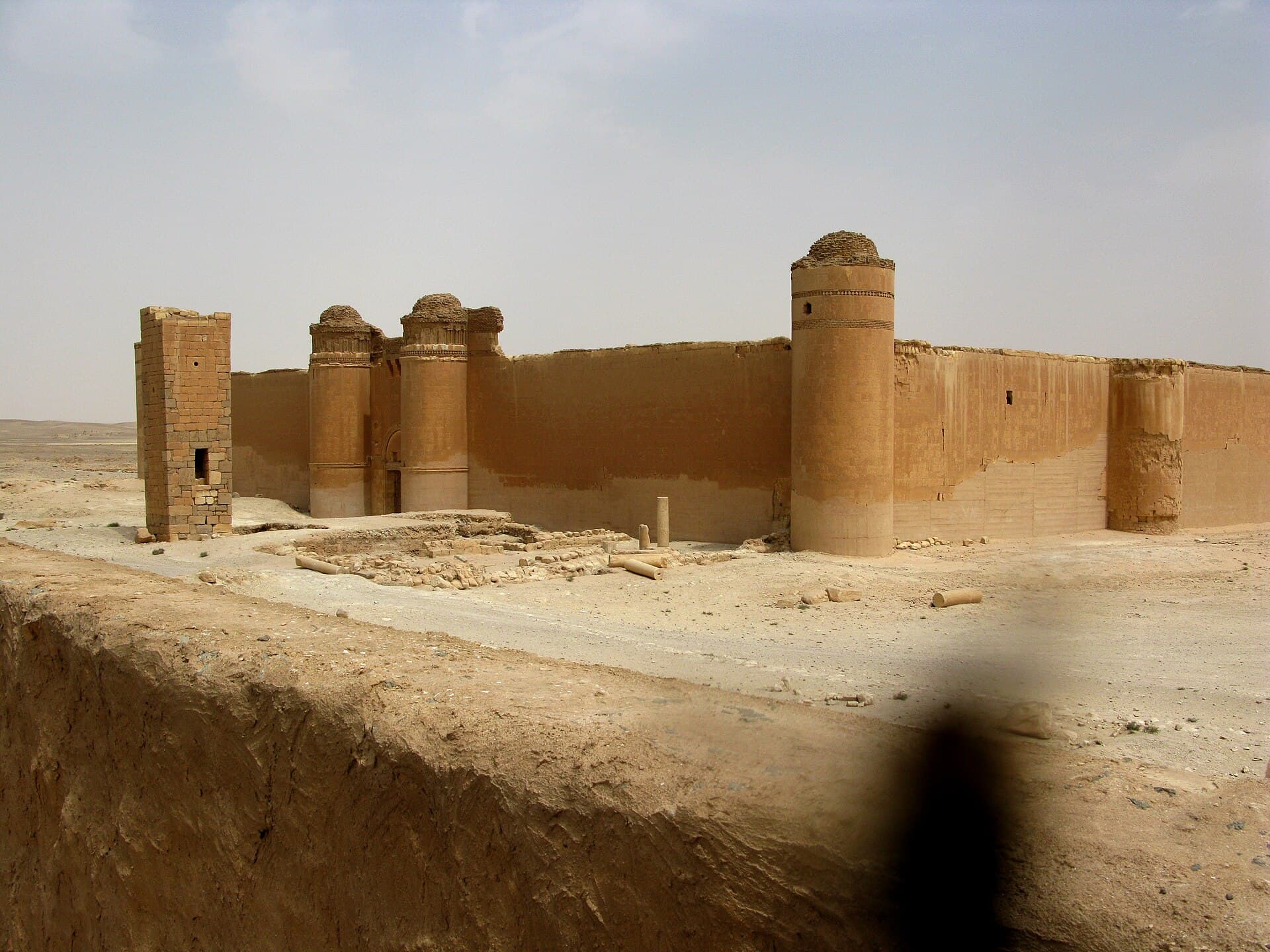
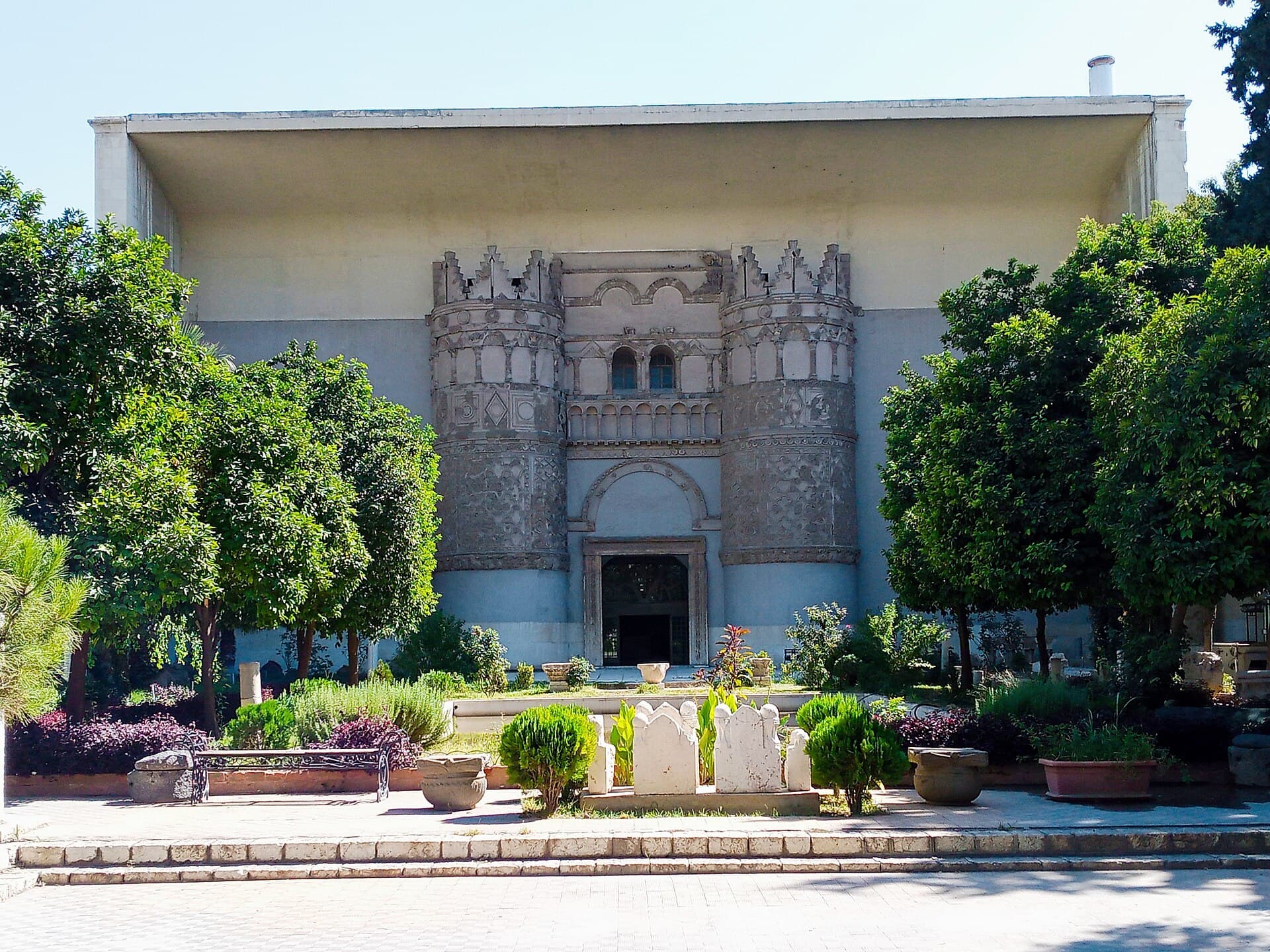
The Umayyad caliph Hisham ibn Abd al-Malik built two palaces a year apart: the western one in 727, the eastern one in 728. Neither is a castle — the hayr in the name means an enclosed hunting and grazing ground, so what stands here is a farm estate laid out in the desert. This route visits both and ends in Damascus, because the front door of the western palace is now in the city: it was taken apart stone by stone and rebuilt as the entrance of the National Museum. It comes to 470 kilometres over two days. The road crosses open steppe and asks for real preparation.
The route
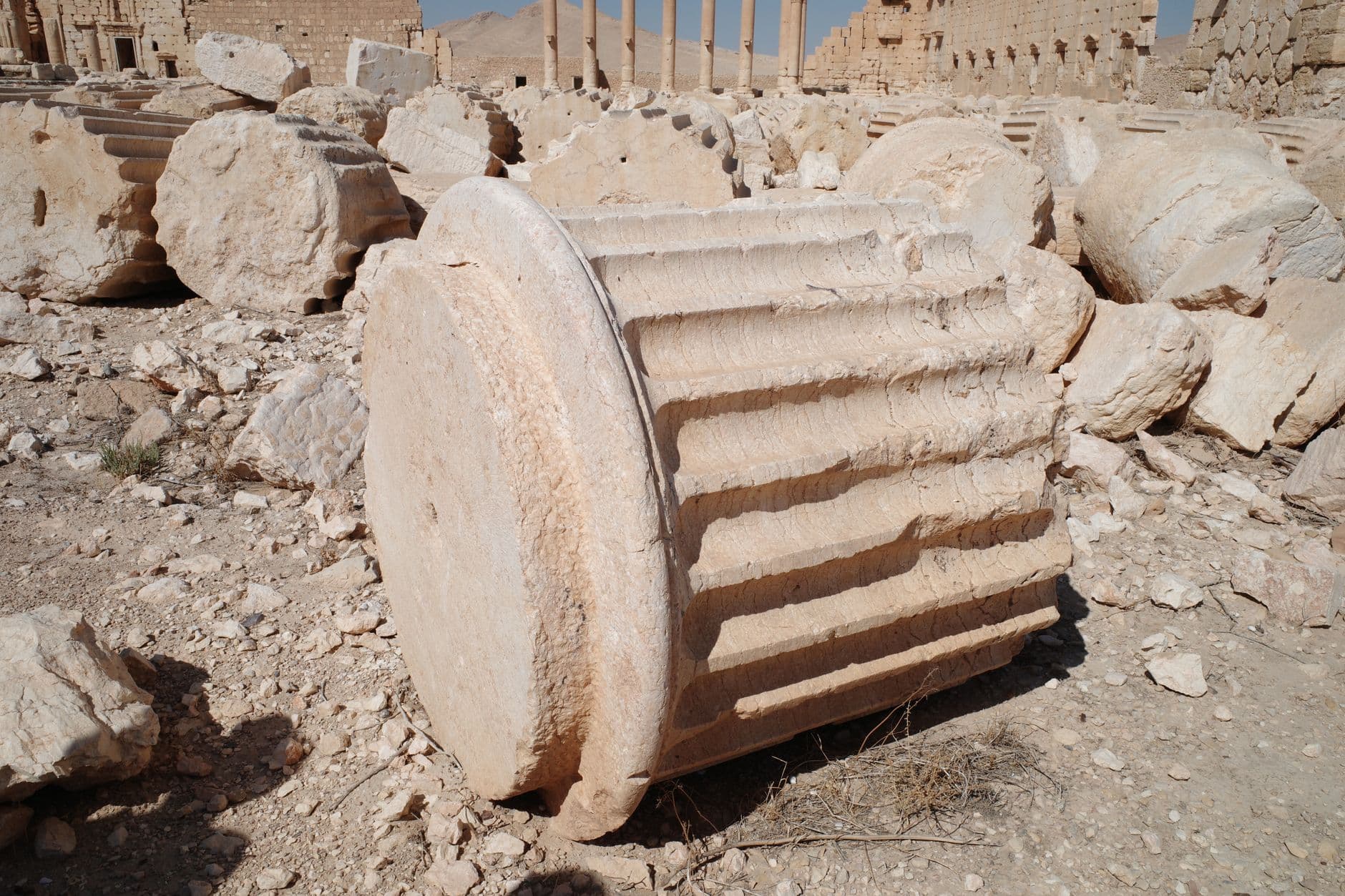
Day one starts in Palmyra. Walk the colonnaded street in the morning, then turn northeast: Qasr al-Hayr al-Sharqi is 115 kilometres away by way of as-Sukhna. There is no fuel and no water along the road, and you need a driver who knows it. After the palace, return by the same road and spend the night in Palmyra. Day two puts you on the Damascus road. Qasr al-Hayr al-Gharbi lies near Qaryatayn, about 75 kilometres southwest of Palmyra, at the edge of the steppe road; the site is unmarked, so do not look for a sign. From there carry on to Damascus; the museum is in the centre, next to the Tekkiye Suleymaniye.
Timing
Leave at 07:00 on the first day. There is no shade on the steppe, and reaching the eastern palace before noon is the only sensible plan; an hour and a half on site is enough. You will be back in Palmyra by the afternoon. Set out early again on day two: spend an hour at the western palace and be in Damascus by the afternoon. Do not tie the museum to the day, tie it to a phone call — if it is closed you need to rebuild the day. If it is open, look at the doorway before you go into the halls: what you spent two days looking at on the steppe is standing right there, and that is why the order runs this way.
Take care
The real risk on this route is the road. On both legs there is no settlement, no fuel and no water in between; fill the tank, take at least two litres of water per person, and travel with a driver who knows the way. None of the stops has any shade. The edges of the excavation pits are loose, so keep away from them. Entry fees vary, so carry cash. The museum reopened on 8 January 2025; still, check its hours before you set out, because on a day it is shut the route drops to three stops and the doorway goes unseen. This road does not work in high summer; go in spring or autumn. Water reached the eastern palace along a canal of about 5700 metres, and its line can still be followed across the ground — ask the driver, because most visitors never hear of it.
The route on a map
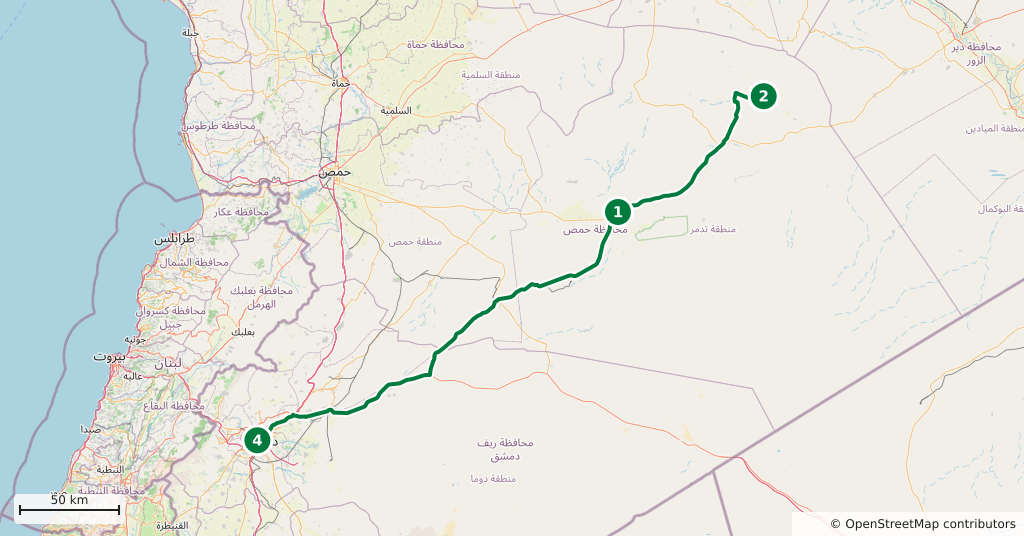
Stops along the route
- 01
- 02
- 03
- 04
Transparency
- How this was chosen
- The stops and their order were set by hand. The line on the map is real road geometry, not a straight hop between pins; distance and duration belong to that itinerary.
- Facts checked
- September 2026
- Last updated
- September 15, 2026