The Old Souqs of Deir ez-Zor (al-Souq al-Muqabbi)
Seven covered markets laid out in 1865 by craftsmen from Urfa, selling spices, sickles and tent rope. Largely destroyed in 2012; ask on site which parts reopened.
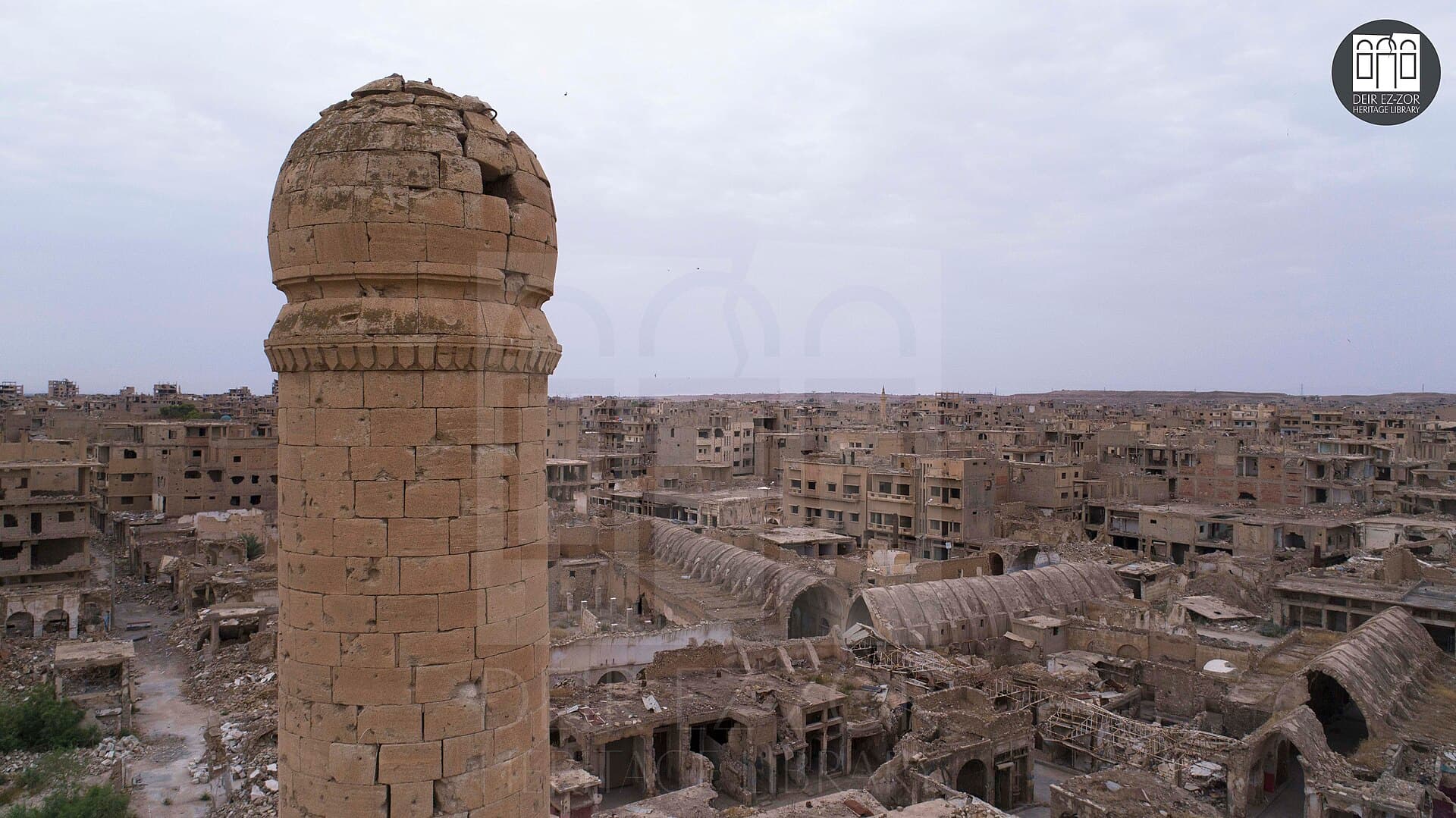
- Opening hours
- Variable — rehabilitation is under way, confirm on site which sections are open
- Entry
- Free
- Duration
- 60 minutes
- Best time
- Morning, while shops are open and before the heat builds
- Period
- Late Ottoman
- Address
- Main street (al-Shari al-Amm), city centre, Deir ez-Zor
The old souqs of Deir ez-Zor, known locally as al-Souq al-Muqabbi — the vaulted souq — are a network of seven covered markets. They were laid out in 1865 and are among the few Ottoman-era building groups left in the city. This was where villagers and Bedouin from the countryside came to shop: sickles, tent rope, wheat and ghee changed hands here. Most of it was destroyed in 2012, and it is now the subject of a rehabilitation project.
Who built them, and when
In 1865 Khalil Bey Thaqib of Urfa was appointed district governor of Deir ez-Zor. Craftsmen he brought from Urfa planned and built the souqs, starting with Souq al-Miri, the government market. The Old Saray went up in the same period; today it is a group of buildings holding the police headquarters, the Museum of Popular Traditions, an Ottoman gate and the Saray café. The souqs are registered with the Directorate of Antiquities. A 1980 expropriation law passed ownership to the city council, while the shops stayed with their original holders.
What each souq sold
- Attarin: spices, medicinal herbs and household sundries. At the eastern end, with its south front on the main street.
- Tujjar (merchants): carpets, rugs and rural clothing. It runs north–south and ends at the Ottoman gate.
- Haddadin (blacksmiths): sickles, axes and fittings for goat-hair tents.
- Khashabin (carpenters): wooden farm tools, decorated chests, Quran stands and sieves.
- Grain souq, or Arasa: wheat and seed.
- Hibal (rope): Bedouin tents, rope and the bells hung round the necks of livestock.
- Khallouf: cloth, wool and ghee. In the south-west, the section that kept its old architecture best.
According to eSyria, the souqs held about 900 shops.
The souqs today
The souqs were largely destroyed in the fighting of 2012. Documentation photographs taken in 2023 show some vaults collapsed and others still standing but holed. The Deir ez-Zor Chamber of Commerce and UNDP have started a rehabilitation project for al-Souq al-Muqabbi. How far it has gone, and which sections have shops open again, is something this page cannot confirm; ask on site.
Getting there and how long it takes
The souqs are in the city centre. Their south fronts face the main street, al-Shari al-Amm, and the western edge opens onto Bridge Street, Shari al-Jisr. Walking the open sections takes about an hour.
What not to miss
The Ottoman gate at the north end of Souq al-Tujjar. The merchants’ souq ends there, and the gate belongs to the Old Saray group. Its condition after 2012 is not known, so ask whether it is still standing.
Tips
- Ask shopkeepers on the main street which sections have reopened
- Do not walk under damaged vaults; unrepaired sections can still collapse
- Ask before photographing shopkeepers or their shops
Transparency
- How this was chosen
- Written by hand; opening hours, entry fee and coordinates are kept as data. A field that is not known for certain is marked as variable rather than guessed.
- Facts checked
- September 2026
- Last updated
- September 15, 2026