The Great Mosque of Hama
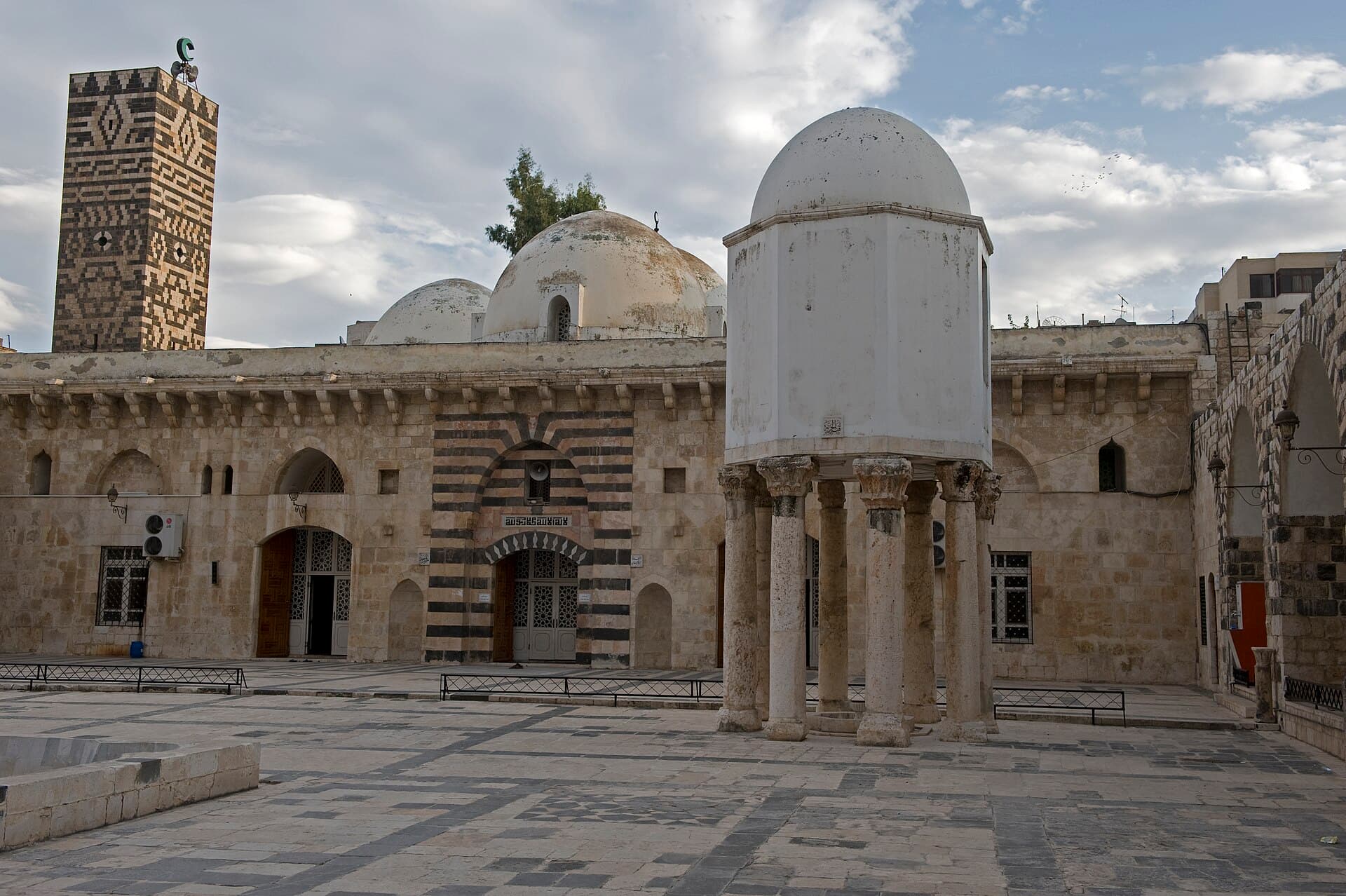
A Roman temple, then a church, then one of Syria’s earliest mosques. Levelled in 1982 and rebuilt by 2001 — the treasury pavilion still stands in the courtyard.
- Opening hours
- Daylight hours, outside prayer times
- Entry
- Free
- Duration
- 30 minutes
- Best time
- Early morning; the courtyard is empty and the river walk starts next door
- Period
- Roman temple — church — mosque; rebuilt after 1982
- Address
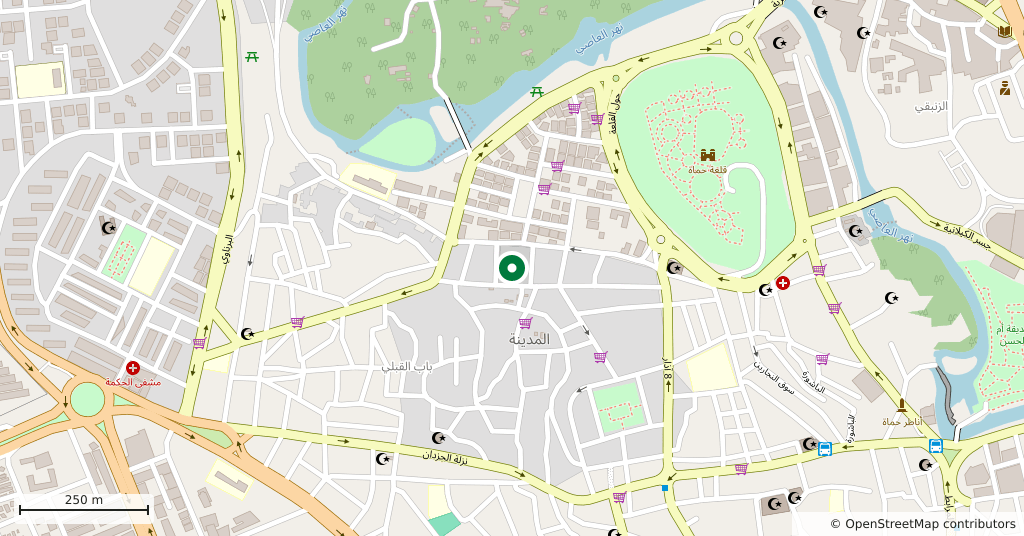
- West of the old town, near the Orontes, Hama
Hama’s oldest place of worship, and the spot where the city’s layers show in a single courtyard. The ground held a Roman temple in the 3rd century. Around the 6th it became a church, and in the first centuries of Islam a mosque — the same story as the great mosques of Damascus and Aleppo, at a smaller scale. In 1982 it was almost completely destroyed along with the historic centre of Hama; the rebuilding, led by the antiquities department, was complete by 2001. What you see today is largely a reconstruction, and the building does not hide it.
Getting there
In the west of the old town, a street back from the Orontes. From the Azm Palace it is a 900-metre walk west along the river; the al-Muhammadiyah noria stands 400 metres further west. It is the natural stop on the norias walk.
How long it takes
Half an hour covers the courtyard, the arcades and both minarets. If you arrive at prayer time, wait in the courtyard and enter the prayer hall once it empties.
What you see
An arcaded courtyard, a domed prayer hall and two minarets from two different ages: the square one dated 1124, patterned in black and white stone; the octagonal one Mamluk work of 1427. In the middle of the courtyard stands the domed treasury pavilion (bayt al-mal) raised on antique columns — the same tradition as the one in the Umayyad Mosque of Damascus. In the walls and over the doors you can pick out carved stones reused from Roman and Byzantine buildings.
Do not miss
The lintel above the main door. The stone, carved with vine scrolls and rosettes, is reused from the pre-Islamic building — the whole story of the mosque reads in that single stone.
Tips
- Walk up to the columned treasury pavilion in the courtyard; under its dome is the coolest spot in the yard
- Compare the two minarets: the square shaft is from 1124, the octagonal one from 1427 — both were re-erected after the destruction
- Cover shoulders and knees; at prayer times wait in the courtyard
- The al-Muhammadiyah noria is 400 metres west — drop down to the river on your way out and carry on the walk
Transparency
- How this was chosen
- Written by hand; opening hours, entry fee and coordinates are kept as data. A field that is not known for certain is marked as variable rather than guessed.
- Facts checked
- August 2026
- Last updated
- September 15, 2026