Jebel Khalid, a Seleucid Town on the Euphrates
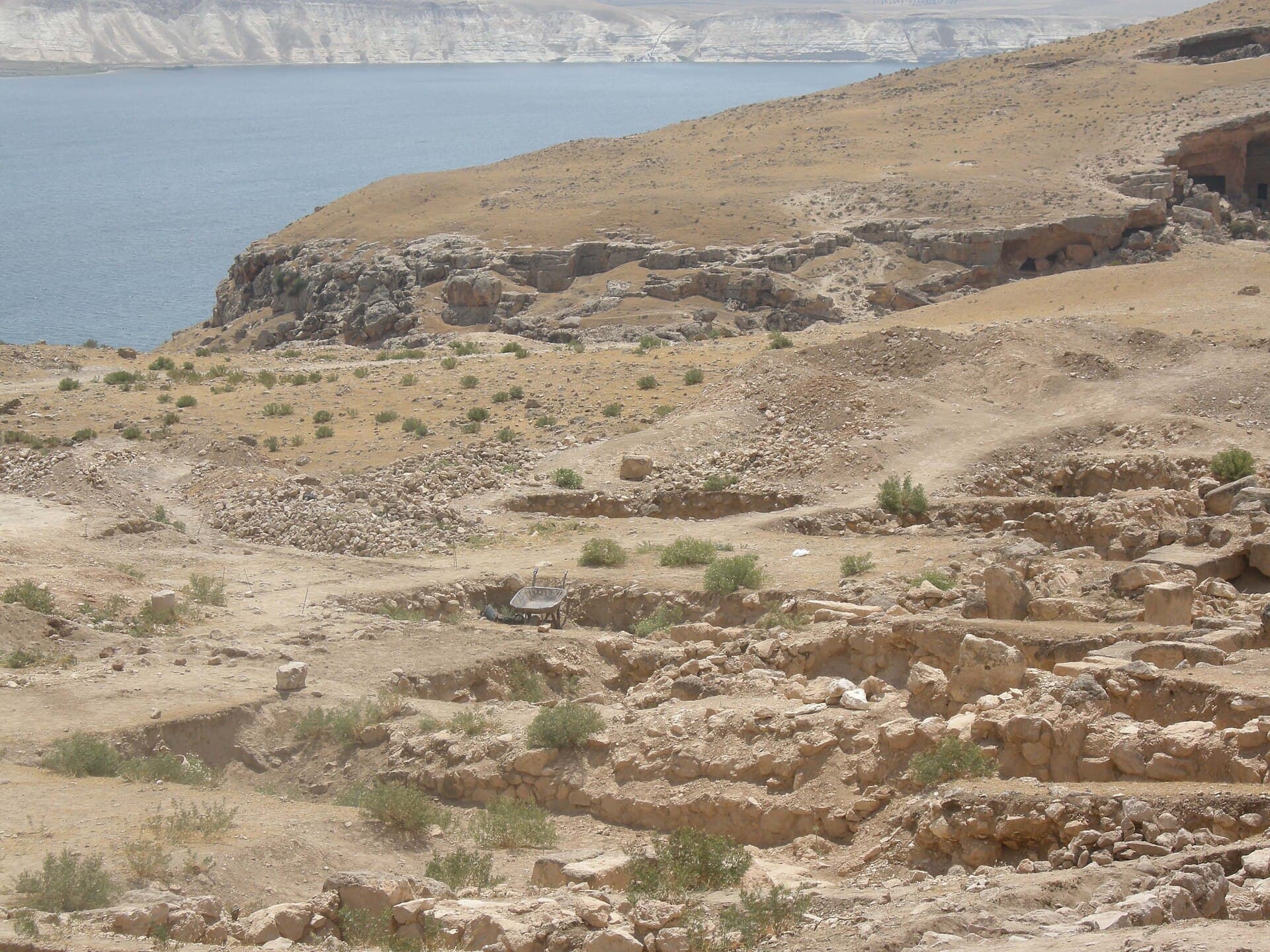
A Seleucid town on the Euphrates abandoned around 70 BC: a 3400-metre wall, a governor’s palace round a Doric courtyard, a temple. No later city covered it.
- Opening hours
- Excavation site; visiting arrangements unknown
- Entry
- Variable — confirm on arrival
- Duration
- 90 minutes
- Best time
- Spring or autumn; in summer the shadeless site in the Euphrates valley gets very hot
- Period
- Hellenistic (Seleucid)
- Address
- On the Euphrates, south-east of Manbij, Aleppo
A walled Seleucid town stretching along the Euphrates — the Seleucids being the Greek dynasty that ruled Syria after Alexander. It was probably founded by Seleucus I Nicator, flourished until around 70 BC and was then abandoned. No later town was built on top of it, so the Hellenistic plan never disappeared under Roman or Byzantine layers. That is why the excavators could open up the palace, temple and houses of an early Hellenistic town directly.
Getting there
On the Euphrates, 27 kilometres south-east of Manbij as the crow flies. Qalaat Najm is about 23 kilometres away. There is no public transport; you hire a car and driver in Manbij. This is an excavation site, and we found no verified information on a guard, visiting hours or entry arrangements. The security situation along the Euphrates changes often; check before you set out.
How long it takes
An hour and a half. The wall is 3400 metres long and the excavated areas inside are far apart. Walking between the palace, the temple, the palaestra and the housing block takes time.
What you see
The governor’s palace belongs to the town’s earliest phase, the early 3rd century BC. At its centre is a courtyard ringed by Doric columns. The excavators think the rooms around it served for audiences, banquets, storage and cooking. That reading is not certain; some interpret the north wing as living quarters.
A temple and a palaestra were also uncovered. The temple is of the amphiprostyle type, meaning it has a columned porch at both front and back. A palaestra is a courtyard building for wrestling and exercise. One housing block was excavated completely and a second in part. The town’s cemeteries lie outside the wall.
Who excavated it
An Australian team from Sydney and Melbourne began work in 1986, led by G. W. Clarke and Heather Jackson. The excavations stopped in 2010 because of the political situation in Syria. The terracotta figurines, the pottery and the housing block were published in separate volumes, and the report on the 2000 to 2010 seasons came out in 2016. The excavation archive is held at the University of Melbourne.
What was it called
Nobody knows. Two names known from written sources have been proposed, Amphipolis and Thapsacus; neither is settled.
Don’t miss
The palace’s Doric colonnaded courtyard. The audience, banquet and kitchen rooms are all arranged around it; standing in that courtyard is the clearest way to read the plan of the town’s earliest building.
Tips
- There is no shade on the site; bring water and a hat
- The wall runs 3400 metres; decide which buildings you want to see before you start
- Keep back from the edges of open trenches and the foot of standing walls
- A day trip from Manbij; it can share a day with Qalaat Najm
Transparency
- How this was chosen
- Written by hand; opening hours, entry fee and coordinates are kept as data. A field that is not known for certain is marked as variable rather than guessed.
- Facts checked
- September 2026
- Last updated
- September 15, 2026