From al-Jdayde to al-Almaji: Hokedun, the wool souq and Burdbek’s two fountains
Half a day in Aleppo from Jdayde to al-Almaji: the Armenian pilgrims’ khan, the wool souq, Al-Hatab Square and two works of Burdbek dated 1461 and 1491.
- Duration
- 4 hours
- Distance
- 1.6 km
- Difficulty
- Easy
- Best season
- March–June, September–November
- stops
- 6
- City
- Aleppo
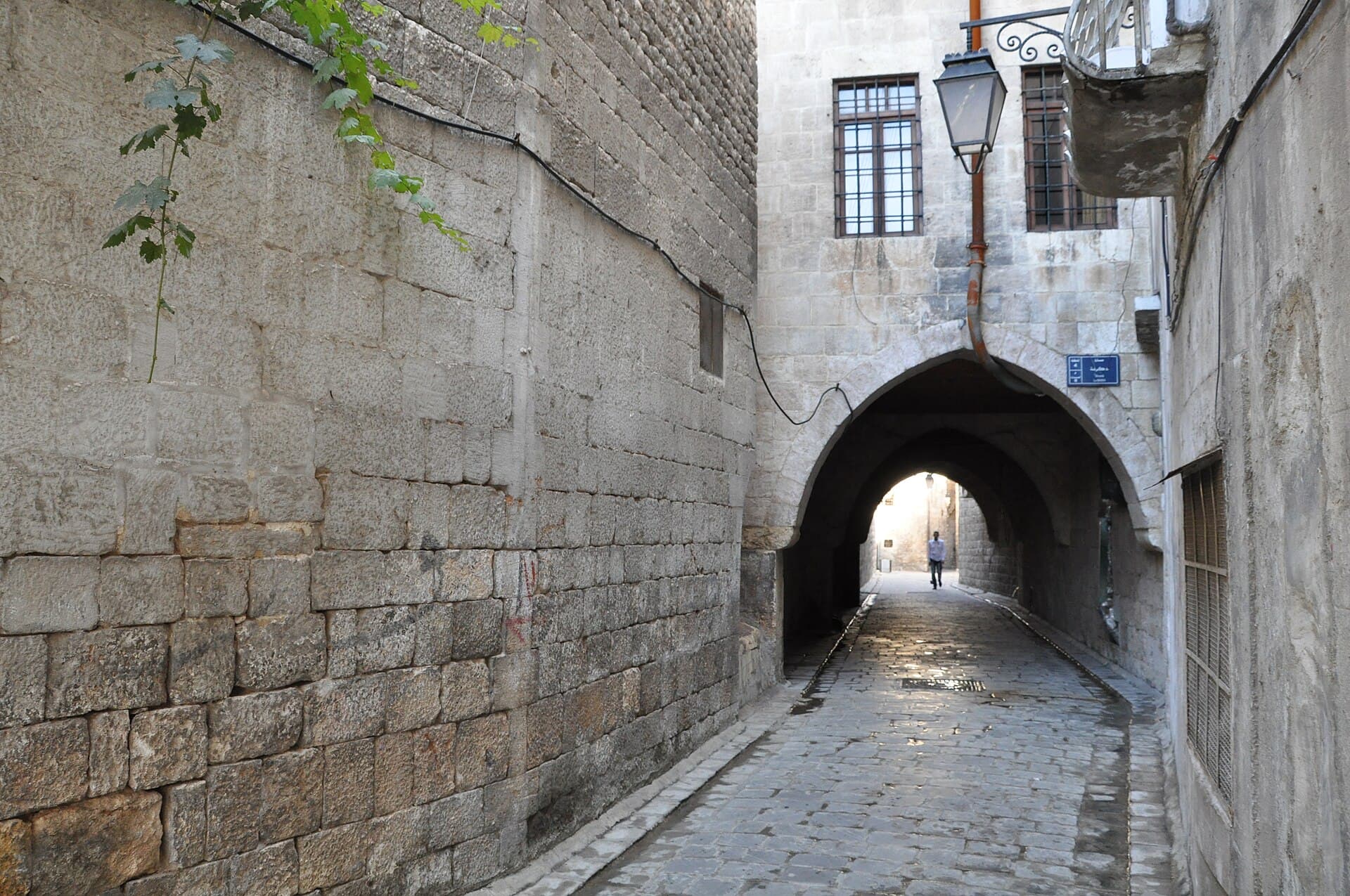
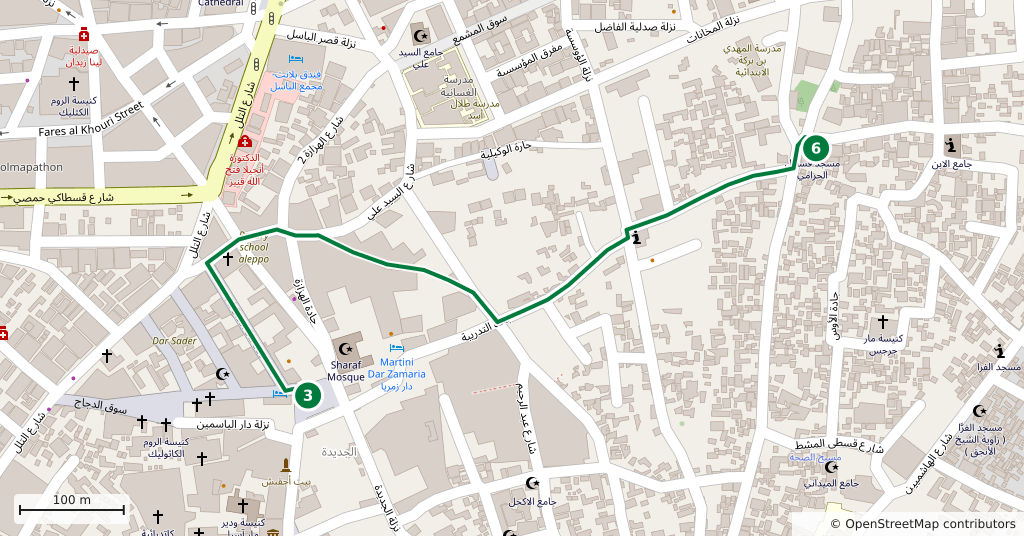
This walk leaves the Armenian khan of Jdayde, heads through al-Almaji to Qastal al-Harami, and one man ties its two ends together: Burdbek, a benefactor of the Mamluk period. In 1461 he had the Qastal al-Harami Mosque built, and in 1491 he put up a qastal — a fountain that gives water to the street — beside the Sharaf Mosque in Jdayde. In between come Hokedun, the khan of the Jerusalem pilgrims; Souq as-Souf, where wool is sold; Al-Hatab Square; and the Al-Maydani Mosque with its octagonal minaret. Six stops and about 1600 metres on foot. The longest leg, between Sharaf and Maydani, is close to 700 metres.
The route
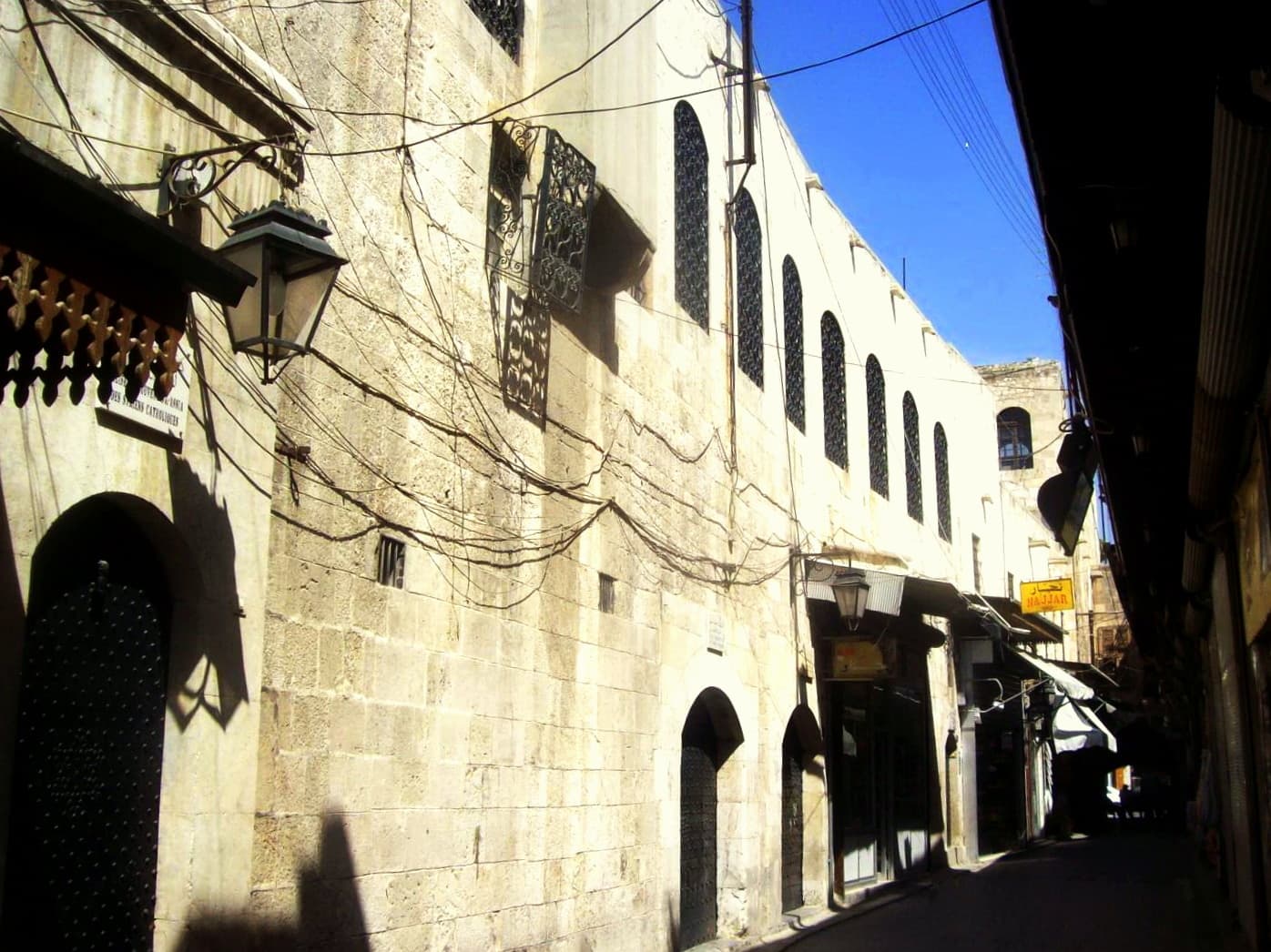
Start at Hokedun, beside the Armenian Cathedral of the Forty Martyrs. The name is Armenian for house of the spirit, and its Arabic name is Khan al-Quds: Armenian pilgrims bound for Jerusalem gathered here. The ground floor is now packed with ready-made clothes shops, and the row of rooms and the arcade of the khan sit above eye level. One of its two entrances opens onto al-Tellel, the other onto Bawwabat al-Qasab. Then cross to Salibeh street. Souq as-Souf is here, its rows of shops running alongside the long stone wall of the Mar Assia al-Hakim Church. Wool is still bought here for quilts and mattresses.
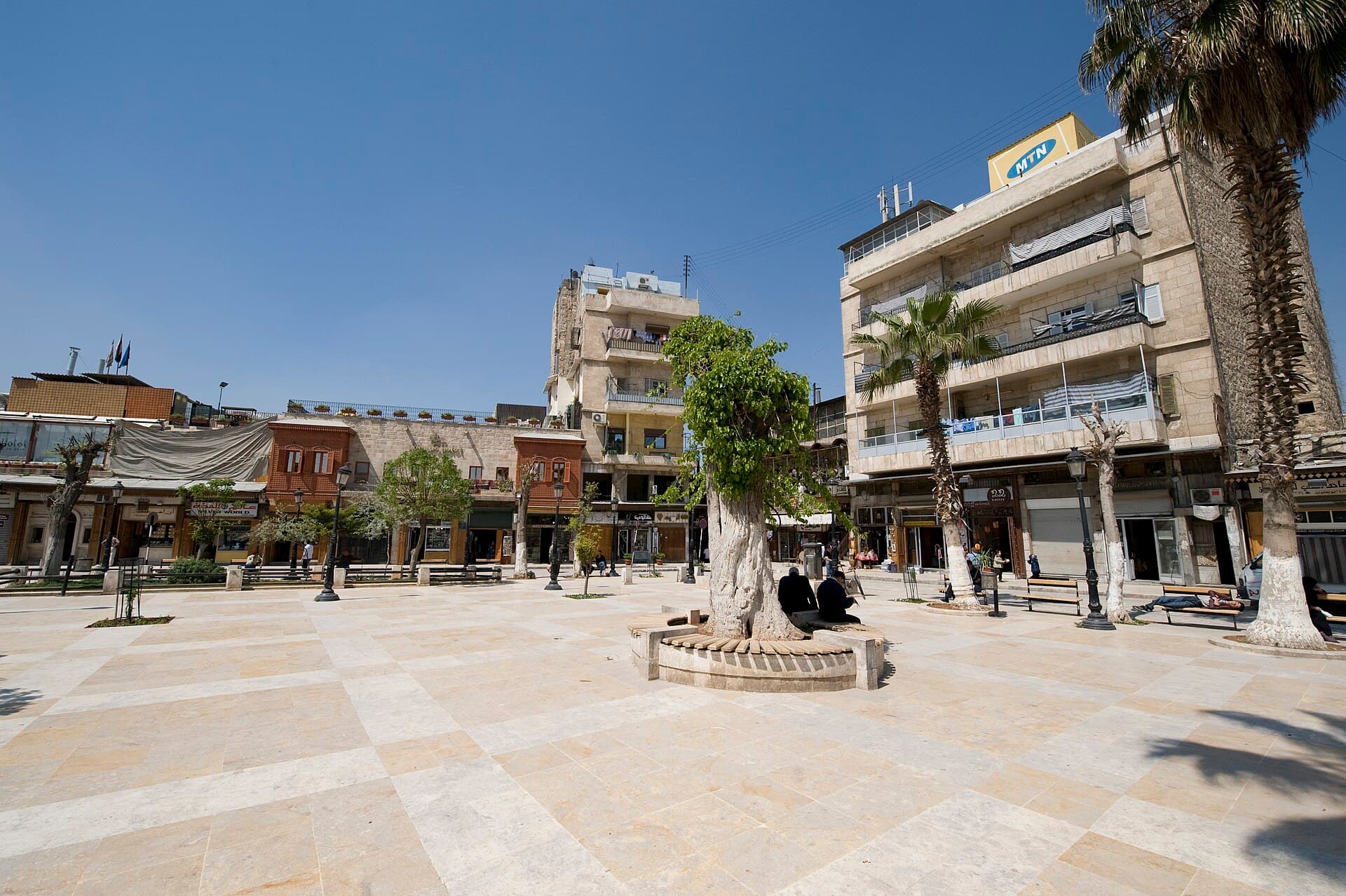
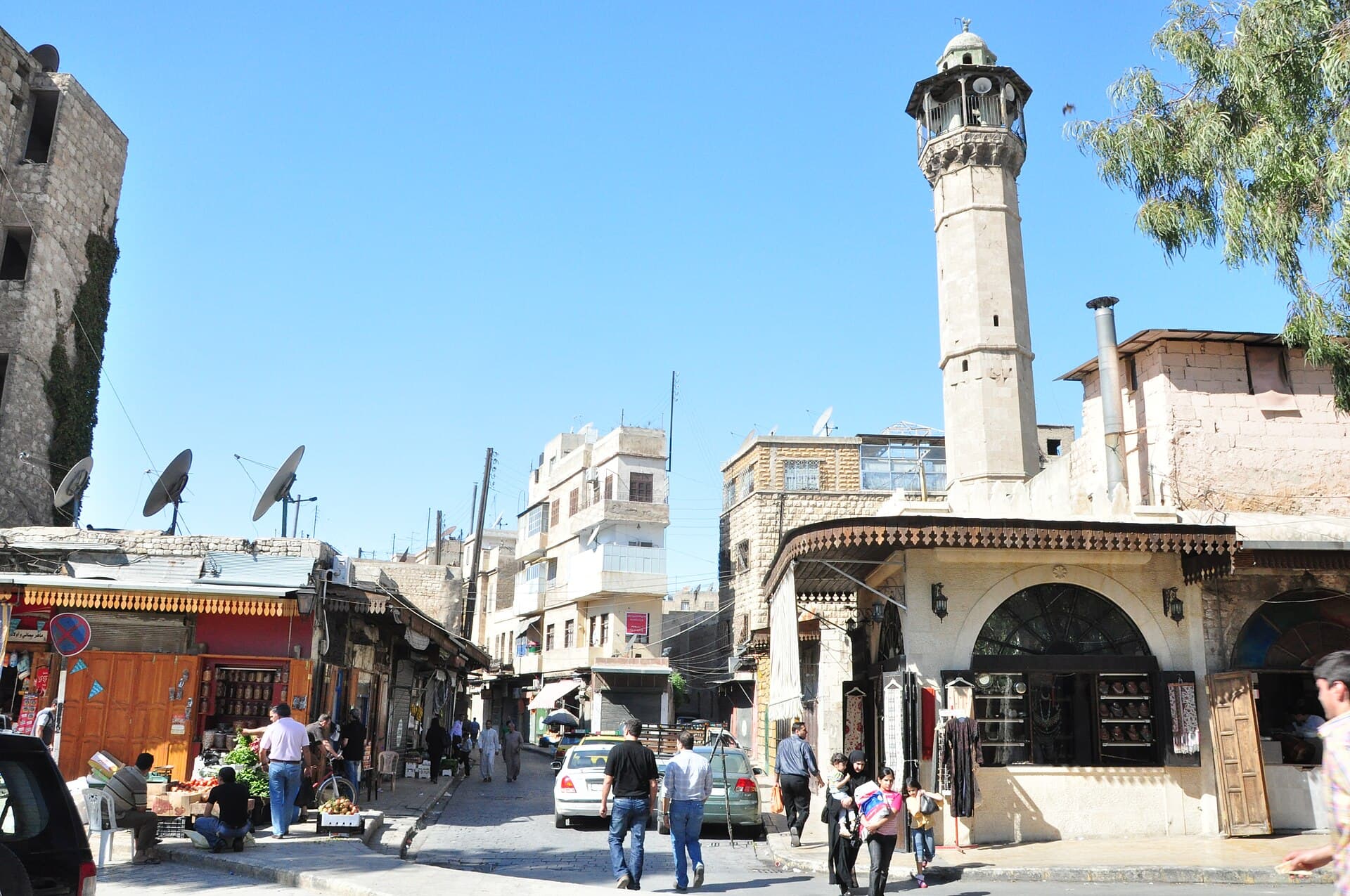
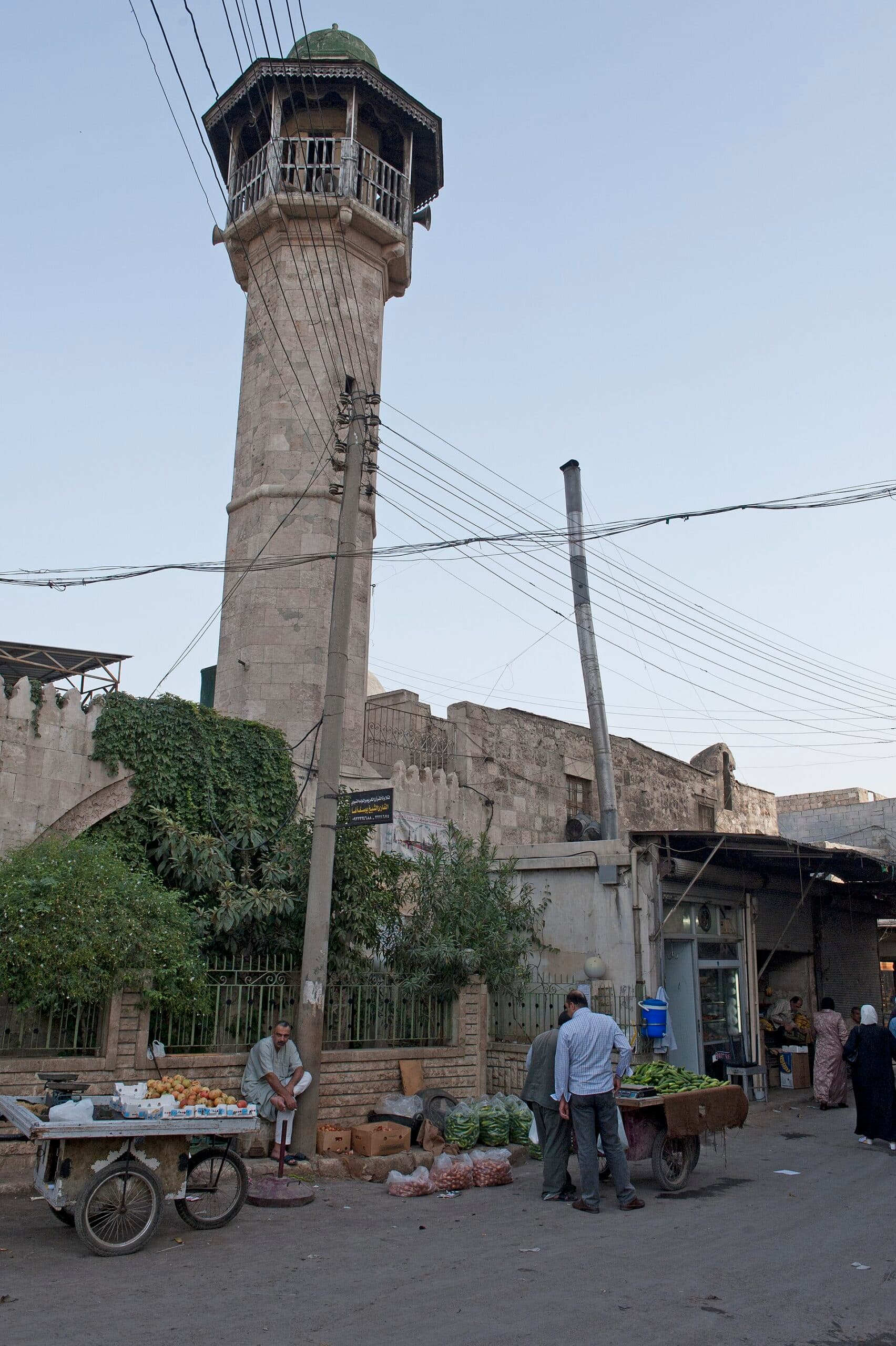
Most lanes come out at Al-Hatab Square, whose name means firewood square. A few minutes north of the square, in the Abd al-Hayy quarter, the minaret of the Sharaf Mosque comes into view. The inscription on the qastal next door gives 1491 and Burdbek’s name, and gravestones dated 1393 stand in the courtyard. From here walk east into the Almaji quarter. The Al-Maydani Mosque is near Almaji square, inside the tight lane fabric. It has no sign, so ask for it in the quarter by the name Ibn al-Maydani. The last leg climbs north into the Qastal al-Harami quarter. The stone fountain beside the mosque entrance is the qastal that gave the quarter its name; inside are the founder’s tomb and a mihrab counted among the best in Aleppo.
Timing
Be at Hokedun at 10:00, when the clothes shops are open and both entrances can be used. Reach Souq as-Souf at 10:45 and Al-Hatab Square around 11:15. Get to the Sharaf Mosque close to the noon prayer: the door is open at prayer times and uncertain outside them, so wait for the congregation to leave. The door of Al-Maydani is mostly locked outside prayer times, so be ready to see the minaret and the front from outside; 15 minutes is enough. Reach Qastal al-Harami around 13:30 and give the mihrab 20 minutes. Souq as-Souf is quiet on Sunday mornings; if you want to see the market busy, pick another day.
Take care
Jdayde was badly damaged in the war. In April 2015 tunnels detonated under Al-Hatab Square destroyed the square and what stood around it. Since repair began in 2021 the square has been back in use, but work continues on some of the surrounding buildings and one side may be closed off. The dome of the Qastal al-Harami Mosque was damaged, and there is no dated record of how far its repair has gone. There is no confirmed post-war condition report for the Al-Maydani Mosque either. Opening hours had not been verified as of September 2026, so ask on the spot. Cover shoulders and knees in the mosques, and ask the traders before taking photographs at Hokedun and in Souq as-Souf.
The route on a map
Stops along the route
- 01
- 02
- 03
- 04
- 05
- 06
Transparency
- How this was chosen
- The stops and their order were set by hand. The line on the map is real road geometry, not a straight hop between pins; distance and duration belong to that itinerary.
- Facts checked
- September 2026
- Last updated
- September 15, 2026