The Khanqah al-Farafira
A Sufi lodge north of the Aleppo Citadel, built in 1237 by Dayfa Khatun, the regent of the city. Its muqarnas portal, bent entrance and mihrab survive.
- Opening hours
- Varies — confirm at the door
- Entry
- Free
- Duration
- 30 minutes
- Best time
- Late morning, while the courtyard still takes light
- Period
- Ayyubid
- Address
- Al-Farafira quarter, north of the citadel, Old City, Aleppo
Walk north from the citadel into the al-Farafira quarter and this is the building. It was built in 1237 by Dayfa Khatun, widow of az-Zahir Ghazi and regent of Aleppo from 1237 to 1244. On the day it opened it was the largest khanqah — Sufi lodge — in the city. Its first name was al-Ribat al-Nasiri, and it was where the dervishes gathered.
Getting there
The al-Farafira quarter lies north of the citadel, inside the Old City. You do not enter from a main façade but from a narrow lane; asking for the quarter by name is enough to find the door.
What to see
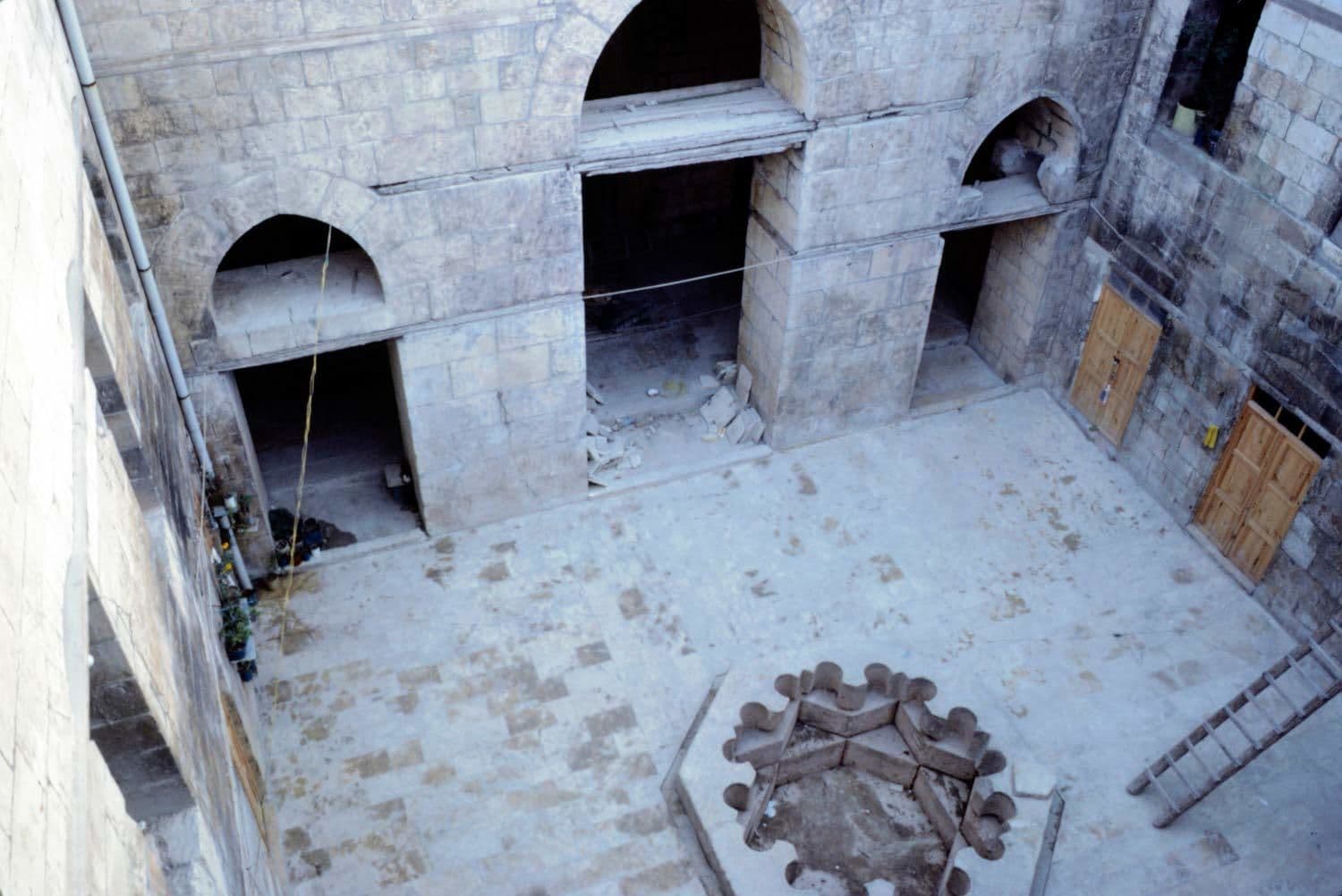
The portal is hooded with muqarnas, the stalactite vaulting of Ayyubid stonework. The way in is not straight: the passage turns once, hiding the courtyard from the lane. That is borrowed from the houses of Aleppo, where public buildings of the period usually had straight entrances. A stone basin for ablutions stands in the middle of the square courtyard. On the south side is the marble mihrab: an octagonal base, a hood of muqarnas, columns to either side.
Who lived here
A khanqah was a place for dervishes and Sufis, but this one was also a shelter for women: widowed, elderly or divorced women with nowhere to go stayed here until they married again. A narrow passage east of the courtyard leads to a second, smaller court and the rooms kept for guests; the stair on the west side climbs to more rooms on the roof. Under the French Mandate the building housed soldiers brought from Africa to serve in the French army.
Do not miss
The inscription panel above the door. It gives the date of the building and verses 34 and 35 of Surat Fatir. Most visitors walk straight in and never read it.
Tips
- Read the muqarnas hood and the inscription panel before you step inside
- The entrance passage turns; the courtyard only opens up once you are through the door
- The narrow passage east of the courtyard leads to a second small court that most visitors miss
Transparency
- How this was chosen
- Written by hand; opening hours, entry fee and coordinates are kept as data. A field that is not known for certain is marked as variable rather than guessed.
- Facts checked
- September 2026
- Last updated
- September 15, 2026