The Maarat al-Numan Mosaic Museum
Roman and Byzantine mosaics from the churches of the Dead Cities, housed in an Ottoman caravanserai. Badly damaged in the war and open to visitors again.
- Opening hours
- Open almost every day; hours vary — confirm before you go
- Entry
- Varies — confirm at the door
- Duration
- 60 minutes
- Best time
- Morning; courtyard light reaches into the arcades
- Period
- Ottoman building — Roman and Byzantine collection
- Address
- Abu al-Ala Street, Maarat al-Numan, Idlib
One of the largest mosaic collections in the region sits in the courtyard of the Khan Murad Pasha. The caravanserai was built in the 16th century as an inn, a soup kitchen and lodgings for travellers; restoration began in 1983 and it opened as a museum in 1987. The collection is made up of Roman and Byzantine floor mosaics gathered from excavations nearby and from the churches of the Dead Cities.
Getting there
On the eastern side of Maarat al-Numan, on Abu al-Ala Street. You can walk from the centre of the town. The caravanserai is the largest building on the street and hard to miss.
How long it takes
An hour. The mosaics are in the arcades of the four wings and in the halls facing the courtyard; one circuit covers them all.
What to see
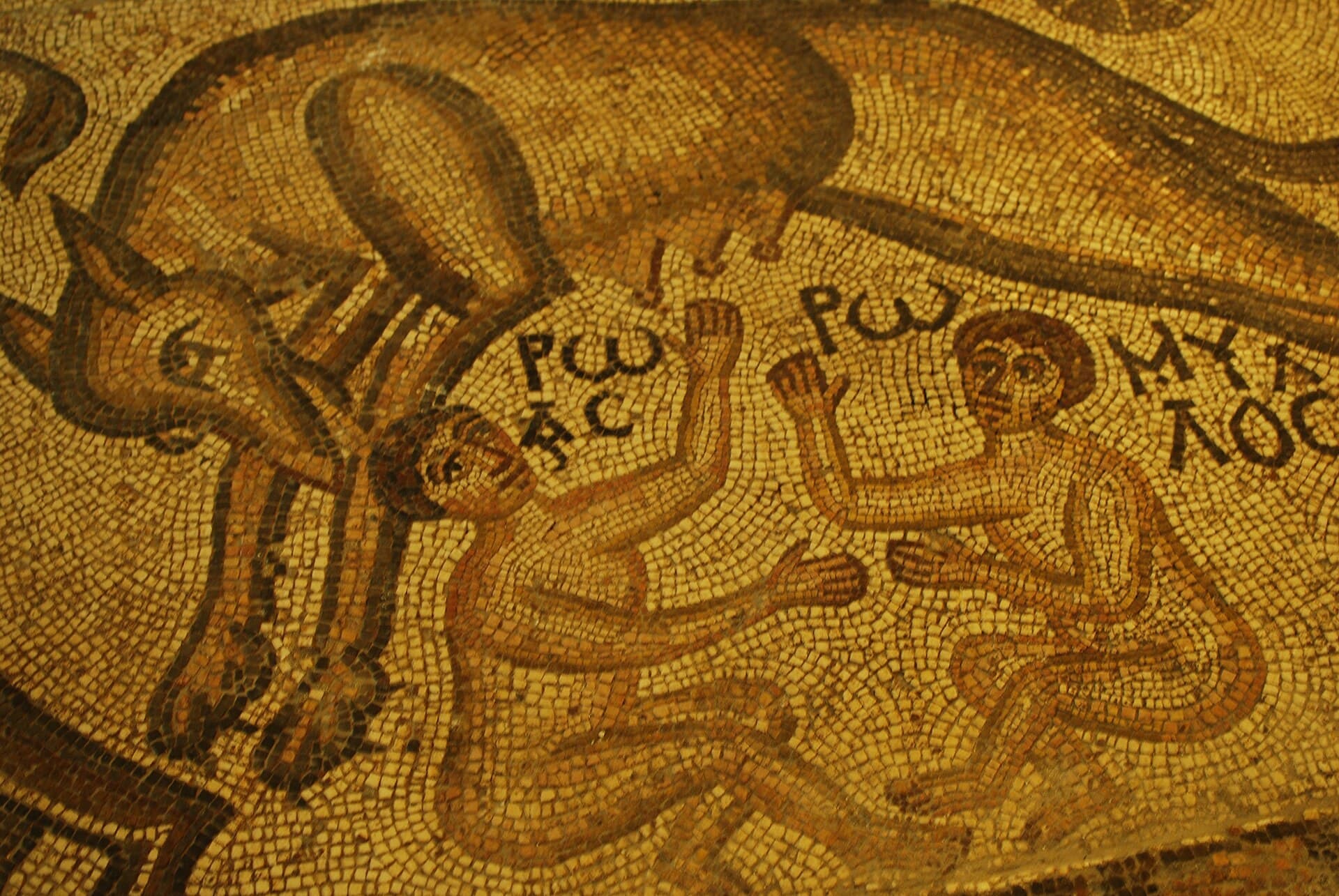
About 1300 square metres of mosaic. The best known is the Birth of Hercules panel, found near Homs in the 1990s and dated to the late 2nd century. Another, dated 510, shows the she-wolf with Romulus and Remus. A floor from the church of Saint George at Houad is dated 568 and carries a Greek dedication. The building is part of the display too: a main façade 70 metres long, arcades on pointed arches, the soup kitchen standing in the middle of the courtyard and the mosque to the south of it.
What most people miss
Read the inscriptions along the edges of the mosaics. Most carry the name of the donor, a date, and who the floor was laid for. They tell you which village paved which church in which year; the panels are records, not decoration.
After the war
The museum was hit repeatedly by rockets and barrel bombs during the war. Part of the arcades collapsed, some mosaic panels were damaged by shrapnel and others were lost. Repair continues with limited means and local effort: collapsed sections are being stabilised first and the damage documented. The museum receives visitors in this state and is open almost every day, though parts of it may be closed.
Tips
- Read the Greek inscriptions at the edges of the mosaics; the date and donor are there
- Repair work is under way; some wings may be closed, ask at the door
- Come before you visit the Dead Cities, so you have seen where the mosaics came from
Transparency
- How this was chosen
- Written by hand; opening hours, entry fee and coordinates are kept as data. A field that is not known for certain is marked as variable rather than guessed.
- Facts checked
- August 2026
- Last updated
- September 15, 2026