Mashta Azar, Valley of the Christians
A village at the western end of the Valley of the Christians, known for a stream cut through rock, the rock-carved chamber of Naghous al-Nahr and a stone bridge.
- Opening hours
- Open village, all day
- Entry
- Free
- Duration
- 120 minutes
- Best time
- Summer; 13 August for the carnival
- Period
- Present village about 500 years old; older remains at al-Qanatir
- Address
- Mashta Azar, al-Nasira district, Tal Kalakh, Homs governorate
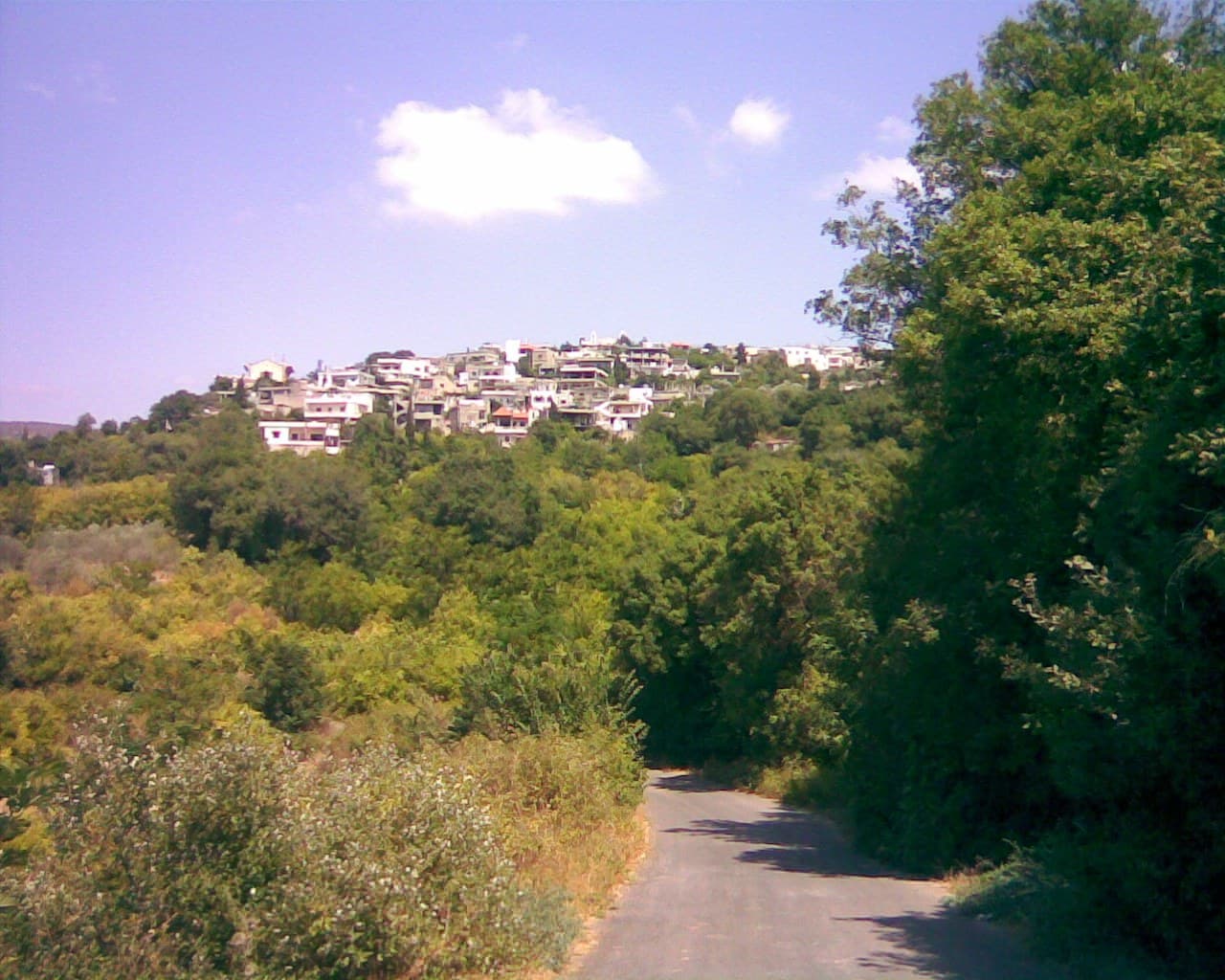
Mashta Azar is a village at the western end of Wadi al-Nasara, the Valley of the Christians, on the border between Homs and Tartus governorates. It sits about 314 metres above sea level; Homs is 60 km away and Tartus 40 km. What sets it apart from the other valley villages is a stream that cuts through rock between the orchards, and beside it a chamber carved into the rock by people nobody has yet identified.
Getting there
The village is on the western edge of the valley. To the east lie Marmarita, al-Nasira and al-Husn; the villages to the west belong to Tartus governorate. From Mashta Azar you can see a stretch of the sea and the Akkar mountains in Lebanon.
What to see
- Naghous al-Nahr. Naghous is the local form of naous, an Arabic word for a stone sarcophagus. You enter through a round, north-facing opening in a large rock terrace. Inside is a rectangular room of about 4 by 3 metres, with three matching niches cut into the walls: one straight opposite the entrance and one in each side wall. No archaeologist has studied it yet.
- The stone bridge. An old single-arched stone bridge over the stream, overgrown with plants.
- Al-Qanatir. In this area, now olive groves, stone grape-pressing basins, offering cups and bronze icons of the Virgin have been found. The same area holds the ruins of a building locals call the Palace of Helena, the King’s Daughter; the story says the king of a small local kingdom built it for his only daughter.
- The churches. The Greek Catholic nuns’ Monastery of Our Lady the Virgin, the Greek Orthodox Church of Our Lady, and separate shrines to the Virgin for the two communities.
The village’s past
The present village is thought to be about 500 years old. The first families came from the Hauran, and later from Lebanon and other parts of Syria. Everyone here is Christian: Greek Orthodox, Greek Catholic and a small number of Protestants. About 1000 people live here in winter, rising to between 15 and 20 thousand in summer.
There are three stories about the name. One reads it as Azar’s winter quarters. Another links it to a silkworm trader called Azar. The third points to mashta, an Aramaic word for a spring, and to the legend of a girl named Azar whose horse struck the ground with its hoof and brought water gushing out.
When to go
Summer, and above all 13 August. The village carnival has been held on that day every year since 1994, when the shrine of the Virgin was built, for the Feast of the Dormition. Summers are mild; in winter rain can last for days, and snow, when it falls, stays only a few hours.
Do not miss
The inner walls of Naghous al-Nahr. The symmetrical placing of the three niches is the detail that shows the room was cut to a plan rather than being a random cave.
Tips
- Naghous al-Nahr is by the stream, inside the orchards; ask the way in the village
- The chamber is dark inside; bring a torch
- The ground by the stream is stony and slippery in places; wear shoes with grip
- Marmarita is the neighbouring village to the east; combine the two in one day
Transparency
- How this was chosen
- Written by hand; opening hours, entry fee and coordinates are kept as data. A field that is not known for certain is marked as variable rather than guessed.
- Facts checked
- September 2026
- Last updated
- September 15, 2026