Masyaf: The Old Town Below the Castle
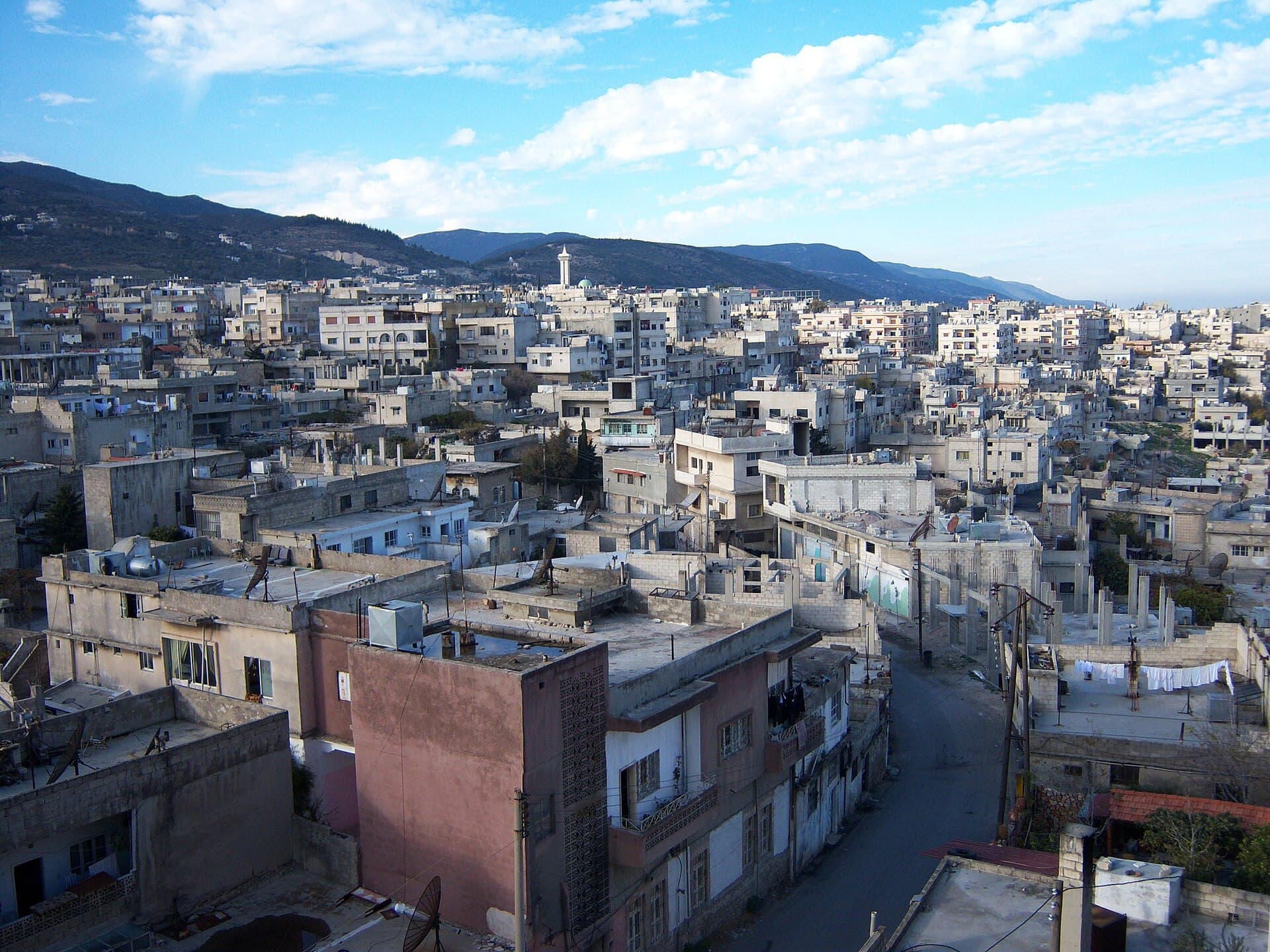
There is more to Masyaf than its castle: town walls from 1249, a mosque linked to Saladin, a fountain from 1788 and the town travellers described for centuries.
- Opening hours
- Town at any hour; market in the daytime
- Entry
- Free — the town itself has no ticket
- Duration
- 120 minutes
- Best time
- Spring and autumn; winters at the foot of the mountains can bring snow
- Period
- Aramaean origins — Nizari Ismaili — Mamluk — Ottoman
- Address
- Masyaf, 45 km west of Hama, Hama
Masyaf is a town at the foot of the coastal mountains west of Hama, best known for its castle. Below the castle there is a town as well: walls built in 1249, a 12th-century mosque that local people associate with Saladin, a public fountain from 1788 and a khan (a merchants’ inn) from the Ottoman period. The castle stands at the northeast corner of the old town.
Getting there
About 45 kilometres west of Hama, an hour by car on a road that climbs towards the mountains. The old town lies southwest of the castle and is best seen on foot.
How long it takes
Two hours, not counting the castle. That is enough for the streets of the old town, the mosque and the fountain; with the castle, allow half a day.
The town’s past
The name probably goes back to Mansuate, an Aramaean town and Assyrian province of the 8th century BC, and the Marsyas of Roman and Byzantine sources may be the same place. The Byzantine emperor Basil II destroyed its walls in 999. In 1127 the Mirdasids sold the town to the Munqidhites of Shayzar; in 1140 the Nizari Ismailis took it, and Masyaf became the base of their leader Rashid al-Din Sinan. Saladin besieged the town in 1176. The town walls were built in 1249 on the orders of the Persian Ismaili leader Taj al-Din Abu al-Futuh. After a brief Mongol occupation in 1260, the town came fully under Mamluk rule in 1270 and became a stop on the Mamluk postal route.
What travellers wrote
In 1320 Abu al-Fida described a pretty town with gardens and a spring feeding a stream. Ibn Battuta mentioned Masyaf in 1355 as the centre of a district, and Khalil al-Zahiri called it a pleasant town in 1446. The Swiss traveller Burckhardt counted 280 families here in 1812, 30 of them Christian. T. E. Lawrence noted that the castle was being used as a poorhouse.
Masyaf under the Ottomans
Under the Ottomans the town belonged to the district of Homs and had a khan that paid a transit tax. In 1788 the emir Mustafa ibn Idris built a public fountain and a house where later emirs lived. In 1808 the Raslan tribe raided the town and killed the Ismaili chief and about 300 people; Ismaili rule returned in 1810.
Today
A carpet-weaving centre employing women was set up in the town in 1965. In 1970 most of the town still lay within the walls; today it has spread far beyond them. The 2004 census counted about 22 thousand people, Ismaili, Alawite and Christian.
What most people miss
Walking down from the castle. Most visitors leave without seeing the town. Yet the 1788 fountain of the emir Mustafa ibn Idris and the 12th-century mosque linked to Saladin explain why the castle has always lived alongside a town. Shopkeepers in the market can point you to both.
Tips
- After the castle, walk into the old town; the mosque and fountain are in its streets
- Ask shopkeepers in the market for the fountain and the mosque linked to Saladin
- Snow can fall at the foot of the mountains in winter; ask about the road first
- Al-Rusafa Castle is to the southwest and fits into the same day
Transparency
- How this was chosen
- Written by hand; opening hours, entry fee and coordinates are kept as data. A field that is not known for certain is marked as variable rather than guessed.
- Facts checked
- September 2026
- Last updated
- September 15, 2026