The Mausoleum of Khayr Bak, Aleppo
A Mamluk tomb 100 metres south of Bab al-Maqam. The last Mamluk governor of Aleppo built it for himself in 1514 and was never once laid to rest in it.
- Opening hours
- The interior is not open to regular visits; the facade is always visible from the street
- Entry
- Free — the facade is on the street
- Duration
- 15 minutes
- Best time
- Morning, before direct sun hits the front and while the inscription still reads
- Period
- Mamluk — the sultanate that ruled from Cairo
- Address
- South of Bab al-Maqam, Maqamat, Aleppo
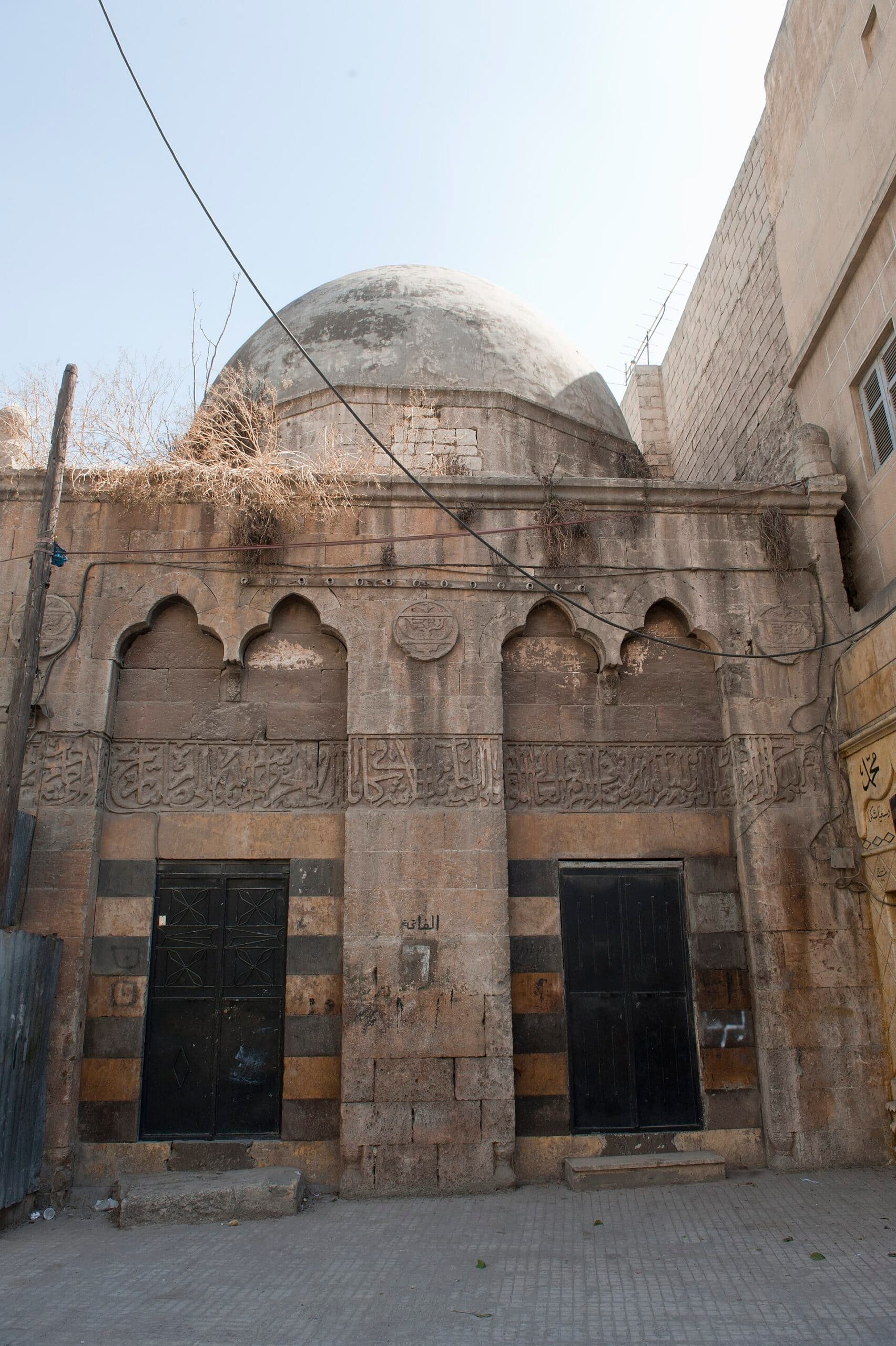
On the street running south from Bab al-Maqam, about 100 metres past the gate. Its dome, its band of inscription and its row of arched niches set it apart at once. Khayr Bak al-Ashrafi built this tomb for himself in 1514. He was the last Mamluk governor of Aleppo, and two years later he would lose the city.
Why it is empty
The two armies met at Marj Dabiq on 24 August 1516. Khayr Bak left the left wing of the Mamluk army and went over to Sultan Selim, and the battle closed that day in favour of the Ottomans. His reward was the governorship of Egypt. He died in Cairo in 1522 and was buried there. So the tomb in Aleppo was never used. The building was ready for its owner; the owner never came back.
What to see
The facade is the best of it. Two recessed panels face the street, and above them runs a row of niches under multifoil arches, with round medallions set between. A band of inscription cuts across the whole front below the niches. Around the door and windows the stone is laid in alternating black basalt and pale limestone. The dome stands back from the street and only comes into view once you step away.
How long it takes
A quarter of an hour, in front of the facade. The tomb is not open to regular visits and the interior is empty anyway; the record here is the front wall. It sits on the way if you are walking from Bab al-Maqam down to the Al-Zahiriyya.
Don’t miss
How the inscription band never breaks. The script runs from one end of the facade to the other, carrying on even between the windows — this is how a man had his name and his titles written onto a street. The name is still there; the bones are in Cairo.
Tips
- Khan Khayr Bek in the souq carries the same man's name but is a different building, about 900 metres north — do not confuse the two
- Step a few paces south along the street to bring the dome into view
- The Al-Zahiriyya and the Al-Kamiliyya lie further along the same line
Transparency
- How this was chosen
- Written by hand; opening hours, entry fee and coordinates are kept as data. A field that is not known for certain is marked as variable rather than guessed.
- Facts checked
- September 2026
- Last updated
- September 15, 2026