Qatura and Its Roman Rock-Cut Tombs
Roman tombs cut into the rock below Jebel Sheikh Barakat, the earliest with an inscription dated AD 122. Carved niches on a great rock and a 3rd-century tower.
- Opening hours
- Open site, daylight hours
- Entry
- Variable — confirm on arrival
- Duration
- 40 minutes
- Best time
- Spring and autumn; there is little shade among the rocks
- Period
- Roman — Byzantine
- Address
- Qatura village, Daret Azze subdistrict, Jebel Sem'an district, Aleppo
A small village on the northern foot of Jebel Sheikh Barakat, north of Daret Azze, on the road to Zarzita. The area was settled in Roman times, and what sets Qatura apart is the tombs from that period: graves cut into rock faces in the 2nd century, and the village’s earliest dated grave inscription, AD 122. It is the starting point of a small cluster, with Refade and Sitt er-Rum, that you can walk on to Saint Simeon.
Getting there
3 kilometres north-west of Daret Azze a road turns left and reaches Qatura after 1 kilometre. Just before the village a dirt track heads north, reaching the church of Sitt er-Rum after 2 kilometres and Refade 500 metres later. There is no public transport.
How long it takes
Forty minutes for the rock tombs and the tower. Add Sitt er-Rum and Refade and it becomes half a day.
What you see
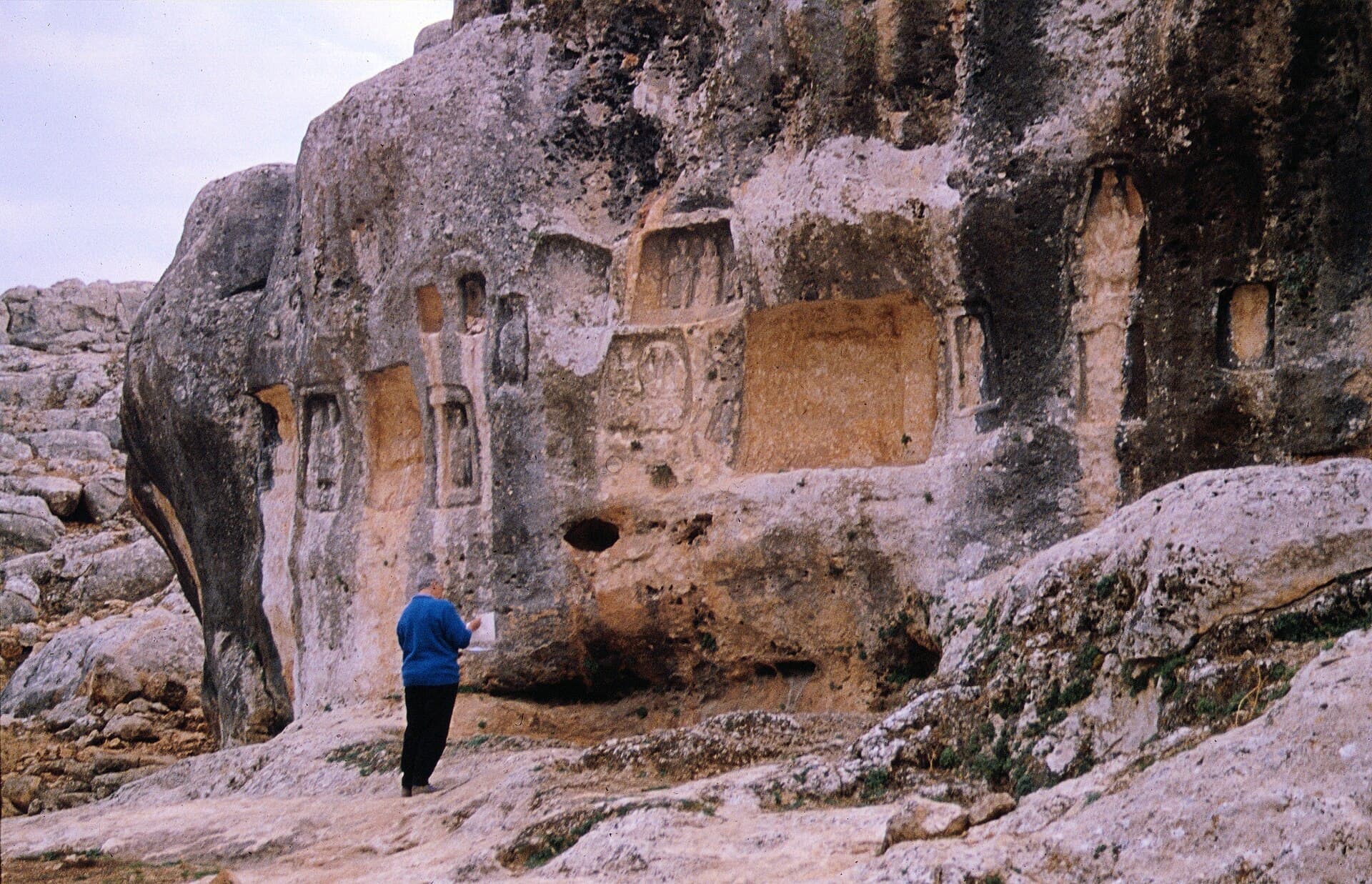
A group of tombs has been cut into the great rock west of the village. Niches open side by side and one above another on the rock face, and figures carved in relief can be made out in some of them. One of these tombs is the funerary monument of a man named Aemilius Reginus. We have no reliable detail on its date or decoration.
The most prominent structure still standing in the village is a tall tower that locals call “the villa”; Arabic sources date it to the 3rd century. Around it are the remains of Roman-period houses and several villas. Qatura has no church ruin; the village is thought to have shared the church at Sitt er-Rum with Refade.
How it stands today
Qatura is a lived-in village of about 300 people. The ruins were bombed in 2015; the sources give no detail on the damage, so the present state of the rock tombs and the tower has to be checked on the spot. Unexploded ordnance is a reported hazard in the countryside: stay on the path and do not touch metal lying on the ground.
Don’t miss
The inside of the niches on the rock face. From a distance you see only hollows; up close, reliefs of the dead appear in some of them. These Roman tombs are several centuries older than the Byzantine churches around them.
Tips
- The rock tombs are in the great rock west of the village; ask in the village
- Do not climb into the niches; the rock is slippery and the edges are broken
- Sitt er-Rum is 2 kilometres north; link it with Refade on the same walk
- The village is lived in; do not walk into courtyards uninvited
Transparency
- How this was chosen
- Written by hand; opening hours, entry fee and coordinates are kept as data. A field that is not known for certain is marked as variable rather than guessed.
- Facts checked
- September 2026
- Last updated
- September 15, 2026