Tell al-Ash’ari, a Candidate for Decapolis Dion
A mound above the Yarmouk valley, 16 km west of Daraa: a candidate for Decapolis Dion, with its gold earrings now in Damascus. Access today is unverified.
- Opening hours
- Open archaeological site; access unverified
- Entry
- Variable — confirm at the entrance
- Duration
- 60 minutes
- Best time
- Spring, while the valley is green; the midday summer heat is harsh
- Period
- Bronze Age — Hellenistic — Roman — early Islamic
- Address
- Edge of the Yarmouk valley, about 16 km west of Daraa
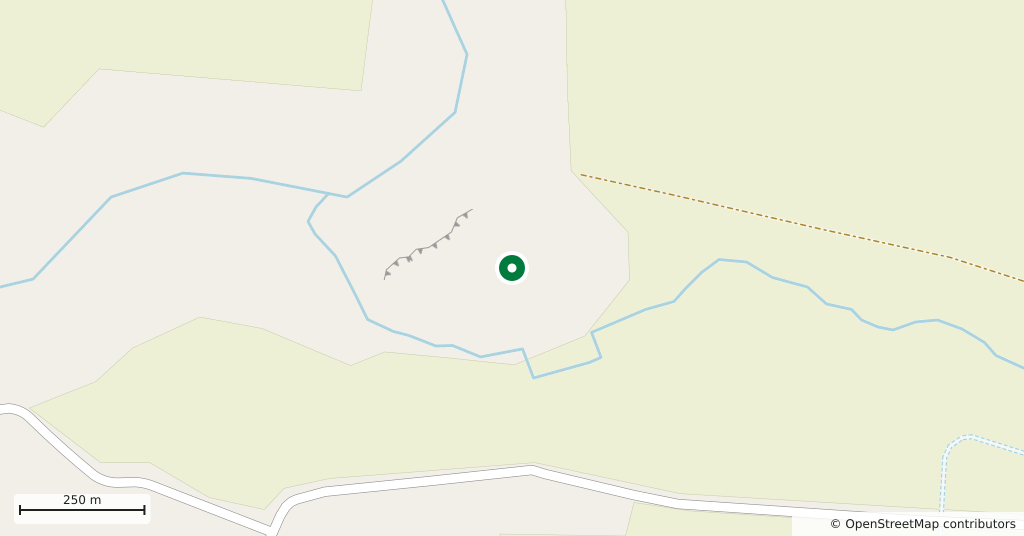
A mound on the edge of the Yarmouk valley, about 16 kilometres west of Daraa. Its history goes back to the 3rd millennium BC, and in the Roman period a town with a theatre and baths stood here. It is one of three candidates for the site of Dion, one of the Decapolis cities. The site was looted and illegally dug during the war years, and whether it can be visited today has not been verified.
The shape of the mound
The mound measures about 400 by 200 metres and rises 20-25 metres. On the west it is protected by a valley about 300 metres deep; the other three sides were enclosed by a towered wall of large blocks. The Wadi al-Harir, a tributary of the Yarmouk, is 1 kilometre away. On the western edge is a theatre about 50 metres across.
Is this Dion?
Older names recorded for the place are Aruna and Haluni; the present name comes from Abu Musa al-Ash’ari, a companion of the Prophet. Pliny counts Dion in his list of the Decapolis, a league of ten cities of the Roman period, but its location is not settled: the other two candidates are Aydun and Beit Ras in Jordan.
What the excavations found
- Schumacher visited the mound in 1884, 1897 and 1913; G. A. Smith came in 1900.
- Henri Seyrig found coins in 1931.
- In 1943 an excavation by Jafar al-Husseini found gold earrings set with precious stones, dating from the Hellenistic and Roman periods (2nd century BC to 3rd century AD).
- In 1992 rock-cut Canaanite tombs, copper axes and various jars came to light.
- In 1998 the Daraa Antiquities Directorate and Damascus University found lime-plastered rooms of the early Islamic period and a lapis lazuli seal ring, carved with a standing man between two leaping lions and dated 1600-1200 BC.
- Between 1998 and 2004 Roman buildings were uncovered to the north, and from 2005 Roman baths to the west.
- The last team, in 2010, recorded 3000 finds and 21 underground Roman tombs, 5 of them dated to the 2nd-4th centuries AD.
What not to miss
The site’s best-known find is not on the site. The gold earrings found in 1943 are displayed in the jewellery section of the National Museum of Damascus, which has its own page here. For anyone who cannot reach the mound, that display case is the most concrete trace of the place.
Its condition now
The Arabic Wikipedia entry says the site was looted and illegally excavated during the war; the extent of the damage is not given. The mound lies close to the Jordanian border, on the edge of the Yarmouk valley. The governorate has been under the transitional government since December 2024, and whether the site can be reached today has not been verified.
Tips
- Keep away from the western edge; the slope drops about 300 metres
- Do not climb into excavation trenches or tomb openings
- For the gold earrings, look in the jewellery section of the National Museum of Damascus
- The site is close to the border; check the current situation locally before going
Transparency
- How this was chosen
- Written by hand; opening hours, entry fee and coordinates are kept as data. A field that is not known for certain is marked as variable rather than guessed.
- Facts checked
- September 2026
- Last updated
- September 15, 2026