The Roman Temple of Isriya (Qasr Isriya)
A Roman temple standing alone on the steppe 100 km east of Hama: a carved east doorway, Corinthian capitals and an Apollo statue found in 1993. Current status.
- Opening hours
- Open site; daylight only, and only once security is confirmed
- Entry
- Variable — confirm on site
- Duration
- 45 minutes
- Best time
- Morning, when the sun is on the carved east side
- Period
- Roman
- Address
- Isriya village, Hama–Raqqa road, Salamiyah district, Hama
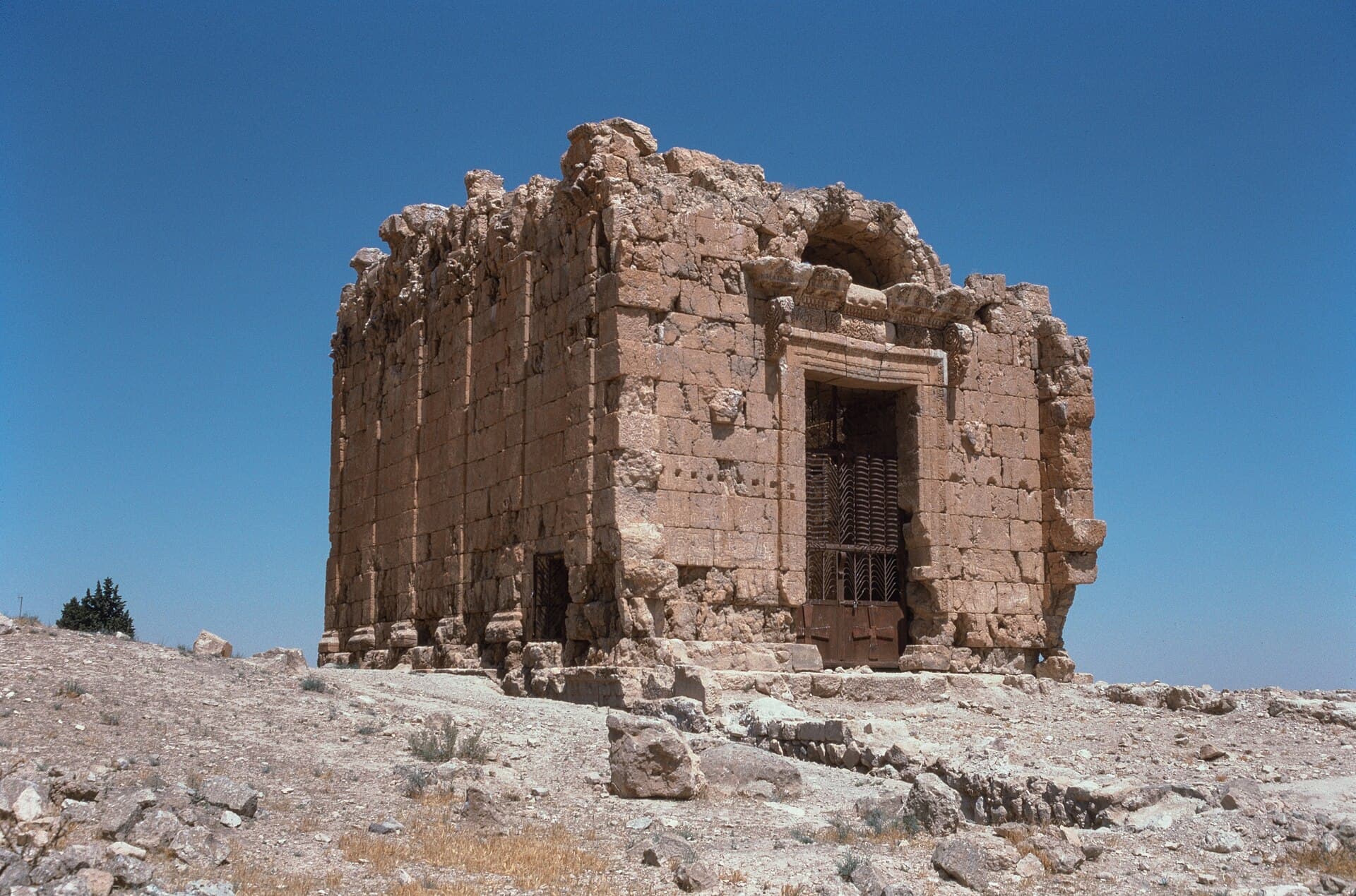
The Temple of Isriya is a Roman building standing alone on the steppe, about 100 kilometres east of Hama. It marks the site of the ancient town of Seriane. Little of the town survives beyond the temple’s cella — the inner room that held the cult statue — and local people call it Qasr Isriya. The top of the walls has fallen, but all four sides still stand.
Getting there
The temple is in the village of Isriya, in the Saan subdistrict of the Salamiyah district, right on the main Hama–Raqqa road. In 2016 the village was a base for operations against ISIS, in December 2022 there was an ambush nearby, and in February 2025 it was empty. Check the security situation with a local source before setting out.
How long it takes
Forty-five minutes. The building is a single room; walking round the four sides and looking closely at the doorway carving fits into that time.
What is there
The main entrance faces east, with a smaller one on the south. The frame of the east doorway is carved with bands of acanthus leaves, beads, scrolling plants and dentils, and a 40-centimetre console projects on each side. Corner pilasters with Corinthian capitals divide the walls, and the building stands on a low podium. The north wall has a large niche for a statue. In the Islamic period the halls were used for religious purposes.
The excavation and the Apollo statue
The German Archaeological Institute in Damascus excavated around the temple between 1991 and 1994. Pottery from the surrounding area dates from the 4th to the 6th century, while the pottery from the central fortified area goes back to the 1st century BC. In 1993 a statue of Apollo, 151 centimetres tall, was found north of the cella. Dated to the 3rd or 4th century, it is now in the National Museum of Damascus.
What most people miss
The carving on the east doorway. The bands run round the frame layer after layer, and the detail is easiest to read when the morning sun falls on the east side.
Tips
- The village was empty in 2025; confirm the security situation before you go
- There is no water or shade along the way; bring your own
- Go to the east doorway in the morning, when the light picks out the carving
- The Apollo statue is in the National Museum of Damascus
Transparency
- How this was chosen
- Written by hand; opening hours, entry fee and coordinates are kept as data. A field that is not known for certain is marked as variable rather than guessed.
- Facts checked
- September 2026
- Last updated
- September 15, 2026