Half a day in Aleppo: three gates along the wall
2500 metres outside the walls of Aleppo in four stops: the clock tower square, the west and south gates, and a Mamluk mosque beyond the line. Hour by hour.
- Duration
- 4 hours
- Distance
- 2.5 km
- Difficulty
- Easy
- Best season
- March–May, September–November
- stops
- 4
- City
- Aleppo
The old city of Aleppo was walled, and part of that line can still be read at street level. This walk is 2500 metres and four stops: the square in the northwest, the west gate, the south gate, and a mosque just outside the wall. The direction never changes — north to south along the line. It does not turn into the souq; this route looks at the gates rather than through them.
The route
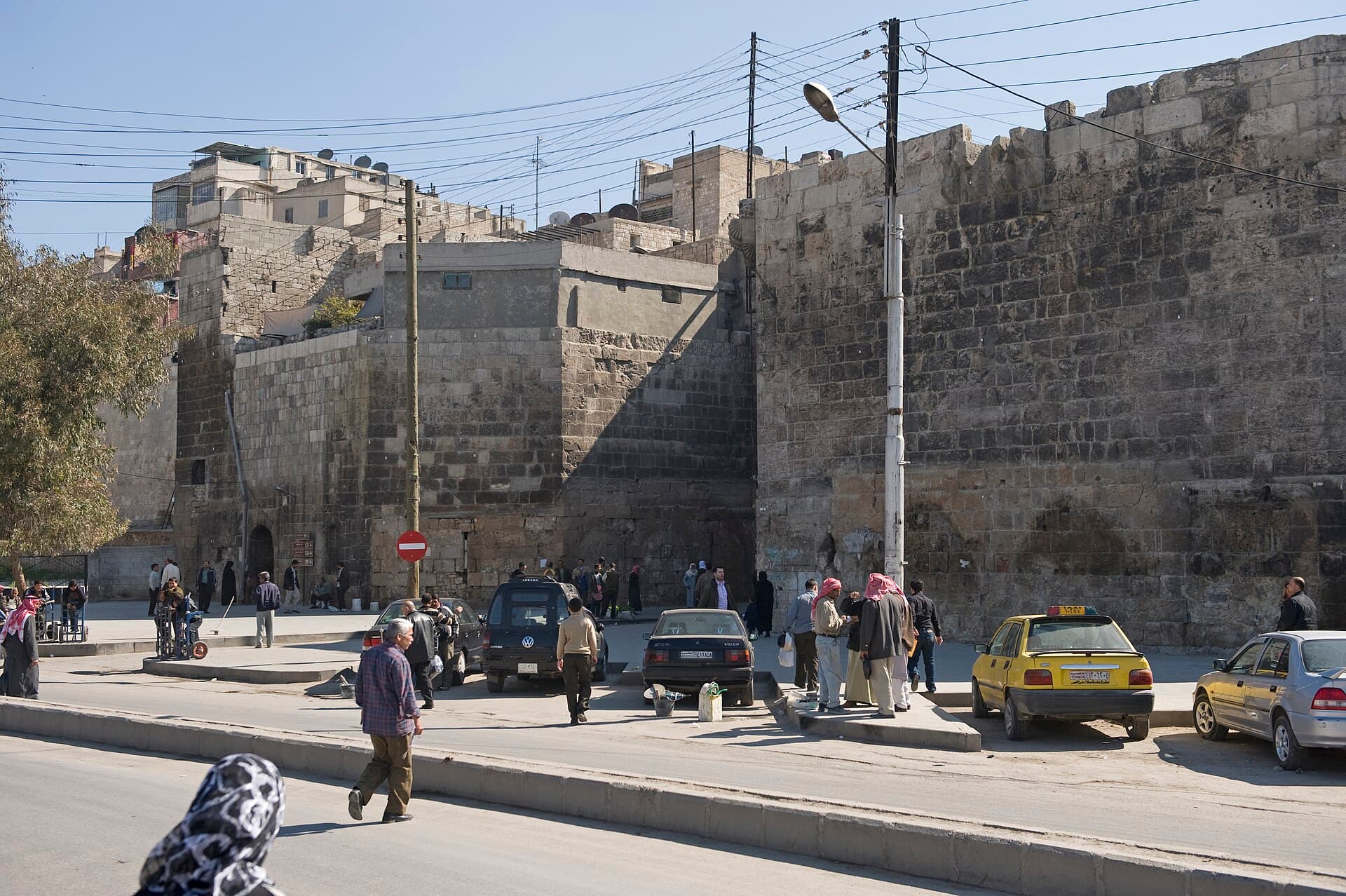
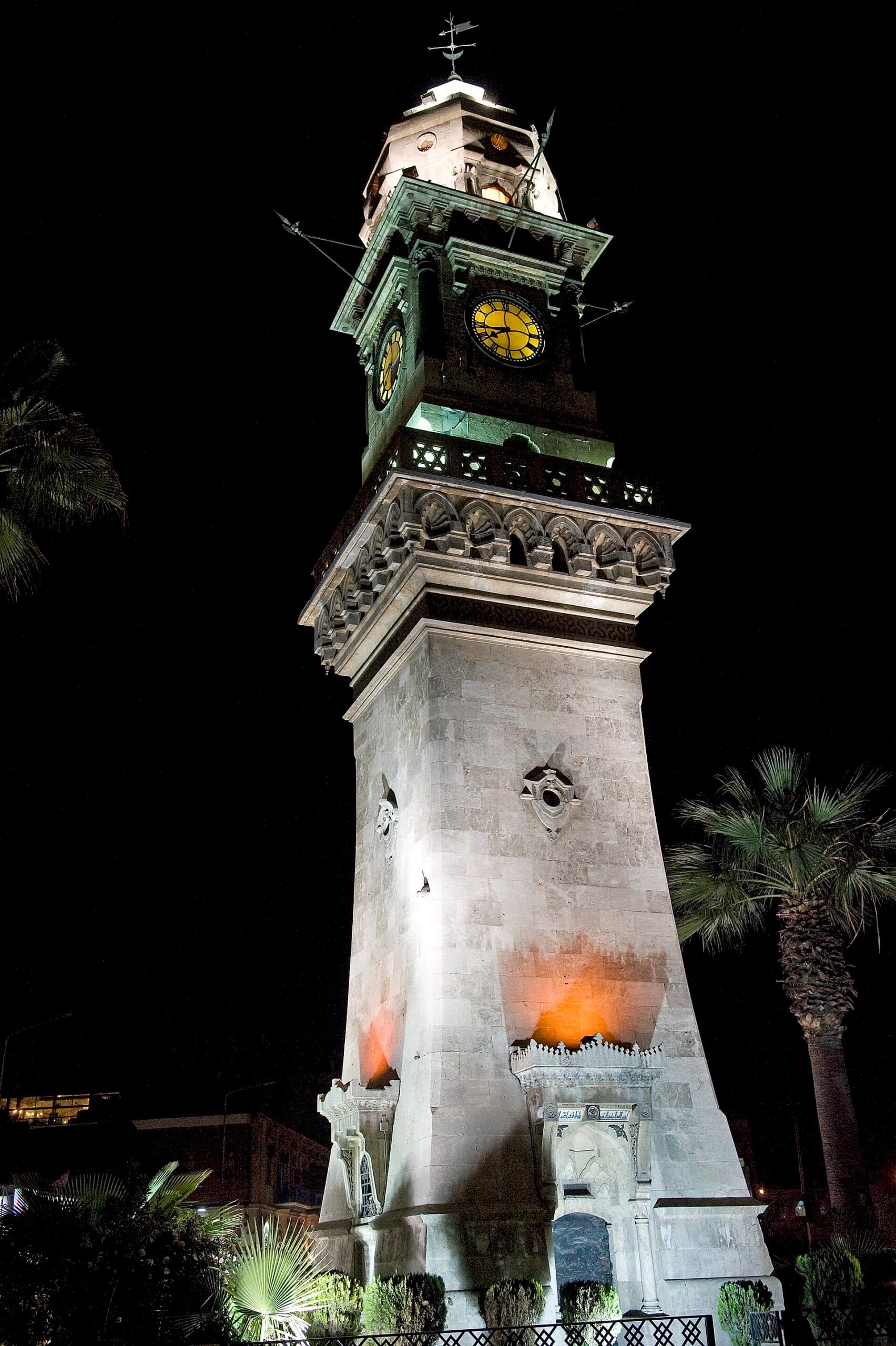
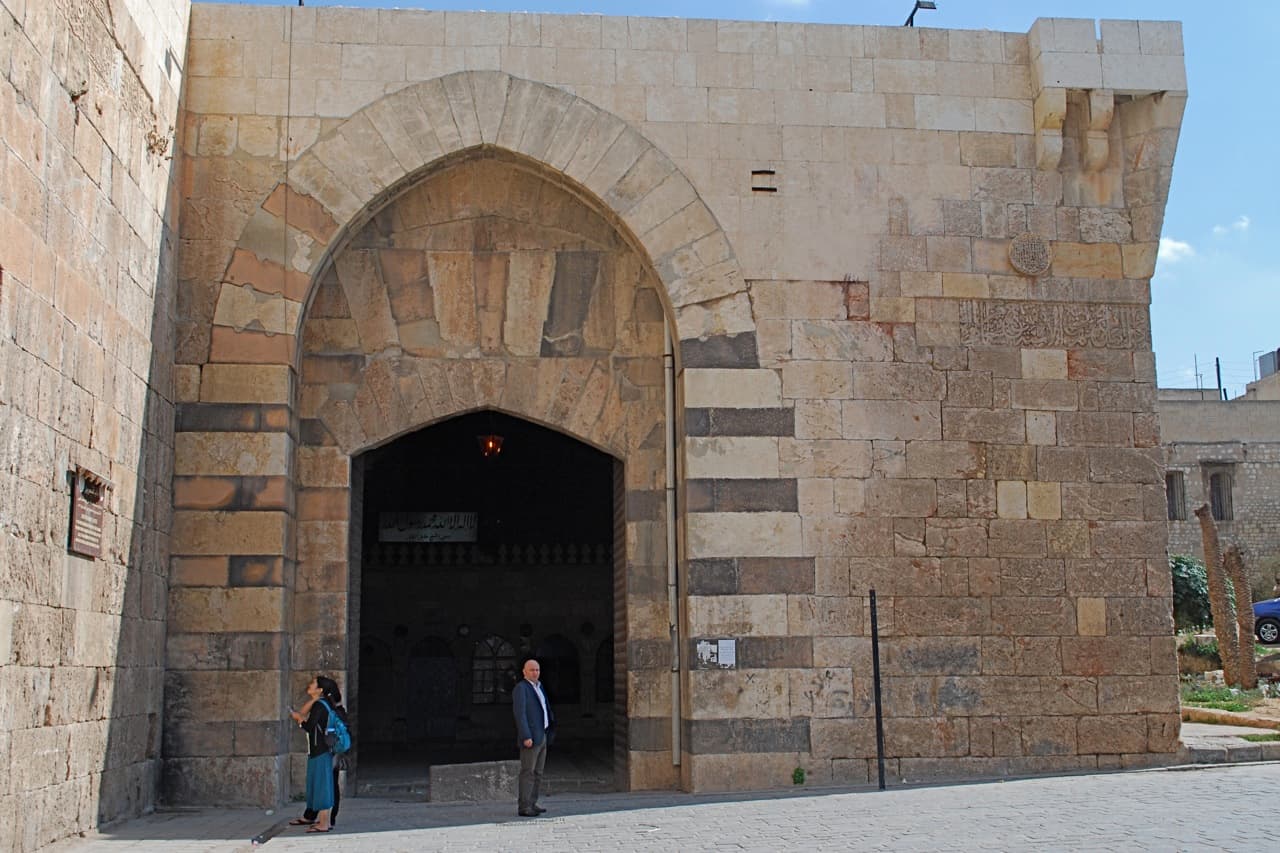
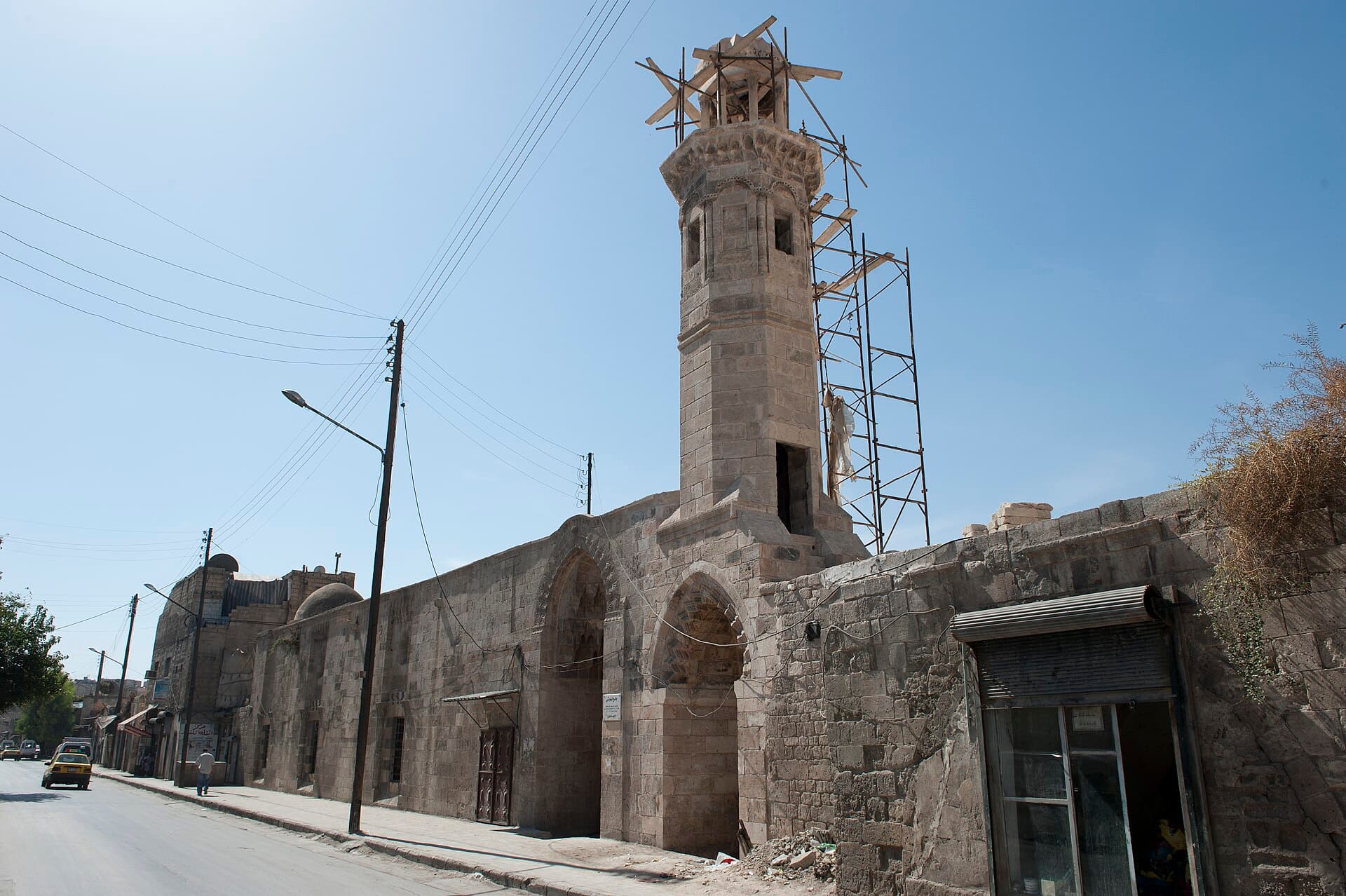
Start in Bab al-Faraj square. The square carries the name of a gate, but what stands in the middle of it is not a gate: it is the clock tower put up in 1898. When the tower was repaired, older remains came out of the ground around it, among them the Roman Haylan aqueduct that runs beside it. Walk south: Bab Antakya is 650 metres on. The gate is a deep passage between two towers, and the inside of it is noticeably cool; the large stones in the lower courses are older than those above. The covered souq begins immediately inside, but this walk stays outside it. Follow the line of the wall southeast: Bab Qinnasrin comes after 900 metres. Then the direction turns east and you leave the wall behind. After 950 metres, the Tawashi mosque, in the Qasile quarter beside the Bab al-Maqam road, low and long against the street.
Timing
09:00 at Bab al-Faraj: cross to the far end of the square to read the dials. 10:00 at Bab Antakya — the souq opens then, and the crowd moving through the passage gives the gate its scale. 11:15 at Bab Qinnasrin. Come at the gate from the right for a photograph, as the light and dark courses read from that angle. 12:30 at the Tawashi: the facade takes the light from the side in the afternoon, and the niches along the long wall separate from one another at that hour. The walk ends in the early afternoon.
Take care
The real story of Bab Qinnasrin is not in its stone but in its door leaves. Taken as booty from Amorium in 838, they went first to Samarra and then to Raqqa; when Sayf al-Dawla built this gate in 964 he had them fitted here. The structure you see now dates from 1256. The last leg goes into the southern quarters, which were heavily damaged in the war: conditions on the road change, so ask locally before you set out. Whether the Tawashi mosque is open for prayer is also uncertain — if it is shut, most of what there is to see is outside anyway. The wall line is not continuous; when the thread is lost, asking for the next gate by name is the quickest fix.
The route on a map
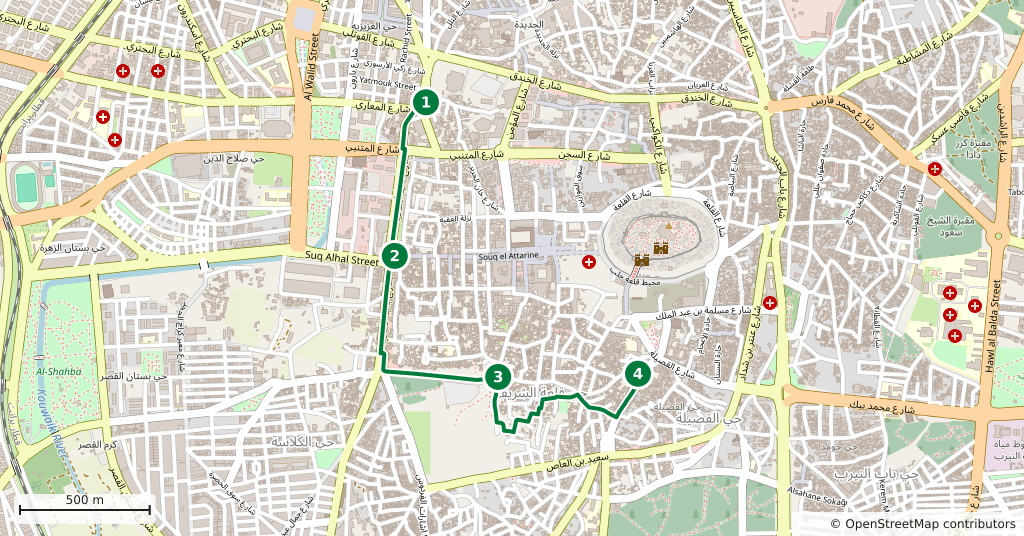
Stops along the route
- 01
- 02
- 03
- 04
Transparency
- How this was chosen
- The stops and their order were set by hand. The line on the map is real road geometry, not a straight hop between pins; distance and duration belong to that itinerary.
- Facts checked
- September 2026
- Last updated
- September 15, 2026