The Temple of Hosn Suleiman
A Roman sanctuary in the coastal mountains at 950 metres, built of colossal blocks. A four-gated enclosure wall, an eagle relief, and decrees cut into the stone.
- Opening hours
- Sunrise to sunset
- Entry
- Variable — check at the entrance
- Duration
- 60 minutes
- Best time
- Spring, when the slopes are green and 950 metres up it is still cool
- Period
- Roman
- Address
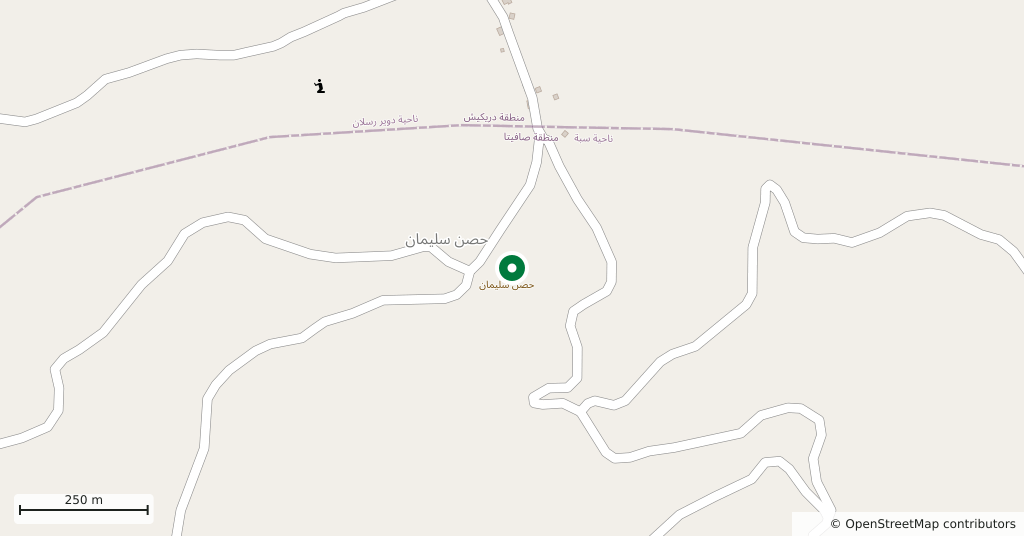
- Hosn Suleiman village, Safita, Tartus governorate
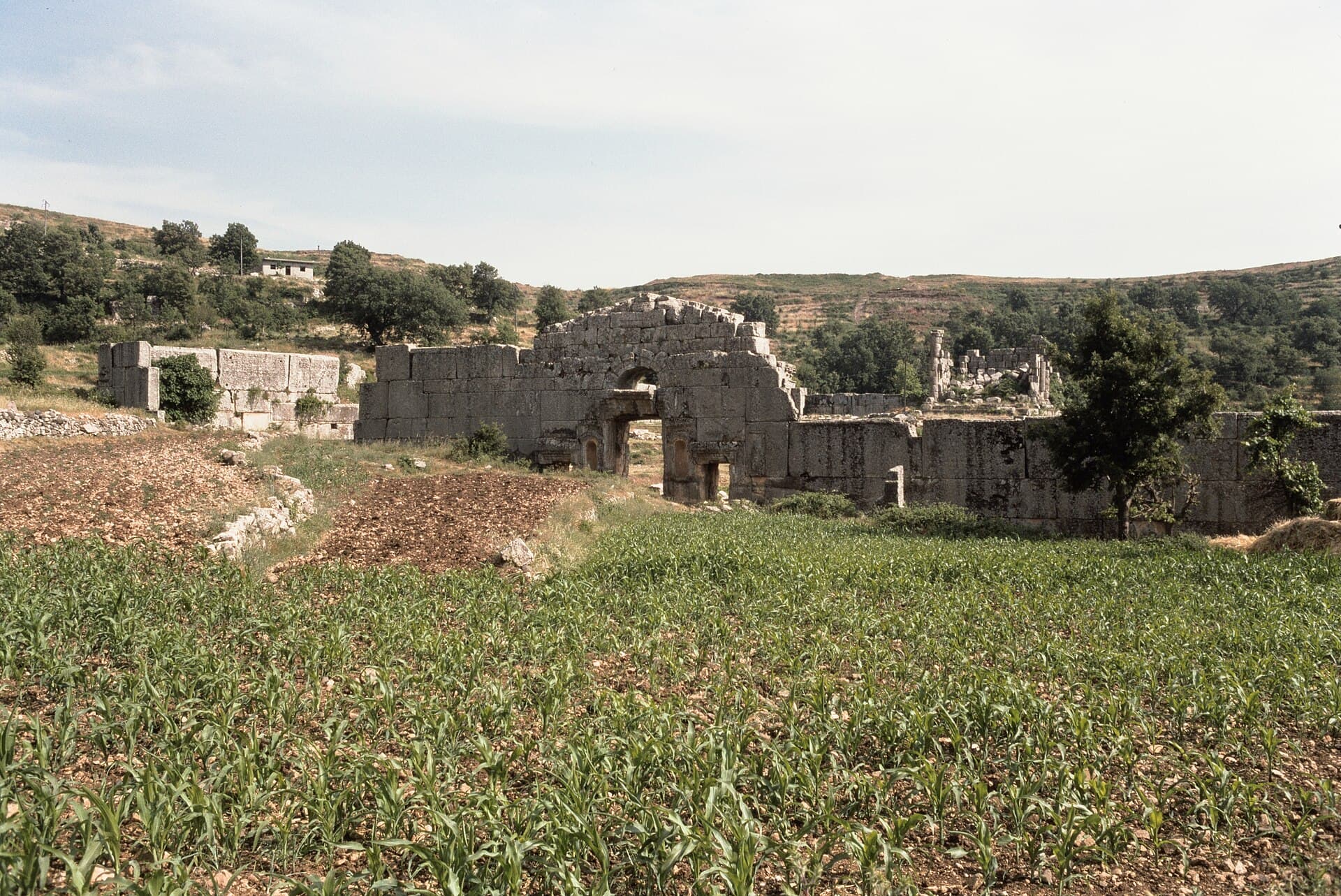
A sanctuary in the mountains of Tartus, east of Safita and 950 metres up. Its ancient name was Baetocaece; the temple was dedicated to Zeus and was the largest religious centre in the region. What you remember afterwards is the size of the blocks: some of them are compared to those at Baalbek.
What to see
The main structure on the site is the enclosure wall. It is built of dressed blocks, has a gate in each of its four sides, and the grandest of the four is the north gate. Inside the wall, at the centre, stand the remains of the temple building. On the underside of the west gate lintel is an eagle with its wings spread. It is a common motif in the Roman world, but here you have to look up to find it, and most visitors do not.
What the writing on the wall says
Inscriptions in Greek and Latin are cut into the stones of the wall. The best known are letters recording the privileges a Seleucid king, Antiochus, granted the sanctuary: the revenues of the village assigned to the temple, sacrifices and a festival twice a month, and immunity from having troops quartered on holy ground. The wall is not just a wall — it is the temple’s legal record.
Getting there
About an hour by car from Tartus, via Safita. The road climbs into the mountains and the last stretch is narrow; it can be foggy in winter. The site sits inside a village, surrounded by fields and oak woods.
How long it takes
An hour. That covers walking round all four gates, seeing the remains at the centre and reading along the inscriptions. At this altitude it stays cool even in summer, and it is a windy spot.
Tips
- Stand under the west gate and look up: the eagle relief is there
- Walk the outside of the wall too; the true size of the blocks only reads from outside
- The inscriptions are cut into the wall stones themselves, not on a separate panel
- The altitude makes it windy; take a light layer even in summer
Transparency
- How this was chosen
- Written by hand; opening hours, entry fee and coordinates are kept as data. A field that is not known for certain is marked as variable rather than guessed.
- Facts checked
- August 2026
- Last updated
- September 15, 2026