What is Homs famous for?
Homs is known for standing at the mouth of the Homs Gap, the only natural break between the coast and the interior, and for the Khalid ibn al-Walid Mosque, whose facade banded in black basalt and white limestone tells you the stone language of the region in one look. Its wider fame comes from 65 kilometres west: Krak des Chevaliers, raised to hold the gap and one of the best-preserved Crusader castles anywhere.
Highlights
- The banded black-and-white facade of the Khalid ibn al-Walid Mosque
- The Homs Gap: the only natural break between the coast and the interior
- Krak des Chevaliers, 65 kilometres west
- Lake Qattinah and the ancient dam that holds it
- The stretch where the Orontes runs through the city
What to see
- Homs · 7th–6th century BC
Riblah, the Biblical Army Camp on the Orontes
A cemetery-covered mound on the Orontes south of Homs: Riblah, where Necho II and Nebuchadnezzar of Babylon camped. Near the Lebanese border; access unverified.
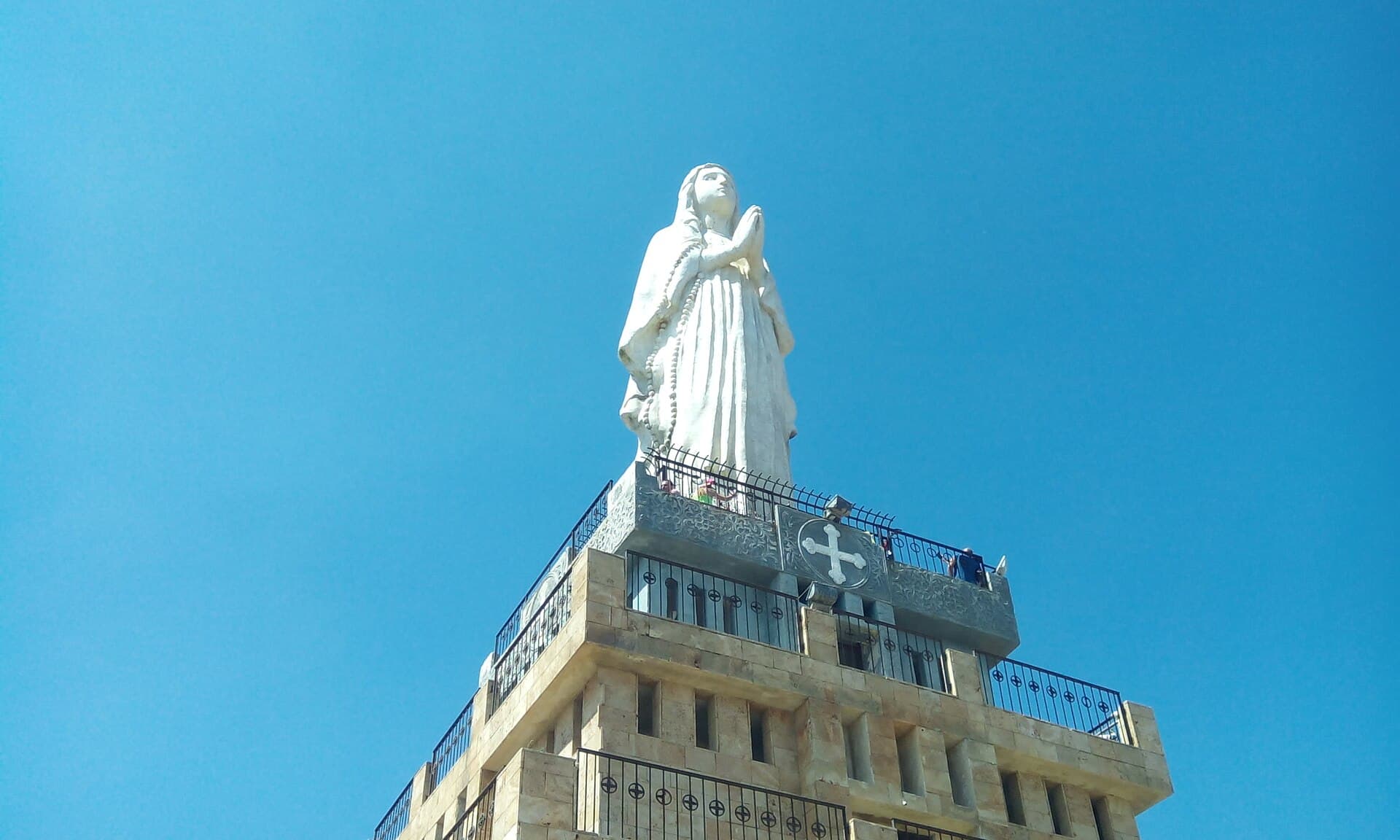 Valley of the Christians · 2009
Lady of the Valley Statue, Valley of the Christians
A 30 m statue of the Virgin Mary on the 980 m summit of Jabal al-Sayih above al-Nasirah, in the Valley of the Christians near Krak des Chevaliers. Opened in 2009.
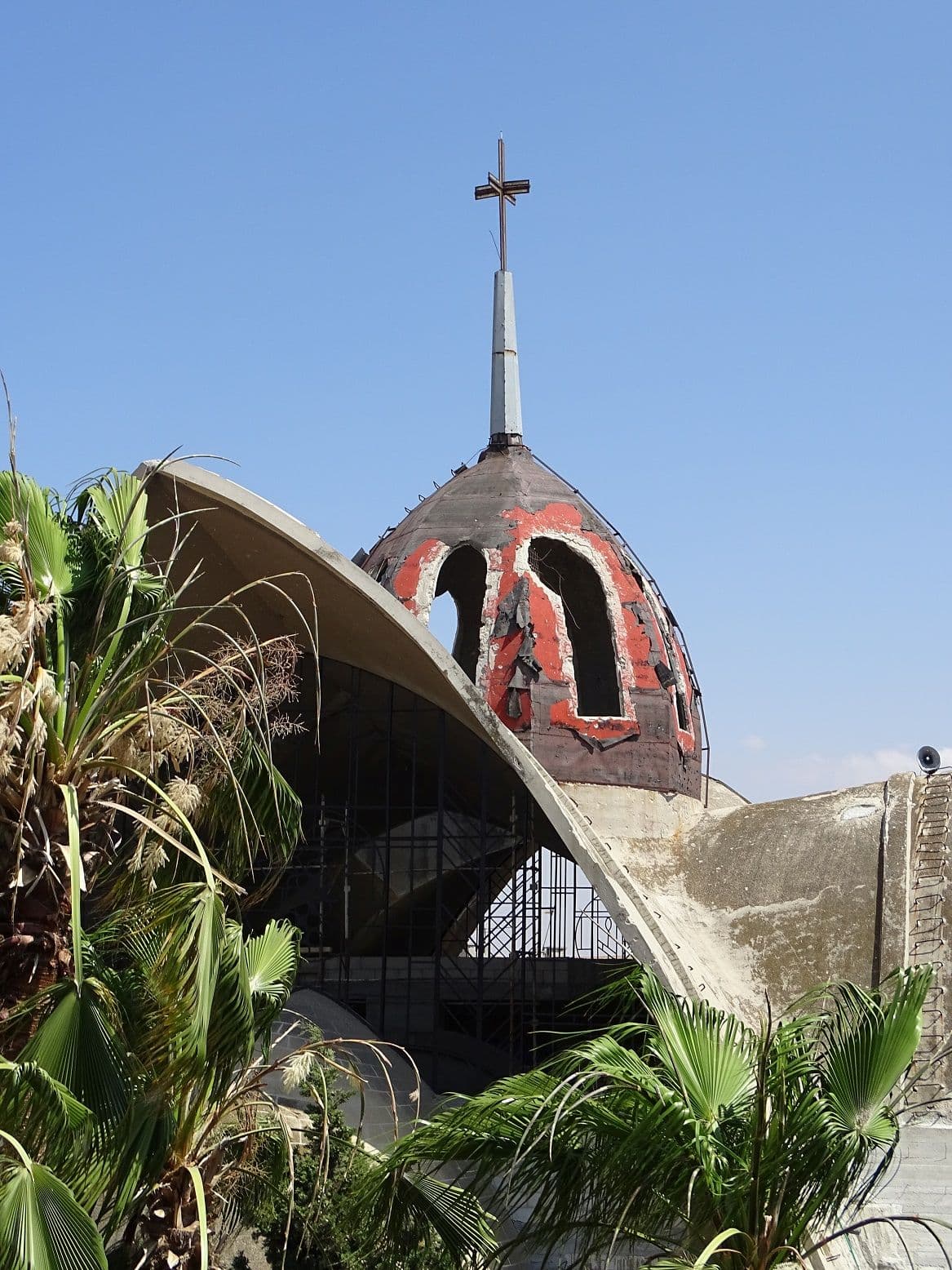 Homs · 20th century
Cathedral of Our Lady of Peace, Homs
The largest church in Homs Old City, a Melkite Greek Catholic cathedral built in 1970. Badly damaged by 2014, restored in 2016-2019, known for its dome and roof.
- Homs · Bustan al-Diwan
Jesuit Monastery in Homs and the Grave of Frans van der Lugt
The Jesuit monastery in Bustan al-Diwan, Homs Old City, where Dutch priest Frans van der Lugt refused to leave during the siege, was killed in 2014 and is buried.
- Homs · 12th century
Burj Zara, a Crusader Tower near Talkalakh
An 11 m square Crusader tower on an ancient temple platform in al-Zarah, west of Homs. Basalt with reused white limestone, and one of the best preserved in the area.
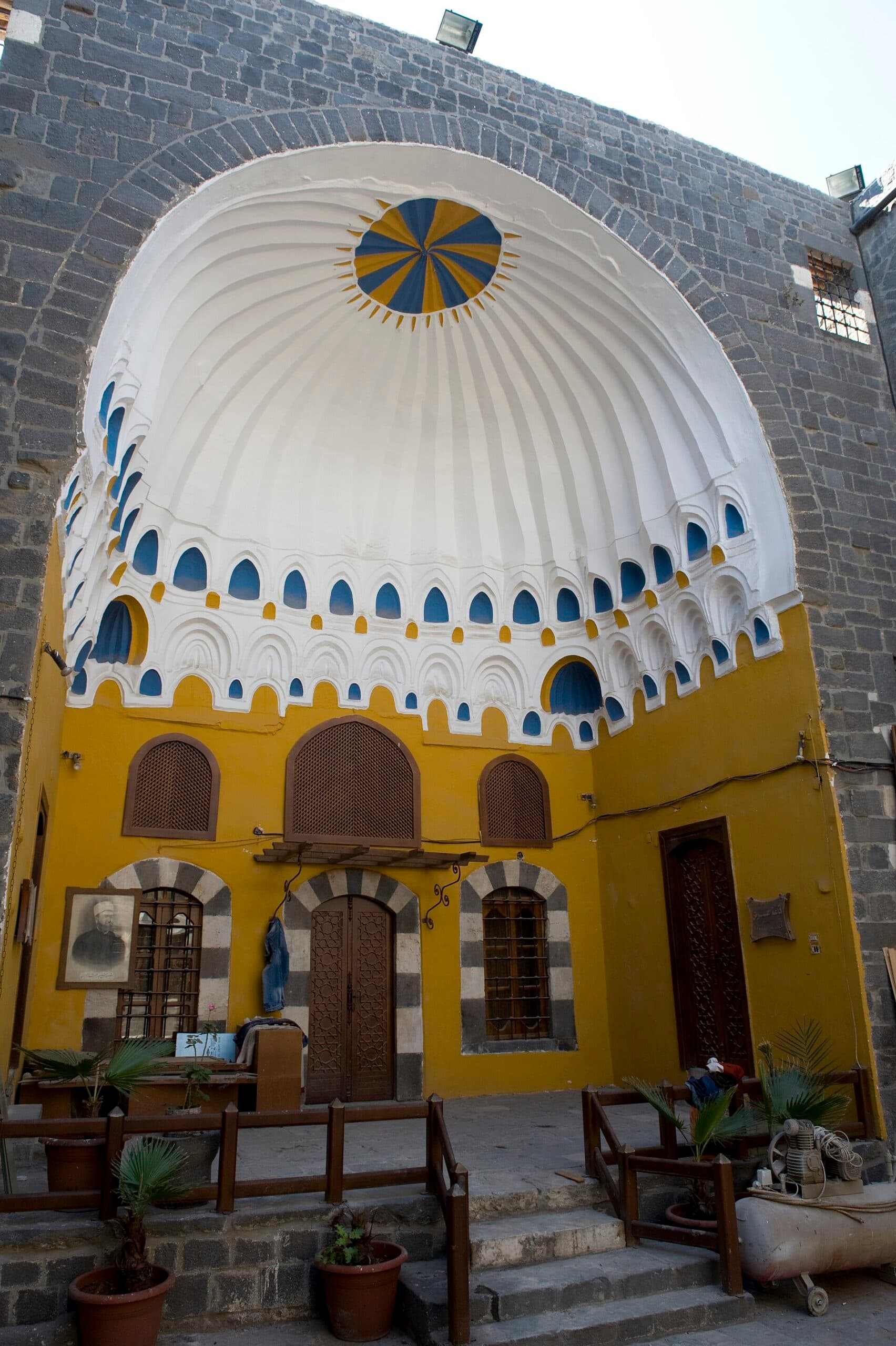 Homs · 13th century
Qasr al-Zahrawi, Homs
A Mamluk mansion in Homs dated 1262-1263, later the city's folklore museum. A shell-vaulted iwan fills one side of the courtyard, with two carved lions facing it.
Where to eat
- Homs · curd cheese
Qarisheh (Syrian curd cheese)
Syrian curd cheese from buttermilk: salted, boiled, strained through cloth and pressed. Fresh at breakfast from Homs to Latakia, and the base of shanklish.
- Homs · Ramadan sweet
Tamriyeh, the Ramadan pastry of Homs
In Homs during Ramadan, thin dough is fried golden and dipped into syrup, filled with clotted cream, dates or nothing. What tamriyeh is and where to find it.
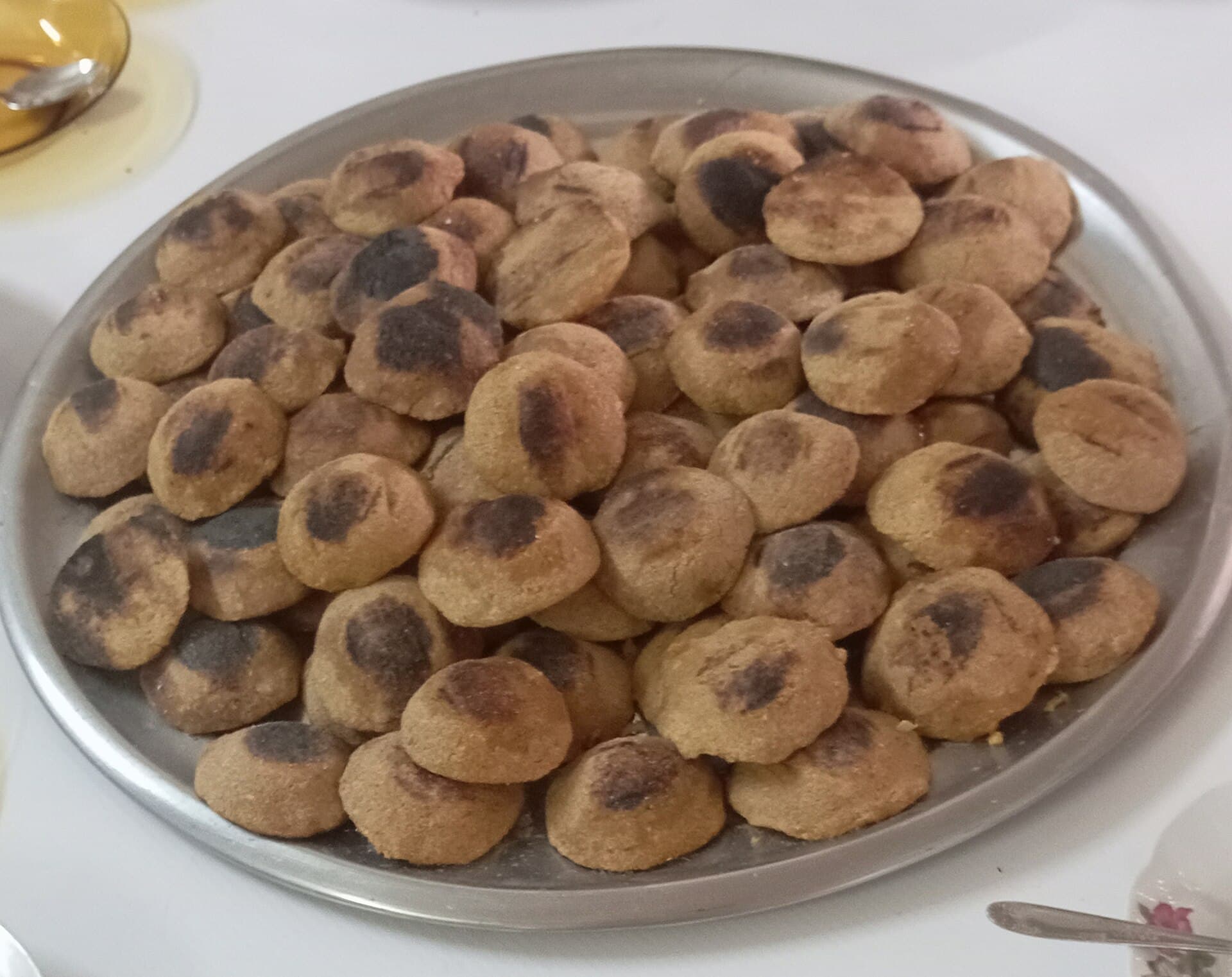 Homs · the Eid dish of Qusayr
Kibbeh mashwiyeh, the grilled kibbeh of Homs and Qusayr
Kibbeh cooked over charcoal, not fried: in Homs two discs sealed around lamb and tail fat, in Qusayr a family job at the fire on the morning of Eid. How it is made.
Ready-made routes
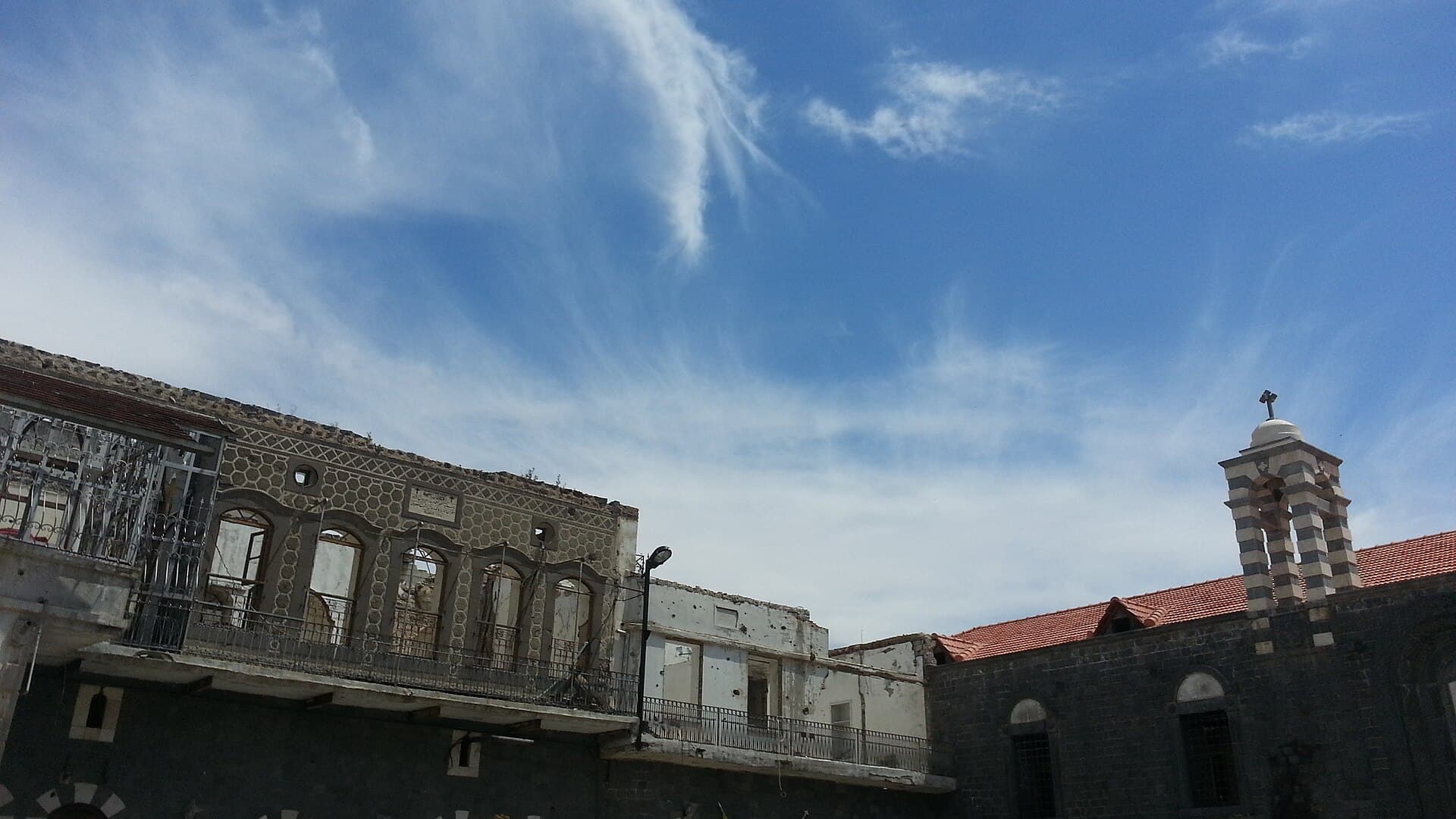 On foot · 3 hours
Homs Old City churches walk: from the National Evangelical Church to Sibat al-Qadi
Five stops in Old Homs: a rebuilt Evangelical church, Father Frans van der Lugt's grave, Our Lady of Peace, Umm al-Zunnar and the Sibat al-Qadi passage.
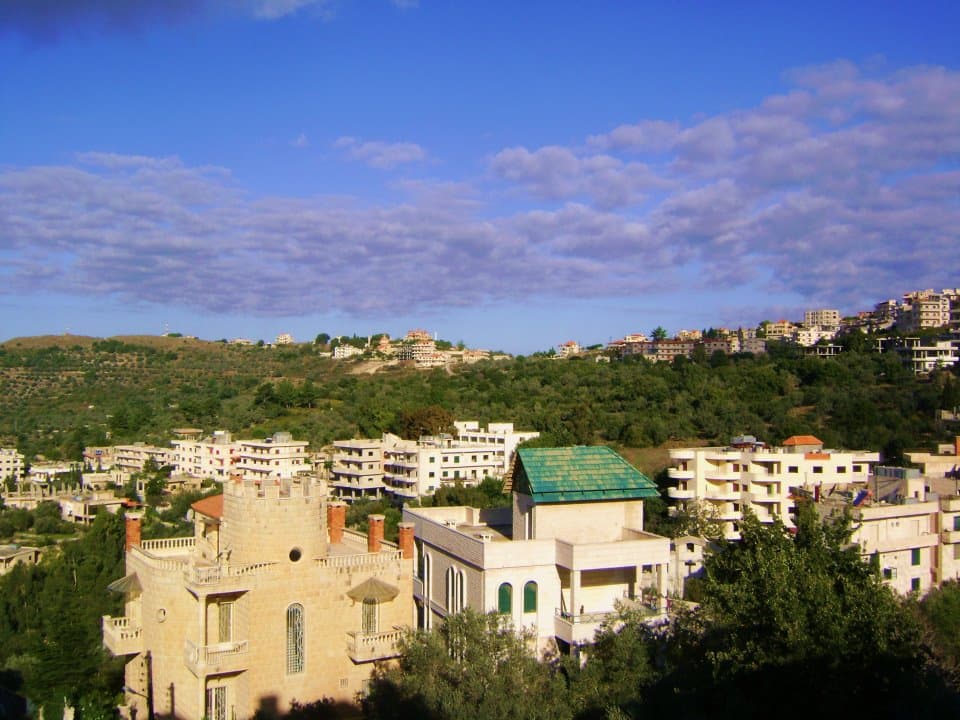 By car · 1 day
Villages of the Valley of the Christians: a day from Marmarita to Mizyeneh
A day through the villages of the Valley of the Christians: old Marmarita, the Fawwar spring, Saint George's Monastery, Krak and a basalt church in Mizyeneh.
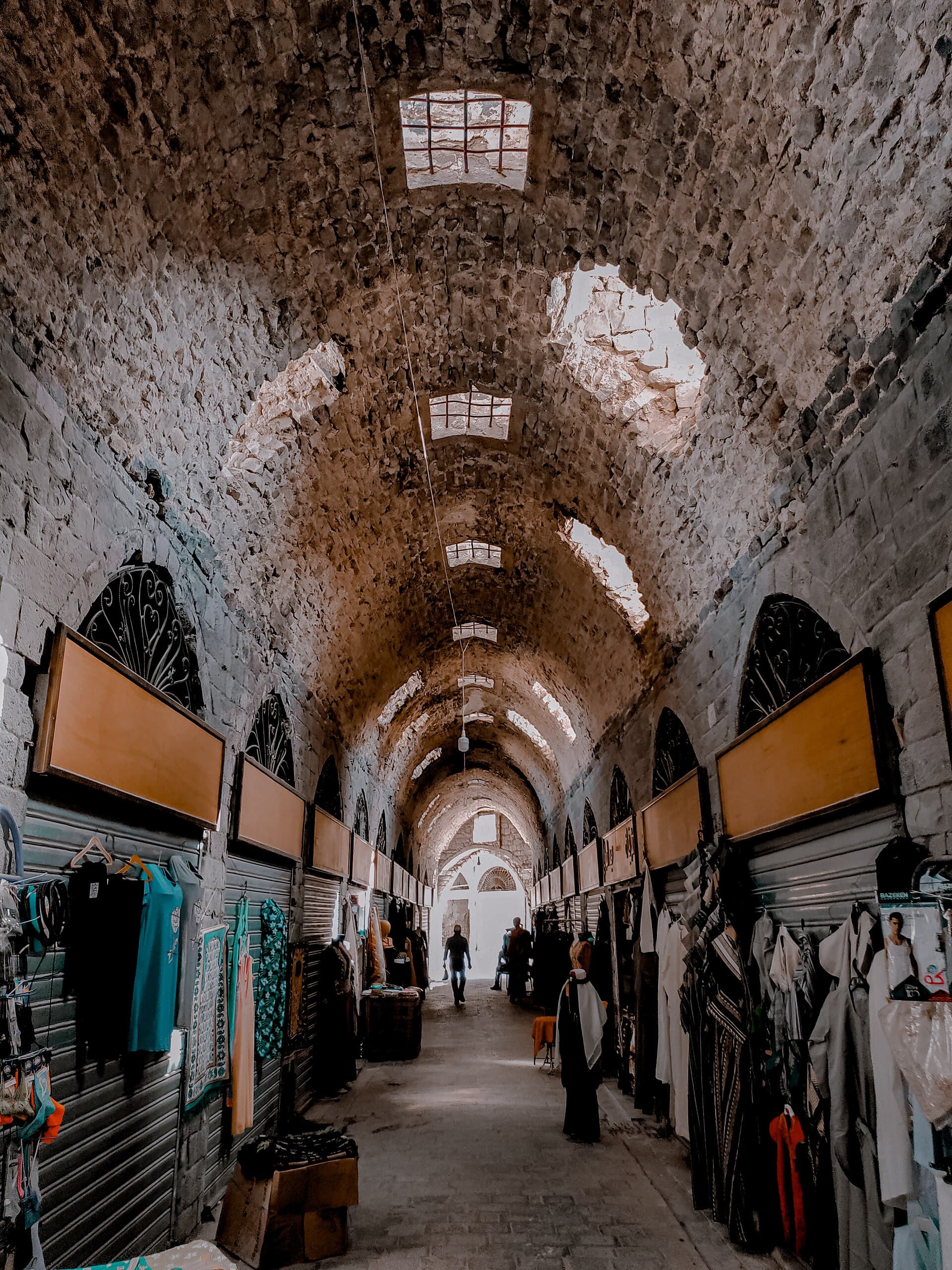 On foot · 4 hours
Old Homs on foot: from the covered souq to Bab Tadmur
A 2600-metre walk through old Homs: the covered souq, the 1923 Old Clock, two churches, the Mamluk Zahrawi Palace and the frescoed crypt of Mar Elian.
Transparency
- How this was chosen
- The answer on this page is written by hand. The lists are built from published records tied to this city and grow on their own as records are added.
- Facts checked
- August 2026
- Last updated
- September 15, 2026