Aleppo za’atar
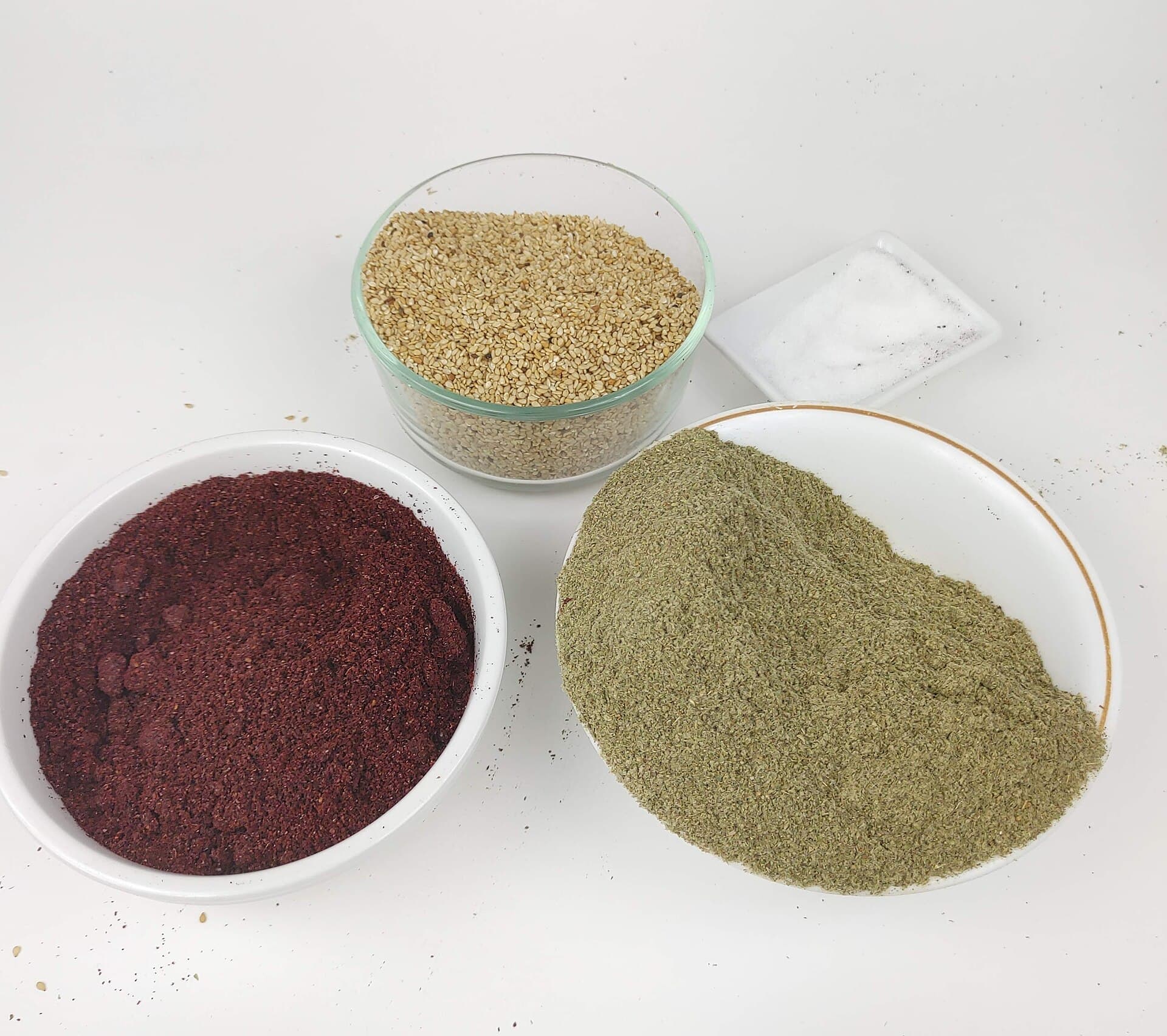
Thyme, cumin, anise and sumac. What separates the Aleppo blend from the rest is where the sourness comes from: dried sumac flower, not citric acid crystals.
- Where to eat it
- At herbalists' and spice counters in Aleppo; on the table at breakfast with olive oil, and at the bakery spread over manaqish dough.
- Price
- Variable — ask the price by the kilo at the counter
- When it is eaten
- Breakfast; the bakeries bring manaqish out in the morning
Za’atar is not one plant but a blend. The proportions change from city to city. The Aleppo mix carries the city’s name: dried thyme leaf, cumin and anise go into it. Aleppo has a long history in the spice trade, and the recipe for the blend settled at its counters over generations.
Where the sourness comes from
The defining part of the mix is sumac flower. It gives a natural sourness and stands in for the citric acid crystals used elsewhere; it is also what gives the blend its reddish colour. Some recipes back the sourness up with dried pomegranate seed. Toasted sesame, coriander and peanut appear in some mixes too, and the proportions change from one maker to the next.
How it is eaten
Most often at breakfast. It is stirred into olive oil and eaten with bread. In the bakery it is spread over manaqish dough, and that is the main morning business of a Syrian oven. It sits on the same plate as labneh and olives, with tea alongside.
Buying it
Take a pinch at the counter and crush it in your palm. In a good blend the thyme leaf breaks up but is not dust, the sumac is dry rather than damp, and the colour is a matt red. Bring it to your nose — cumin and anise come first, thyme after. Every herbalist in Aleppo sells his own blend, so there is no single Aleppo za’atar. Tasting at two or three counters before you buy is worth the time.
Tips
- Crush a pinch in your palm: the thyme should break up but not turn to dust
- The sourness should come from sumac; if you taste citric acid, try another counter
- Every herbalist has his own blend; taste at two or three before buying
- Keep it sealed and cool — the aroma goes quickly
Transparency
- How this was chosen
- Two kinds of record live here: the dish itself, and the place that serves it. Both are chosen and written by hand; ranking is not for sale and there are no sponsored entries. If a price range is not known for certain, it says so. Venues that serve alcohol are not listed on this site at all.
- Facts checked
- September 2026
- Last updated
- September 15, 2026